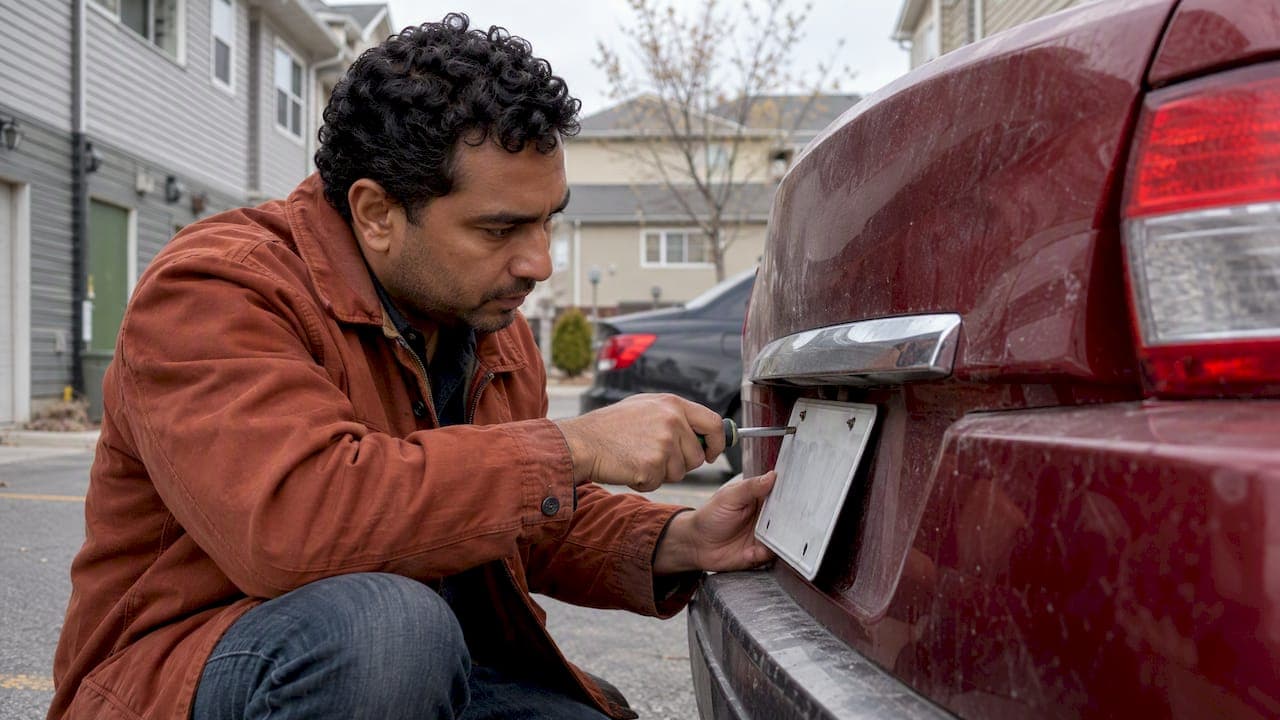
Empty the cabin, glove box, trunk and every hidden pocket. Pull your licence plates. Take your documents and any personal data. After that, leave the car whole. The tires, battery, engine, transmission and catalytic converter are part of what a buyer is pricing, so stripping them usually costs you more time than it earns you. This guide covers each item, the Calgary rules for fluids, and what happens to your plates in Alberta.
TL;DR
- Remove everything personal first: papers, toll or parking passes, garage remotes, phone mounts, child seats, and anything in the trunk or under the seats.
- Take your licence plates off. In Alberta the plates belong to you, not to the buyer or the car.
- Do not strip major parts for a quick win unless you plan to sell them separately. Ask your buyer how the car is priced before you pick up a wrench.
- Never drain fluids onto the ground or down a drain. Calgary has free drop-off for batteries, oil and tires, and a separate stream for other fluids and fuel.
- A car that will not start is fine. You do not need to jump it or fix it before pickup.
Table of Contents
- The two-minute rule: personal items out, car intact
- Step 1: Clear every personal item
- Step 2: Wipe your data and cancel the connected stuff
- Step 3: Take your licence plates off
- Step 4: Gather the paperwork
- Step 5: Fluids, fuel and the battery
- Should you pull parts before you scrap?
- Do you need to jump-start or fix it first?
- Our perspective: the cleanest car is not a stripped car
- A one-hour checklist
- Selling instead of donating or driving it in
- Ready when your car is empty
- FAQ
- Sources
The two-minute rule: personal items out, car intact
Think of the job in two piles. The first pile is everything that is yours and not part of the vehicle: belongings, documents, data, plates. That pile always comes out. The second pile is the car itself, and for most owners of a non-running, damaged or old car, the right move is to hand it over complete.
Why? A scrap or junk buyer quotes on the whole vehicle: its weight in metal, plus whatever parts can be resold. If you pull the battery, wheels or converter, you change that math, and you may be left with a pile of parts that is harder to sell than the car was. We say more about this in our own view below.

Step 1: Clear every personal item
People forget the same places again and again. Go through the car slowly, with a flashlight and a bag.
- Glove box and center console: registration, insurance slips, old service receipts, sunglasses, charging cables.
- Door pockets and seat-back pockets: coins, parking stubs, pens, kids' toys.
- Under the seats and between the cushions: this is where keys, earbuds and cash hide.
- Trunk and spare tire well: jumper cables, snow brush, emergency kit, a tire jack, boxes of winter gear. A Calgary car often carries a full winter kit all year.
- Roof, hitch and mounts: roof racks, bike carriers, hitch accessories, phone and dash-cam mounts.
- Sun visors and headliner: garage door remotes, toll tags, parking passes, gift cards.
- Aftermarket audio: if you installed a good stereo, amp or subwoofer, take it out now. It is an add-on, not factory equipment, and it is easy to unplug.
If you want an extra step, take photos of the interior and odometer before pickup. It is a simple record of the condition you handed over.
Step 2: Wipe your data and cancel the connected stuff
A newer car holds more of you than you think.
- Infotainment: delete paired phones, saved home addresses, garage-door presets and contact lists. Most systems have a factory reset in the settings menu.
- Connected apps and subscriptions: remove the car from your manufacturer app and cancel any paid connected-services or satellite radio plan.
- Toll, parking or fleet devices: unplug and keep them.
- Insurance: talk to your insurer about when to end coverage. Do not cancel it before the car has actually left your possession.
If the battery is dead and the screen will not respond, do not worry. Tell the buyer, and clear the app side from your phone.
Step 3: Take your licence plates off
This is the single most commonly missed item, and it matters in Alberta. A guide from a Calgary-area registry agent states that you cannot transfer a plate to another person and should not let anyone keep yours when you sell a vehicle. The plate follows you. If you buy another vehicle, you may be able to put the same plate on it, as long as the registration is valid and the registrant is the same.
If you will not use the plate again, the province explains how to cancel a vehicle registration through a registry agent. You need a signed written request from all registrants, a photocopy of your driver's licence and your current address. A $10 plus GST cancellation fee is deducted from any refund, and the registry agent charges a separate service fee. Fees can change, so check that page before you go.
Practical tips:
- Bring a screwdriver or a socket set. Rust on older plates makes screws stubborn, so a drop of penetrating oil helps.
- Remove the plates before the tow truck arrives, so you are not scrambling at the curb.
- Keep the plates in your house, not in the car.
- Keep a copy of your bill of sale or receipt when the car goes. It is your proof of when you stopped owning it.
Step 4: Gather the paperwork
Emptying the car includes emptying your folder. You will normally want to have these ready:
- Your registration certificate, or other proof that the car is yours.
- Your photo ID.
- Lien or loan information, if the car was financed. A buyer will ask whether anything is owed on it.
- Any keys you have. A missing key is not usually a deal-breaker for a junk car, but mention it when you ask for a quote.
Ownership paperwork is a trust issue for every legitimate buyer. We walk through the sale itself, step by step, in How to Scrap a Car in Calgary: Get Paid Same Day.
Step 5: Fluids, fuel and the battery
You do not have to drain anything for a typical junk car pickup. Fluids are handled by the buyer or dismantler as part of dismantling. Check that when you book, because it is a fair question for any buyer: who removes and disposes of the fluids, and is that included?
If you decide to do it yourself, the rules are specific. The City of Calgary says engines and transmissions must be drained of all fluids before they go in as scrap metal. Its information on automotive items sets out where each material goes:
| Item | Where it goes in Calgary |
|---|---|
| Car battery | Free drop-off at a City Eco Centre |
| Motor oil | Free drop-off at an Eco Centre |
| Passenger tires | Eco Centre, up to 12 per day, free |
| Brake, transmission and power steering fluid, plus fuel | Household Hazardous Waste drop-off, max 20 litres per container |
Use leak-proof, labeled containers, and never pour automotive chemicals down a drain or onto the ground. They harm the environment and can damage pipes. Spills in a driveway are a real mess, which is one more reason most people let a professional handle it.
If you are not confident working under a car, skip this step altogether. A mechanic can drain the fluids for a modest charge, or you can pass the whole job to a buyer who includes it.
What about a nearly empty fuel tank?
You do not need to run the tank dry or siphon it. A low tank is simpler and safer to tow. Siphoning gasoline at home is a fire and health risk, so do it only if you know how and have the right container.
Should you pull parts before you scrap?
This is the question behind "remove tires before scrap" and "remove parts before scrap." The honest answer is that it depends on whether you will sell those parts yourself.
Parts that are worth taking if you will sell them
- Aftermarket stereo, amp and speakers.
- Good aftermarket wheels with decent tires, if they are not the factory set. You would need to put the car on a set of steelies or leave it on blocks, and a tow truck needs to roll or lift the car safely.
- Roof racks, tonneau covers, running boards and similar bolt-ons.
- Child seats. Take these out for safety and because they expire.
- Items you plan to reuse, like a winter tire set on separate rims.
Parts to leave where they are
- Battery: leave it in unless you will use it. Removing it saves little, and it can complicate a pickup if the car needs to be moved.
- Engine and transmission: pulling them is a garage job. If you do not have a buyer lined up for them, you cannot recoup the effort. They are also central to what a buyer sees as value, especially if the car can be dismantled for parts.
- Catalytic converter: it is the item people ask about most. It sits under the car and is often valued by scrap buyers, and taking it off a vehicle is hard work. Ask your buyer to quote the car with it attached. If you cut it off yourself, tell the buyer, because the price may change and the car may need extra care to move.
- Factory wheels and tires on a car being towed: the car needs to roll. Leave them on unless the car is going on a flatbed, and confirm that with the buyer.
- Doors, seats, glass and body panels: these are part of how a car is dismantled and weighed.
If you pull a major part and tell nobody, the buyer will notice when they arrive, and the quote you were given may no longer apply. Tell the buyer first, always.
Do you need to jump-start or fix it first?
No. A car that will not start, will not shift, has a blown engine or has a failed transmission can still be bought and towed. That is the point of a junk car service. Don't spend money on a new battery, a tow or a repair to make a car "worth" scrapping.
There are two small things that make the pickup easier:
- Release the parking brake and put the car in neutral, if that works.
- Make sure the car is reachable. If it is in a back lane, behind other vehicles or in a snowbank, tell the buyer in advance. Calgary winters turn this into a real factor from November to March.
Our guide on removing junk cars from your property goes through access and parking details.
Our perspective: the cleanest car is not a stripped car
We buy and tow cars in Calgary and Okotoks, and a pattern shows up. The sellers who have the easiest time are the ones who do three things: they empty their belongings, take off their plates and have their paperwork ready. They do not dismantle the car.
The temptation is understandable. You hear that a catalytic converter or a set of wheels is worth money, and it feels wrong to hand it over. But a car that has been half stripped is harder to price, harder to tow and harder to dismantle. Our business revenue comes from reselling parts and scrap metal value, so we price the whole vehicle, and we are open about that. If you do want to keep or sell specific parts, tell us when you call and we will work around it.

The second pattern is fluids. People worry about the oil and gas. You do not need to. A reputable buyer deals with fluids as part of the work, and you should ask for that to be confirmed before you book. Our scrap value guide for Calgary explains what drives the offer for a vehicle, and none of it depends on a clean engine bay.
The last pattern is the one we like least: personal items left behind. Registrations, garage remotes and kids' things end up in the trunk of a car we have already towed. Give the car one slow walk-through the day before.
— Franz
A one-hour checklist
- Day before: photograph the car, including the odometer and each corner.
- Interior: clear cabin, glove box, console, door pockets and trunk, including the spare tire well.
- Mounts and add-ons: remove stereo, dash cam, racks and any child seat.
- Data: reset the infotainment system and unlink phone and apps.
- Paperwork: locate registration, ID, any loan details and keys.
- Plates: remove them and store them at home.
- Call the buyer: report the car's condition, any missing parts and where it is parked.
- At pickup: check that the car is empty, sign the bill of sale and get your copy.
- After pickup: talk to your insurer and decide whether to cancel or reuse the plates.
For a longer walkthrough of how a same-day sale works, see our junk car removal process guide.
Selling instead of donating or driving it in
If your car is ready to go, you have a few routes. You can drive it to a yard, arrange a tow, or sell it for cash with pickup. Our driving versus free pickup checklist compares them for non-running vehicles, and our note on donation versus cash covers the other choice.
If you want to see where your vehicle ends up, what happens to a scrapped car in Canada explains the dismantling and recycling stages.
Ready when your car is empty
Once your belongings are out and your plates are off, we do the rest. We buy junk, non-running, damaged, scrap and failed-inspection cars, plus ATVs and side-by-sides, in Calgary and Okotoks, with free same-day towing and payment at pickup. The process has three steps: you contact us, we pick up the vehicle, and you get paid. Start at our scrap car removal page or on our home page, and tell us the condition and any parts you have removed.
FAQ
Do I have to remove the tires before scrapping a car?
No, not for a normal pickup. Leave the tires on unless you want to keep a good set, and tell the buyer if you do. If you remove tires yourself in Calgary, passenger tires, up to 12 per day, can be dropped off free at a City Eco Centre.
Do I need to drain the fluids first?
Usually not, because the buyer or dismantler handles that work. If you do it yourself, take oil and batteries to an Eco Centre, and take other fluids and fuel to a Household Hazardous Waste drop-off in containers of 20 litres or less. Never pour them down a drain.
Can I keep my licence plates when scrapping?
Yes, and in Alberta you should. Plates stay with you and cannot be passed to another person. You can use them on another vehicle you register, or cancel the registration through a registry agent.
Do I need to jump-start the car before it is scrapped?
No. Non-running cars, including those with a dead battery, blown engine or failed transmission, can be towed. Just tell the buyer where the car is parked and whether the wheels turn.
Should I remove the catalytic converter?
We suggest you don't, unless you have a separate buyer and the skills to do it safely. Ask for a quote with the converter in place, and if you do remove it, say so before pickup so the price is accurate.
Sources
- How to dispose of scrap metal and unusable metal items, City of Calgary
- Household Hazardous Waste Program: acceptable items, City of Calgary
- City Eco Centres, City of Calgary
- Cancel a vehicle registration, Government of Alberta
- Transfer vehicle registration in Alberta