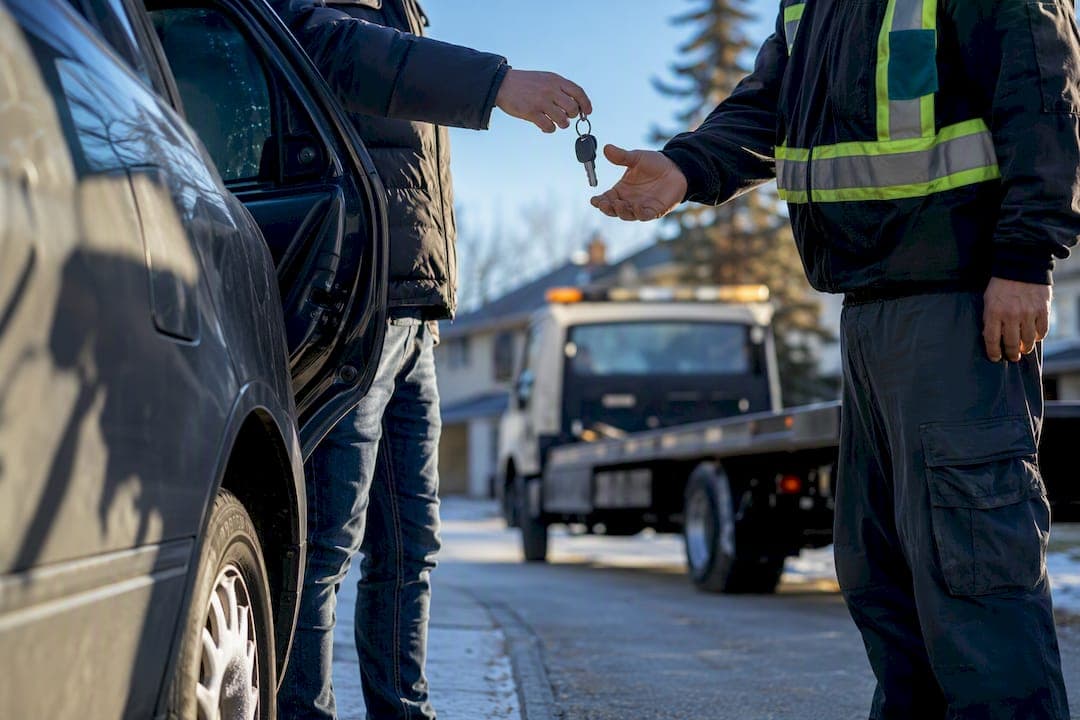
Getting rid of a junk car takes four moves: get a quote, prepare the car and paperwork, schedule pickup, and collect payment when the tow truck arrives. Most sellers finish the whole junk car removal process quickly, often on the same day they call, or shortly after if scheduling is tight. Have your title or registration, a photo ID, and your keys sitting on the counter before you make that first call.
TL;DR:
- The best offers for junk cars depend on scrap metal weight, catalytic converter value, and demand for usable parts, with complete vehicles and intact key components commanding higher prices.
- Preparing your vehicle involves removing personal items, gathering ownership documents, taking photos, and disabling alarms to avoid delays or disputes during pickup.
- Confirming pickup logistics and timing in writing helps ensure same-day service and prevents surprises with access restrictions or hidden fees.
- Reputable buyers include towing in their quotes, process depollution properly, and handle environmental disposal to prevent pollution issues after removal.
- Most junk car removal services buy vehicles as-is, offering free same-day towing with a straightforward three-step process: contact, pickup, and payment.
Table of Contents
- What Is the Junk Car Removal Process, Step by Step?
- How Do You Prepare the Car and Paperwork Before Pickup?
- How Do You Schedule Pickup and Confirm Logistics?
- What Happens on Pickup Day?
- What Should You Do Right After the Car Is Gone?
- How Are Junk Car Offers Actually Calculated?
- How Does a Simple 3-Step Cash-for-Cars Service Work?
- What Fees or Hidden Costs Should You Watch For?
- What Happens to a Junk Car Environmentally After Pickup?
- How Do You Prepare a Car for Removal Beyond Clearing It Out?
- What Vehicles Qualify for Junk Car Removal?
- What Sellers Get Wrong About This Process
- Ready to Get a Free Quote?
- Sources
- FAQ
What Is the Junk Car Removal Process, Step by Step?
The junk car removal process runs through four stages, and understanding each one before you start saves you from surprises on pickup day. Buyers quote you first, based on your car's details. Then you prepare the vehicle and gather paperwork. Next comes scheduling, where you and the buyer agree on a pickup window. Finally, the truck shows up, someone inspects the car, you sign the title, and cash or e-transfer changes hands on the spot.
That sequence mirrors what most reputable operators follow: gather paperwork, get a quote, schedule free pickup, get paid on the spot, then cancel insurance and handle plates. It's a five-step version of the same basic idea, and it works because each step depends on the one before it. Skip the paperwork step and pickup stalls. Skip verifying the quote and you risk a lowball surprise at the curb.
Get a quote and choose an offer
Every buyer worth calling will ask for the same handful of details before naming a number: year, make, model, VIN, mileage, general condition (running or not), and often a few photos. The more accurate you are here, the less likely the quoted price shifts once the truck actually arrives.
Before you accept any offer, ask these questions:
- Is towing included in this price, or is that a separate fee?
- How and when do I get paid, cash or e-transfer, and at what point in the visit?
- How long does this quote stay valid, hours or days?
- What paperwork or ID do I need to have ready at pickup?
Reputable, transparent buyers confirm towing is included and payment happens at pickup before you ever sign anything. If a company won't commit to a firm number over the phone, or hedges with "we'll see when we get there," treat that as a warning sign. The quoted price should be the price you're paid, not an opening bid for haggling. If you're weighing multiple offers, comparing a handful of local disposal-for-cash providers side by side helps you spot which numbers are realistic and which are bait.
How Do You Prepare the Car and Paperwork Before Pickup?
Preparation is where most delays and lowball surprises actually happen, not at the curb. Handle these steps the hour before your scheduled window and pickup goes far smoother.
- Clear out personal items. Check the glovebox, center console, trunk, under the seats, and door pockets. This is the single most commonly forgotten step, and once the car's gone, whatever's left inside is gone with it.
- Gather your title and registration. These prove ownership and are the documents most buyers legally require to complete a sale.
- Have a valid photo ID ready. It has to match the name on the title.
- Sort out a missing title in advance. If you can't find yours, many buyers can still work with alternate paperwork or point you toward getting a duplicate, but this step can add a day or two to the timeline if you wait until pickup day to mention it.
- Remove plates and toll transponders. Some regions require you to keep plates after a sale; check your local motor vehicle rules before the truck leaves.
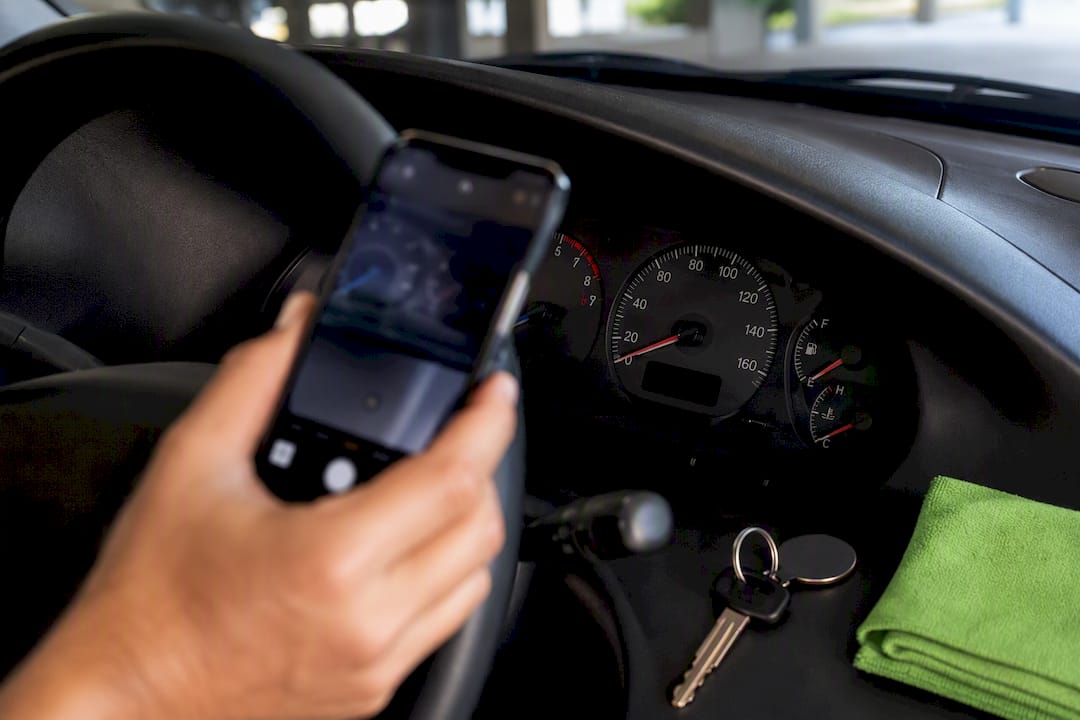
- Photograph the VIN, odometer, and overall condition. These photos become your proof if a dispute ever comes up about what shape the car was in.
Skipping any one of these can significantly delay the removal process.
How Do You Schedule Pickup and Confirm Logistics?
Once you've accepted an offer, scheduling is mostly about access. Confirm these details before you hang up:
- Your pickup window, and whether it's a firm time or a loose "sometime this afternoon."
- Whether your driveway, street, or lot allows a flatbed or standard tow truck to get close enough.
- What happens if access is blocked, does the price change, or does the buyer send a different truck?
- Whether the driver brings paperwork copies or you need to have your own printed.
Same-day pickup is common if you call early. Requesting a quote first thing in the morning meaningfully raises your odds of same-day service versus calling at 4 p.m. and hoping. Weather, remote locations, and tight parking are the usual culprits behind next-day delays instead. If your car is wedged into a spot a standard tow truck can't reach, mention it up front. Buyers who handle tight-space pickups regularly can plan for it instead of showing up with the wrong equipment.
What Happens on Pickup Day?
Pickup day itself moves fast once the truck arrives. Expect this rough sequence:
- Arrival and visual check (5 to 10 minutes): the driver confirms the VIN matches your paperwork and the car looks roughly as described.
- Paperwork signing (5 to 10 minutes): you sign the title over, hand off registration, and show ID.
- Payment (immediate): cash or e-transfer changes hands right there, before the car is hooked up.
- Loading and towing (15 to 30 minutes): the truck winches or lifts the car and pulls away.
Total time on-site usually runs under an hour, consistent with industry breakdowns showing inspection at 15 to 30 minutes and towing at 30 to 60 minutes. If you lost the title, mention it during the quote call, not when the driver's standing in your driveway. Disclosing missing paperwork early lets the buyer tell you what they'll accept as an alternative instead of stalling the whole visit.
If the driver tries to renegotiate the price on the spot, citing damage or a condition you didn't disclose, stay calm and ask them to point to the specific discrepancy. Your VIN and condition photos are your backup here.
Pro Tip: Text yourself a timestamped photo of the odometer and exterior right before the truck arrives. If anyone questions the car's condition later, you have proof from the day of pickup, not just from when you first called.
What Should You Do Right After the Car Is Gone?
The sale isn't finished the moment the truck pulls away. A few loose ends still need closing:
- Cancel or transfer your insurance policy the same day, so you're not paying for coverage on a car you no longer own.
- Return or transfer your license plates according to your local motor vehicle agency's rules; some jurisdictions want plates back within days, not weeks.
- Keep a scanned or photographed copy of the signed title and your payment receipt somewhere you can find it.
- Ask for or write up a simple bill of sale noting the date, price, and both parties' names.
- Notify your motor vehicle agency of the sale if your region requires it, so liability for the car legally leaves your name.
That last step matters more than people expect. Until the transfer is logged, an unpaid ticket or accident involving your old car can technically still land on you.
How Are Junk Car Offers Actually Calculated?
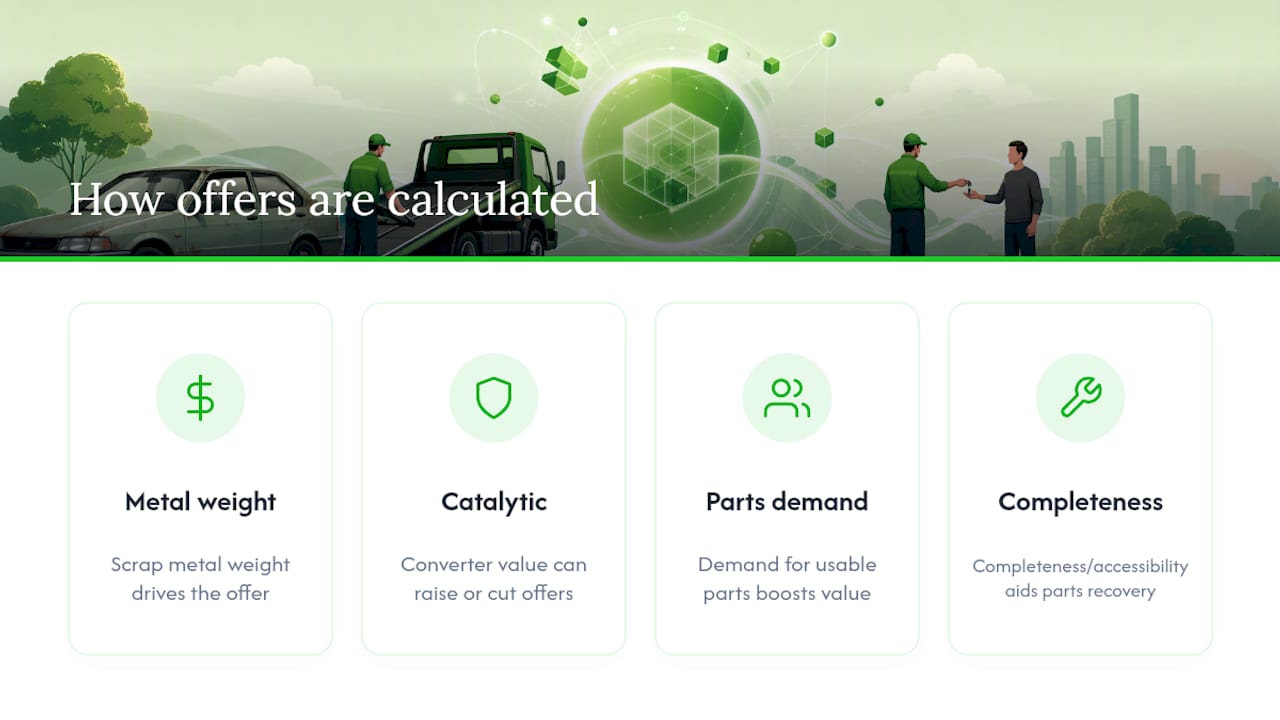
Offers aren't pulled from thin air. Buyers weigh four things: scrap metal weight, the value of the catalytic converter, demand for usable parts, and how complete and accessible the car is. A car with its engine intact and a catalytic converter still in place is worth meaningfully more than the same model stripped of both, because parts value and metal weight drive the number more than cosmetic condition does.
A few things genuinely raise your offer: noting which parts still work (a recently replaced transmission or battery, for instance), being honest about condition instead of downplaying damage the buyer will spot anyway, and leaving the car as complete as possible.
On the flip side, a missing catalytic converter, heavy fluid contamination, or a vehicle crushed too badly for parts recovery will drag the number down fast. If you're weighing whether to strip parts yourself first or sell it whole, checking who typically pays the most for junk cars before you start pulling parts can save you from undercutting your own offer.
How Does a Simple 3-Step Cash-for-Cars Service Work?
Some buyers strip this whole process down to three moves: contact, pickup, cash. This model involves buying running and non-running vehicles, including cars with blown engines or failed transmissions, without requiring the car to move under its own power.
The appeal of a three-step model is simple: one phone call gets you a number, one scheduled visit gets the car off your property, and payment happens before the truck leaves. No back-and-forth negotiation, no waiting on a check in the mail.
Sellers who go this route tend to value same-day pickup, a quoted price that doesn't shift at the curb, and towing that doesn't come with a hidden fee attached. As with any buyer, confirm the specifics (timing, payment method, what paperwork they need) on your call, since exact details can vary by vehicle and location.
What Fees or Hidden Costs Should You Watch For?
The junk car removal process should not cost you money out of pocket, but a few line items can sneak in if you don't ask upfront. Towing is the big one. Reputable buyers typically fold towing into the offer, meaning it's free to you, but some operators quote a vehicle price and then tack on a separate towing charge once the truck shows up.
Storage or "administrative" fees are another spot to watch. If a buyer mentions any fee for holding your vehicle information, processing the title, or handling paperwork, that's unusual and worth questioning directly.
Price adjustments for access issues are legitimate in some cases, but they should be disclosed during scheduling, not invented on pickup day. If your car is in a spot a standard truck can't reach and a specialized truck is needed, a fair buyer flags that possibility when you first book the pickup, not after the driver arrives and finds the driveway too narrow.
The clearest defense against all of this is asking the towing-included and payment-timing questions before you agree to anything. Get the answer in writing if possible, even if it's just a text message confirming "quote includes towing, payment on pickup." That single message is your leverage if anyone tries to change terms later.
What Happens to a Junk Car Environmentally After Pickup?
A junked car doesn't just disappear once it's towed away. Legitimate recyclers run it through a process called depollution first: draining oil, coolant, fuel, and other fluids so they don't leak into soil or waterways. After that, workers pull usable parts for resale, then the remaining shell gets shredded and the metal gets recycled into new steel products.
That depollution, parts harvesting, and shredding cycle is exactly why even a car that doesn't run still has real value to a buyer. It's not scrap in the sense of "worthless," it's scrap in the sense of "raw material waiting to be reclaimed." Choosing a buyer who actually follows environmental disposal standards, rather than one who lets fluids drain onto a lot or dumps unusable shells illegally, keeps you from being indirectly tied to a pollution problem down the line. Ask how a buyer handles fluid disposal if it isn't obvious from their listing or website; a straight answer is a decent signal of legitimacy.
How Do You Prepare a Car for Removal Beyond Clearing It Out?
Removing your belongings is only half the prep work. A few mechanical and safety steps matter just as much, especially if the car still has working electronics.
Draining fluids yourself usually isn't necessary. Most buyers handle depollution as part of their own process once the car reaches their facility, so you don't need to drain oil or coolant before pickup. What you should do is disconnect or disable any car alarm, especially if the battery is still connected, so the system doesn't trigger mid tow and cause a scene in your driveway.
If the car has a factory or aftermarket tracking device, remove it or disable the subscription, since some services keep pinging location data on a car that's no longer yours. Double check the trunk and hood release mechanisms work, since a jammed latch can slow down the inspection step significantly. If your key fob has any personal garage or gate codes programmed in, note them down before you hand the keys over.
Finally, walk the car one more time for anything overlooked. Under the spare tire compartment and in seat back pockets are two spots people forget almost as often as the glovebox.
What Vehicles Qualify for Junk Car Removal?
Most buyers accept a wide range: sedans, trucks, SUVs, vans, and in some cases ATVs and side-by-sides. Running condition isn't a requirement. Cars with blown engines, failed transmissions, flood damage, collision damage, or failed inspections all typically qualify, since the value comes from parts and metal, not drivability.
Exceptions exist, though. Vehicles that have been fully stripped of their catalytic converter, engine, and transmission may still get accepted, just at a much lower offer. Cars burned in a fire down to bare frame sometimes fall below what a buyer can profitably process. Vehicles with no VIN plate or seriously compromised paperwork (stolen, unregistered, or subject to a legal lien) can also complicate or delay a sale until ownership is sorted out.
If you're unsure whether your situation qualifies, it's worth a quick read on the signs a car has crossed from "repairable" into "junker" territory before you commit to a decision either way.
What Sellers Get Wrong About This Process
The biggest mistake sellers make isn't paperwork or pricing, it's timing their call badly. Waiting until late afternoon to request a quote is the fastest way to lose a same-day pickup slot to someone who called at 9 a.m.
Three things speed things up every time: photograph the VIN and condition before you make the first call, disclose a missing title immediately instead of at the door, and confirm the exact pickup window in writing, not just verbally. The single most common seller mistake, beyond forgetting personal items, is not confirming the actual pickup time and then being surprised when a truck shows up during a window they thought was flexible.
None of this requires special expertise. It just requires doing the small things in the right order.
— Franz
Ready to Get a Free Quote?
If you've read through the steps above and you're ready to skip the DIY hassle, some local services in Calgary and Okotoks offer vehicle owners a faster path than handling paperwork, buyers, and towing logistics on your own. Running or not, damaged or just old, these services buy vehicles as-is with same-day free towing and no hidden fees tacked onto the number they quote you.
The process is a simple three-step approach: contact for a free quote, confirm pickup details, and receive payment on the spot when the truck arrives, cash or e-transfer. There is generally no negotiating down from an inflated number or waiting days for a check to clear.
Start by requesting your free quote for your junk car today, or check the Okotoks-area pickup details if that's closer to home.
Sources
- How Long Does Scrap Car Removal Take? A Step-by-Step Guide
- How to Junk a Car: A Step-by-Step Guide | Speedy's Cash For Cars
FAQ
Do I need to do anything if I scrap my car?
Yes. Beyond removing personal items and signing the title over, you need to cancel or transfer your insurance and handle your license plates according to your local motor vehicle agency's rules right after pickup.
Who will pay the most for a junk car?
Offers depend on scrap metal weight, catalytic converter value, and parts demand, so the highest offer usually comes from whichever buyer can use the most of your specific vehicle, not necessarily the biggest name. Getting more than one quote is the only reliable way to know where your car stands.
How much do you get for scrapping a car?
There's no fixed number. It shifts with local scrap metal prices, your car's completeness, and whether the catalytic converter and major parts are still intact, so the only accurate figure is the one in your actual quote.
What is the best way to get rid of a junk car?
For most sellers, a straightforward cash-for-junk-cars service beats private sale or DIY parts stripping, since it skips listing hassles and gets the car off your property the same day. Services like Southsidecashforjunkcars handle running and non-running vehicles with free towing built into the offer.
How long does the whole junk car removal process take?
Most sellers complete the full process, from quote to payment, within the same day or the next, assuming paperwork is ready and the buyer can access the vehicle without complications.