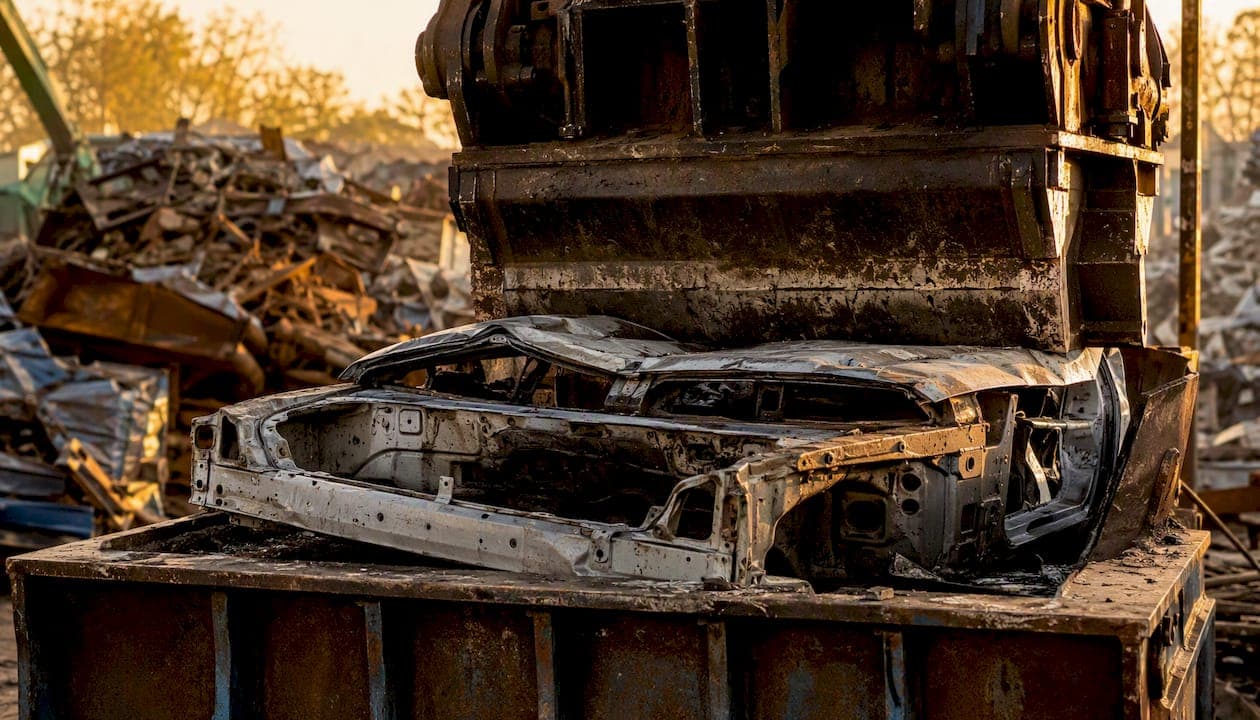
When you scrap a car in Canada, it goes through a regulated sequence: depollution, parts harvesting, crushing, and shredding, with metals sent to steel mills and hazardous materials routed to licensed recyclers. The process is governed by provincial vehicle agencies, guided by Transport Canada, and carried out by facilities that meet the standards set by the Automotive Recyclers of Canada (ARC). In Calgary and Okotoks, Southsidecashforjunkcars handles the full chain from pickup to paperwork.
Here is where each major piece ends up:
- Usable parts (engines, transmissions, electronics) are cataloged and sold into the used-parts or remanufacturing market
- Catalytic converters and EV batteries go to precious-metal reclaimers and specialist battery recyclers
- Fluids and refrigerants are drained and routed to licensed reclaimers or disposal facilities
- The remaining steel shell is shredded and sold by the ton to steel mills
Key Takeaways
Scrapped cars in Canada go through a regulated sequence of depollution, parts harvesting, and shredding, with a large portion of materials recovered and the remainder managed as automotive shredder residue.
| Point | Details |
|---|---|
| Depollution is mandatory | Fluids, refrigerants, batteries, and airbags must be removed before crushing — skipping this step risks fines and contamination. |
| Get and keep your CoD | The Certificate of Destruction removes the vehicle from your name; without it, you remain legally responsible. |
| Parts drive the most value | Catalytic converters, engines, and transmissions often contribute more to your offer than the steel weight alone. |
| Choose a licensed facility | ARC-affiliated or provincially licensed recyclers follow proper depollution and issue valid destruction documentation. |
| Southsidecashforjunkcars | Offers same-day free pickup, instant cash payment, and full paperwork handling for Calgary and Okotoks vehicle owners. |
Table of Contents
- What happens to a scrapped car, step by step
- Legal and administrative steps when you scrap a car in Canada
- Where parts and materials from a scrapped car actually end up
- Environmental risks and why proper depollution matters
- How scrap value is determined and tips to maximize what you get
- Typical timeline and fees to expect
- What "scrapped" means for your registration, insurance, and vehicle history
- How a local Calgary cash-for-junk service processes your car
- Does scrapping a car affect your Canadian taxes?
- Options for donating or selling usable parts before scrapping
- Why proper scrapping matters more than most people realize
- Ready to scrap your car in Calgary or Okotoks?
- Sources
- FAQ
What happens to a scrapped car, step by step
The scrap car recycling process is sequential and tightly controlled. Skipping a step isn't just bad practice — in most provinces, it's illegal. Here is the full chain of custody.
1. Collection and intake
The recycler collects the vehicle and verifies proof of ownership before anything else. In Alberta, that means a signed title or registration document. The facility logs the vehicle identification number (VIN), inspects its condition, and stages it in a holding area. At this point, the owner hands over the keys and any documentation.
2. Draining fluids
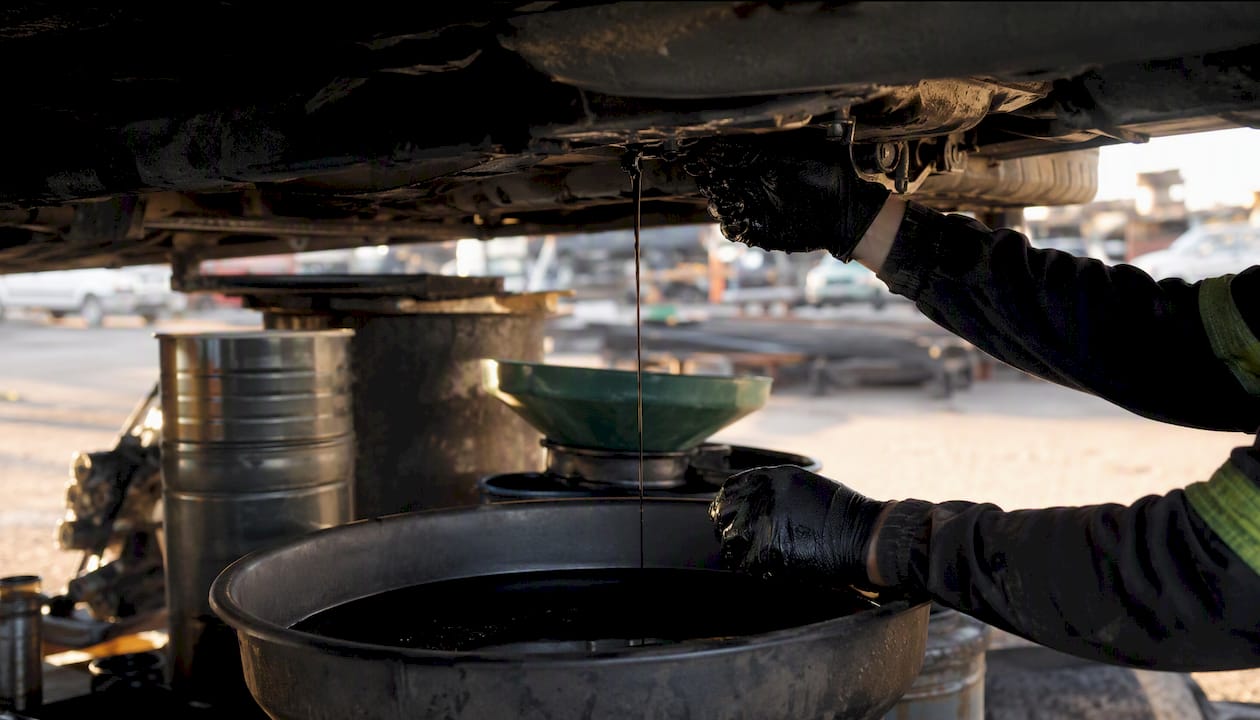
Depollution starts with fluids: engine oil, transmission fluid, brake fluid, power steering fluid, coolant, and fuel are all drained before any cutting begins. In some Alberta yards, recovered gasoline is reused on-site to fuel heavy equipment — a pragmatic reuse step before formal recycling. Everything else goes to licensed reclaimers.
3. Refrigerant recovery
Air conditioning refrigerant (typically R-134a or the newer R-1234yf) must be captured by certified equipment before the system is opened. Releasing refrigerant into the atmosphere is a federal offense under Canada's Environmental Protection Act. This step requires specialized recovery machines and trained technicians.
4. Battery and airbag removal
Lead-acid batteries are disconnected and set aside for battery recyclers. Airbag modules and seatbelt pretensioners contain pyrotechnic charges — they must be deployed or removed by trained staff before the car is crushed. Leaving an undeployed airbag in a car going through a shredder is a serious safety hazard.
Pro Tip: If your vehicle is a hybrid or EV, disclose the battery type when you call for a quote. High-voltage packs require insulated tooling and certified technicians — facilities that aren't equipped for them may decline the vehicle or charge a handling fee.
5. Parts harvesting
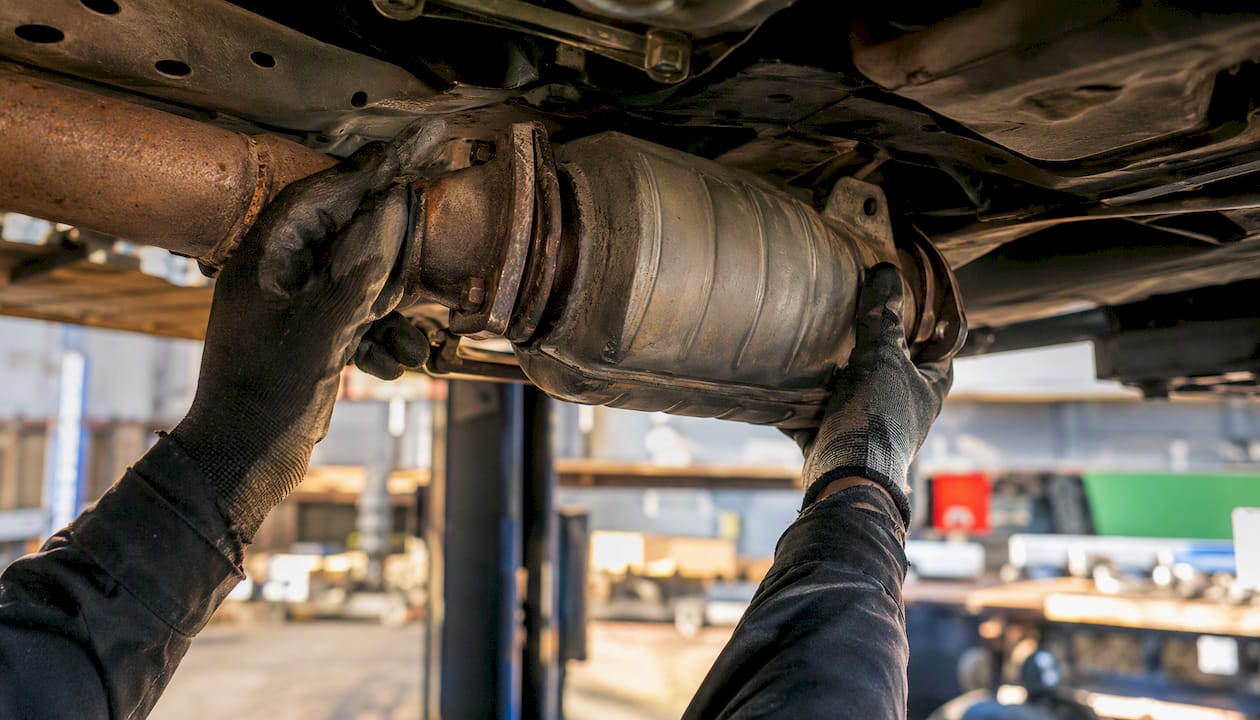
High-value parts are removed and cataloged before the shell goes anywhere near a crusher. Engines, transmissions, alternators, starters, catalytic converters, and electronic modules are tested and either resold through the used-parts market or sent to remanufacturers. Catalytic converters alone can be worth hundreds of dollars because they contain platinum, palladium, and rhodium. For many recyclers, parts harvesting generates more revenue than the scrap metal weight of the entire shell.
6. Crushing and compacting
Once stripped, the body is flattened by a hydraulic baler or crusher to reduce its volume for transport. The compacted block is then loaded onto a truck and moved to a shredding facility.
7. Shredding and mechanical separation
Industrial shredders reduce the compacted car body to fist-sized fragments in seconds. After shredding, magnets pull out ferrous steel and eddy-current separators eject non-ferrous metals like aluminum and copper. What remains — a mix of plastics, foam, glass, and rubber — is called automotive shredder residue (ASR).
8. Material sorting and dispatch
Ferrous steel goes to steel mills. Aluminum and copper go to non-ferrous smelters. ASR is the problem fraction: some of it goes to energy recovery, some to landfill, and emerging optical sorting and flotation technologies are slowly improving recovery rates. The circular-economy framing is accurate — recovered steel feeds construction and appliance manufacturing — but ASR remains an unresolved challenge for the industry.
Legal and administrative steps when you scrap a car in Canada
Scrapping a car isn't just dropping it off. There are paperwork obligations on both sides of the transaction, and getting them wrong can leave you liable for a vehicle you no longer own.
What you must do as the owner:
- Provide proof of ownership (vehicle registration or title) at handover
- Remove your license plates — in Alberta, plates stay with the owner, not the vehicle
- Notify your insurer and cancel or adjust your coverage
- Keep a copy of the bill of sale or removal receipt and the Certificate of Destruction (CoD) reference
What a licensed facility must provide:
- A Certificate of Destruction (or its provincial electronic equivalent), which notifies the provincial vehicle registry that the vehicle has been permanently removed from the road
- Proof that the facility is licensed to handle end-of-life vehicles
The CoD is the document that transfers liability away from you and prevents the vehicle from ever being re-registered. Without it, you remain the registered owner on paper — which can create problems if the vehicle is later found abandoned or involved in an incident.
Provincial procedures vary. Alberta, British Columbia, Ontario, and Quebec each have their own registry systems and timelines for processing a destruction notification. The procedural names differ (some provinces call it a "salvage declaration," others a "deregistration notice"), but the outcome is the same: the VIN is flagged as destroyed. Check your provincial motor vehicle agency's website or Transport Canada's guidance for the rules that apply to your registration.
Where parts and materials from a scrapped car actually end up
Industry estimates place the recoverable portion of a vehicle at a large portion, with the remaining 25% typically ending up as ASR destined for landfill or energy recovery. The U.S. automotive recycling sector alone contributes millions of tons of steel per year to mills — Canada's contribution follows the same proportional logic.
| Material | End destination | Notes |
|---|---|---|
| Ferrous steel | Steel mills | Used in construction, appliances, new vehicles |
| Aluminum | Non-ferrous smelters | High-value stream; separated by eddy-current |
| Copper wiring | Non-ferrous smelters | Stripped by hand or during shredding |
| Lead-acid battery | Battery recyclers | Lead and acid both reclaimed |
| EV/hybrid battery pack | Battery recyclers or second-life refurbishers | Requires specialist handling |
| Catalytic converter | Precious-metal reclaimers | Platinum, palladium, rhodium recovered |
| Refrigerant | Licensed recovery facilities | R-134a and R-1234yf captured and reclaimed |
| Tires | Dedicated tire recyclers | Ground into crumb rubber for playground surfaces, asphalt |
| Fluids (oil, coolant) | Licensed reclaimers | Re-refined or safely disposed |
| ASR (plastics, foam, glass) | Landfill, energy recovery, or advanced sorting | Emerging optical and flotation recovery improving rates |
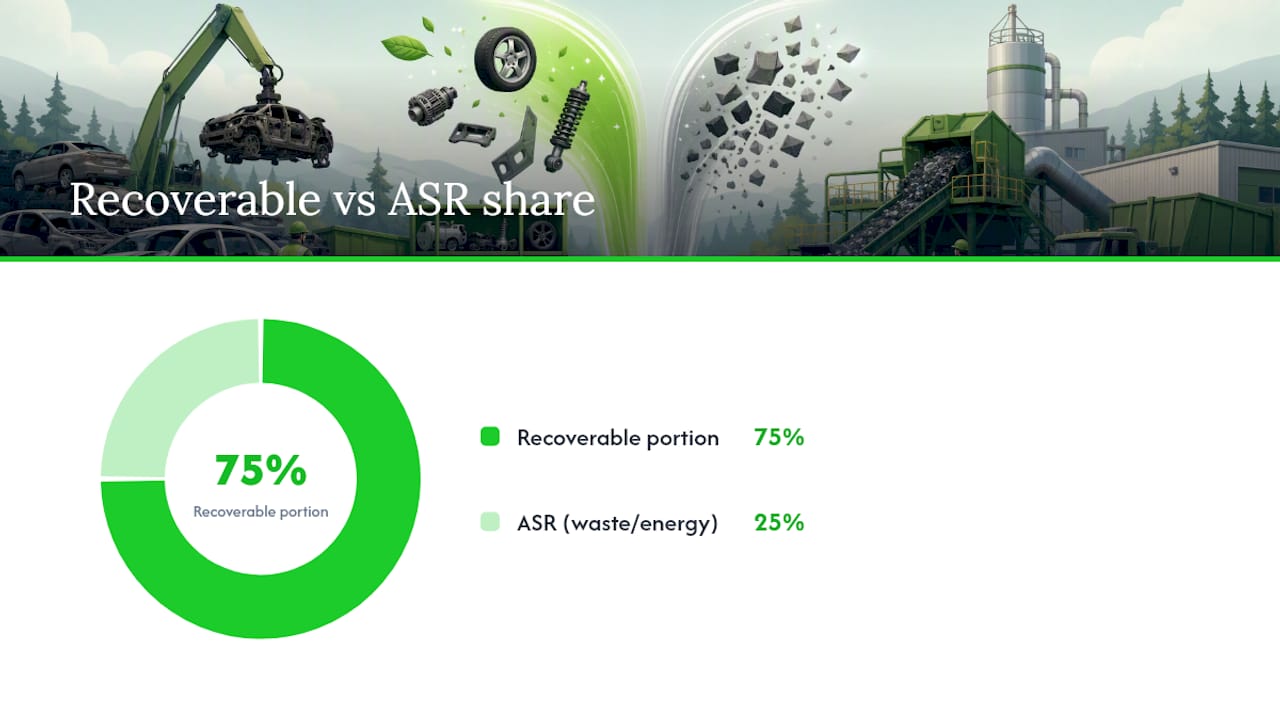
After shredding, magnets and eddy-current separators handle the bulk of metal separation automatically. The non-metal fraction — ASR — is where the industry still has work to do.
Environmental risks and why proper depollution matters
A single car contains roughly nine liters of engine oil, several liters of coolant, brake fluid, and transmission fluid, plus a lead-acid battery, refrigerant, and pyrotechnic airbag modules. If any of those reach soil or groundwater, the contamination can persist for years.
The main environmental risks from improper scrapping:
- Engine oil and transmission fluid leaching into soil and groundwater
- Coolant (ethylene glycol) poisoning local water sources — it's sweet-smelling and attractive to animals
- Refrigerant release contributing to greenhouse gas emissions; R-134a has a global warming potential roughly 1,430 times that of CO2
- Lead-acid battery acid corroding soil and contaminating runoff
- Airbag modules exploding unexpectedly during crushing, injuring workers and damaging equipment
- Mercury switches (found in pre-2003 vehicles) releasing toxic mercury if not removed before shredding
Warning: Informal or "backyard" scrapping — crushing a car without proper depollution — can result in provincial environmental fines, civil liability for contamination cleanup, and fire risk from fuel or refrigerant exposure. In Alberta, penalties under the Environmental Protection and Enhancement Act can be substantial.
A properly licensed facility's depollution checklist covers: fuel drain, oil and transmission fluid drain, coolant drain, brake and power steering fluid removal, refrigerant capture, battery disconnection and removal, airbag deployment or safe removal, and mercury switch extraction. Ask any facility you use whether they follow this sequence — a reputable one will answer without hesitation.
How scrap value is determined and tips to maximize what you get
The cash offer you receive reflects two things: what the recycler can sell from the car and what the remaining steel is worth at current commodity prices. Those two numbers move independently, which is why offers vary more than most people expect.
Primary value drivers:
- Catalytic converter condition and type — precious metal content varies significantly by make and model
- Engine and transmission condition — a running drivetrain is worth far more than a seized one
- Battery condition — for EVs and hybrids, state of health matters; a degraded pack may cost more to recycle than it's worth
- Gross vehicle weight — more steel means a higher base scrap price
- Current scrap metal market price — steel commodity prices fluctuate, directly affecting what you're offered
Practical tips to get the most money:
- Check the scrap value of your car against current Calgary-area metal prices before accepting any offer
- Get at least two or three quotes — offers can vary by $100 or more for the same vehicle
- Keep all four tires on the car; some buyers deduct for missing wheels
- Leave the catalytic converter in place unless you have a buyer lined up and can remove it safely and legally
- Disclose hybrid or EV battery condition upfront — hiding it rarely helps and can void an offer
Pro Tip: If you want the most money for your scrap car, ask the buyer specifically what they're paying for the catalytic converter separately. That single component often accounts for a disproportionate share of the total offer on older trucks and SUVs.
The trade-off between maximum cash and convenience is real. Selling parts individually takes time, tools, and knowledge. For most owners, the math favors a single cash-for-junk transaction — especially when pickup is free and same-day.
Typical timeline and fees to expect
Timeline from pickup to paperwork:
- Same day: Pickup, inspection, and cash payment (with services like Southsidecashforjunkcars)
- 1–2 weeks: CoD or destruction notification processed and registry updated
- 2–4 weeks: Specialist battery recycling or catalytic converter processing completed at the facility
- Varies by province: Registry update confirmation — Alberta is generally faster than some eastern provinces
Fees to watch for:
- Pickup/towing fees: Often waived by cash-for-junk services; confirm before booking
- Administrative fees: Some facilities charge for paperwork; reputable ones don't
- EV battery handling surcharge: A legitimate charge at some facilities for high-voltage pack removal
- Deductions for missing parts: If the catalytic converter, battery, or wheels are already gone, expect a lower offer
Payment is typically immediate cash on pickup with local services. Bank transfers or cheques are common with larger dismantlers and may take a few business days to clear. Get the payment method confirmed in writing before the truck arrives.
What "scrapped" means for your registration, insurance, and vehicle history
Once the CoD is issued and the provincial registry is notified, the vehicle's VIN is permanently flagged as destroyed. It cannot be re-registered, retitled, or insured as a road vehicle. That flag shows up on vehicle history reports — relevant if you're ever asked about the vehicle's status or if a dispute arises later.
Your aftercare checklist:
- Cancel or adjust insurance on the day of pickup; you're paying for coverage on a vehicle you no longer own
- Keep the CoD reference number — this is your proof that the vehicle was properly destroyed
- Keep the bill of sale or removal receipt — shows the date of transfer and the buyer's identity
- Confirm the buyer is a licensed facility — ask for their provincial license number or ARC membership
- Check your provincial registry after 2–3 weeks to confirm the vehicle no longer appears under your name
If the CoD is delayed or the registry update is slow, you remain the registered owner in the interim. That matters if the vehicle is moved, ticketed, or involved in an incident between pickup and registry update. Keep your receipt as proof of the transfer date.
How a local Calgary cash-for-junk service processes your car
Here is what the workflow looks like when you use a local service like Southsidecashforjunkcars in Calgary or Okotoks:
- Contact and quote: Call or submit your vehicle details online. You'll get an offer based on make, model, year, condition, and current scrap metal prices — no obligation.
- Confirm pickup: Schedule same-day or next-day pickup. Have your proof of ownership (registration or title), government-issued ID, and keys ready.
- Vehicle inspection on arrival: The driver confirms the vehicle matches the description and checks for any undisclosed damage or missing components.
- Instant payment: Cash is paid on the spot before the vehicle is loaded. No waiting for a bank transfer.
- Free towing: The vehicle is loaded and transported to a licensed processing facility at no charge to you.
- Depollution and processing: The facility follows the full depollution sequence — fluids, refrigerants, batteries, airbags — before parts harvesting and shredding, in line with Automotive Recyclers of Canada standards.
- CoD issued: The Certificate of Destruction is submitted to the Alberta registry, removing the vehicle from your name.
- Confirmation: You receive documentation confirming the vehicle has been processed. Keep it.
What to have ready: proof of ownership, your ID, the keys (all sets if possible), and a note of any hybrid or EV systems. Remove personal items before the truck arrives — the facility won't return them.
Ask any service you use whether they are ARC-affiliated or provincially licensed, and request the CoD reference number after processing. A legitimate operation will provide both without hesitation.
Does scrapping a car affect your Canadian taxes?
For most private vehicle owners, scrapping a car has no direct income tax consequence. You're disposing of a personal-use property, and the Canada Revenue Agency (CRA) generally does not require you to report a gain on a personal vehicle unless the proceeds exceed your original adjusted cost base — which is rare with a junk car.
Key points for Canadian vehicle owners:
- No GST/HST collected on scrap sales to licensed recyclers in most cases — the transaction is typically treated as a sale of used goods between individuals and a registered business
- Business owners who scrap a vehicle used for commercial purposes may need to report the disposition and adjust their Capital Cost Allowance (CCA) claim; consult a tax professional for your specific situation
- Charitable vehicle donations (to registered charities that accept vehicles) can generate a donation receipt for the fair market value, which may be claimed as a charitable tax credit — but this only applies when the recipient is a CRA-registered charity, not a for-profit recycler
- No provincial scrap incentive programs are currently active in Alberta as of 2026; programs like Retire Your Ride operated federally in the past but are no longer running
When in doubt, confirm your situation with a CRA-registered tax professional. The rules around business-use vehicles and capital property are specific enough that general guidance doesn't substitute for advice tailored to your file.
Options for donating or selling usable parts before scrapping
Scrapping the whole car at once is the fastest route, but it isn't always the highest-value one. If you have time and some mechanical knowledge, there are legitimate alternatives worth considering.
Selling parts privately: Platforms like Facebook Marketplace and Kijiji are active markets for used auto parts in Calgary. Doors, hoods, fenders, seats, and infotainment systems sell well when they're in good condition. Engines and transmissions attract buyers too, though they require more effort to remove and ship safely.
Selling to a local dismantler directly: Some Calgary-area dismantlers will buy specific components outright — particularly catalytic converters, alternators, and starters. Prices are lower than private sale but the transaction is faster and requires no shipping.
Donating to a registered charity: A handful of Canadian charities accept vehicle donations and issue tax receipts for the fair market value. The vehicle doesn't need to run. The charity typically arranges pickup and either auctions the car or sells it to a recycler, with proceeds funding their programs. Confirm the organization is a CRA-registered charity before donating — not every "vehicle donation" program qualifies.
What to keep in mind: Removing parts yourself voids the completeness of the vehicle for any subsequent scrap offer. If you pull the catalytic converter and then sell the shell, the recycler will deduct its value from the offer. The math only works in your favor if you can sell the part for more than the deduction — which is sometimes true for catalytic converters, less often for body panels.
For most owners, the top cash route is a full-vehicle sale to a licensed buyer. Partial dismantling makes sense only when you have a specific buyer lined up for a specific part before the car leaves your driveway.
Why proper scrapping matters more than most people realize
There is a version of this process that looks fine on the surface — someone shows up, pays you cash, takes the car — and turns out to be anything but. Unlicensed operators skip depollution, dump fluids, and sell the shell to a shredder without issuing a CoD. You get paid, but you stay on the registry as the owner. The fluids end up in the ground. The airbags go through the shredder live.
The licensed route isn't just better for the environment. It's the only one that actually ends your legal relationship with the vehicle. Every step in the process — from the refrigerant capture to the CoD submission — exists because someone, somewhere, learned the hard way what happens when it's skipped.
Southsidecashforjunkcars handles this chain daily in Calgary and Okotoks: same-day pickup, no hidden fees, immediate cash, and processing at licensed facilities. The three-step process (contact, pickup, payment) is straightforward by design, because the back-end work — depollution, paperwork, registry notification — is handled on your behalf.
Ready to scrap your car in Calgary or Okotoks?
Southsidecashforjunkcars offers instant cash for junk cars in Calgary and Okotoks, regardless of condition. Running, non-running, damaged, failed inspection, or hybrid — the service covers all of it with free same-day towing and no hidden fees.
Here is what you get: a cash offer based on your vehicle's actual condition and current scrap metal prices, same-day pickup at no charge, and full handling of the paperwork including CoD submission to the Alberta registry. You don't need to arrange towing, chase down forms, or wonder whether the facility is licensed. Bring your proof of ownership, your ID, and your keys. The rest is handled.
To get started, get a cash offer for your junk car today — or call directly to schedule same-day pickup in Calgary or Okotoks.
Sources
- Auto Recycling: Everything You Need to Know | Driving
- Vehicle recycling - Wikipedia
- How Are Crushed Cars Recycled? The Full Process Explained | ScrapGo
- What Really Happens to a Car After It's Removed? | The New Auto Mag
- Autopartsbreakers
This article is general information, not a substitute for advice from a qualified lawyer. Consult a qualified legal professional about your own circumstances before acting on anything here.
FAQ
What happens to cars that are scrapped in Canada?
Scrapped cars are depolluted (fluids, batteries, and airbags removed), stripped of usable parts, then crushed and shredded so metals can be recovered and sent to steel mills. A Certificate of Destruction is issued to remove the vehicle from the provincial registry.
How much do you get for scrapping a car in Alberta?
Scrap offers depend on the vehicle's weight, condition, catalytic converter type, and current steel commodity prices, so amounts vary. Getting two or three quotes from licensed Calgary-area buyers is the most reliable way to confirm a fair price for your specific vehicle.
How do you get the most money when scrapping a car?
Preserve the catalytic converter, keep all four tires on the vehicle, and get multiple quotes before committing. Disclosing accurate condition upfront — including hybrid or EV battery status — prevents deductions at pickup and keeps the offer intact.
What happens to unsold cars at Canadian dealerships?
Unsold dealer inventory is typically wholesaled to auction houses like ADESA or Manheim Canada, redistributed to other dealers, or sold to fleet buyers. Only vehicles that are genuinely end-of-life or uneconomical to repair eventually reach the scrap recycling chain.
Do I need to notify my insurer when I scrap a car?
Yes. Cancel or adjust your coverage on the day of pickup. Keep the bill of sale and CoD reference as proof of the transfer date in case your insurer has questions about the policy end date.