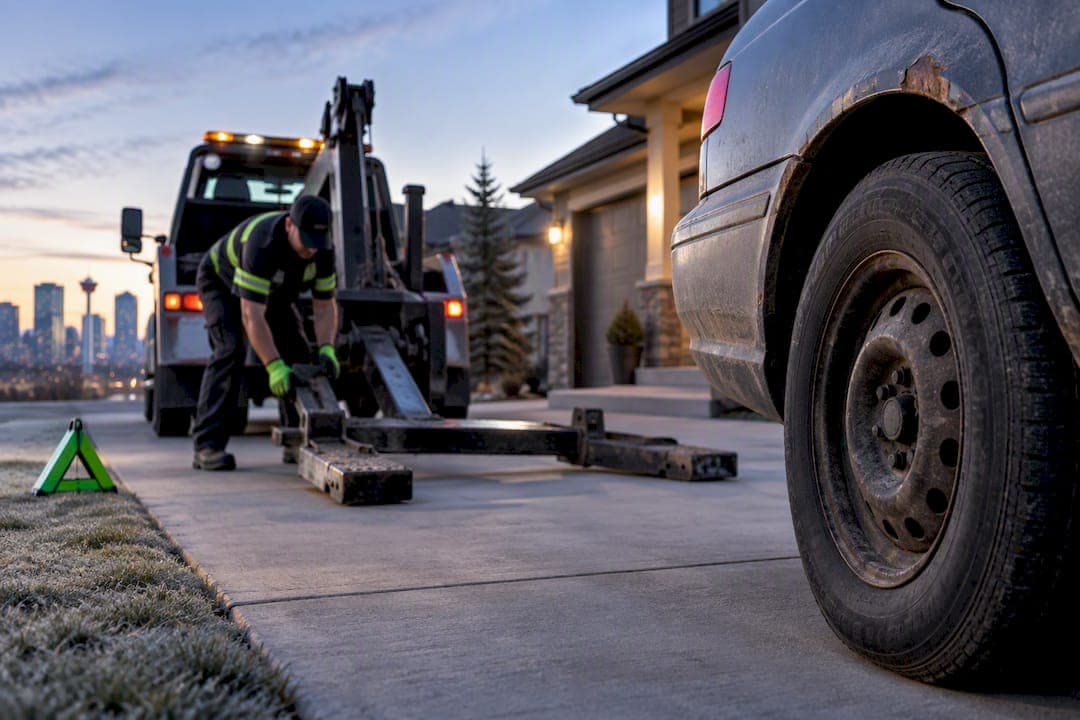
Drive your car to the scrapyard only if it's roadworthy, currently insured, and close by. If it doesn't start, steer, or stop reliably, or your insurance has lapsed, arrange towing or let the buyer handle pickup instead. That single check, roadworthy versus not, decides almost everything else in this process.
TL;DR:
- Driving to the scrapyard is safe only if the vehicle is fully functional, insured, registered, within a few miles, and you possess all ownership documents.
- If the car has active brakes, steering, lights, and no fluid leaks, driving it yourself can save time and money; otherwise, towing becomes necessary.
- Tow costs typically range from $75 to $200, with flatbed or recovery options adding up to $150, especially if the vehicle is immobilized or damaged.
- Preparing your vehicle with ownership proof, clearing personal items, and confirming pickup details ensures a smooth transaction and avoids delays.
- Letting the seller or buyer handle pickup usually minimizes risks and liabilities, especially for cars with mechanical issues or safety concerns.
Table of Contents
- Should I Drive My Car to the Scrapyard or Arrange a Tow?
- What Legal and Safety Checks Come Before Driving a Junk Car?
- What Do Tow Trucks Cost, and Which Type Do You Need?
- What Should You Prepare Before Pickup or Drop-Off?
- Why a Same-Day Pickup Service Often Beats DIY Towing
- Why Letting the Buyer Handle Transport Usually Wins
- How to Get Pickup From Southsidecashforjunkcars
- Sources
- FAQ
Should I Drive My Car to the Scrapyard or Arrange a Tow?
The decision comes down to five yes-or-no questions. Answer all of them "yes" and driving is usually fine. Any "no" and you need a tow or a pickup service.
- Does the car roll forward and steer without fighting you?
- Do the headlights, brake lights, and turn signals all work?
- Is the vehicle currently insured and registered in your name?
- Is the scrapyard or buyer within a few miles, on roads you know?
- Do you have the title or ownership paperwork secured for the trip?
If you checked every box, driving carefully to the yard costs nothing extra and saves a little time. If you're missing even one, the math flips. A stuck caliper, a blown headlight, or a lapsed policy turns a free trip into a liability problem, and the few dollars you might save skipping a tow rarely covers a fender-bender, a ticket, or a stranded car on a shoulder. When in doubt, call the yard first. Most, Southsidecashforjunkcars included, will tell you upfront whether pickup is included and whether your vehicle qualifies for a simple drop-off instead.
What Legal and Safety Checks Come Before Driving a Junk Car?
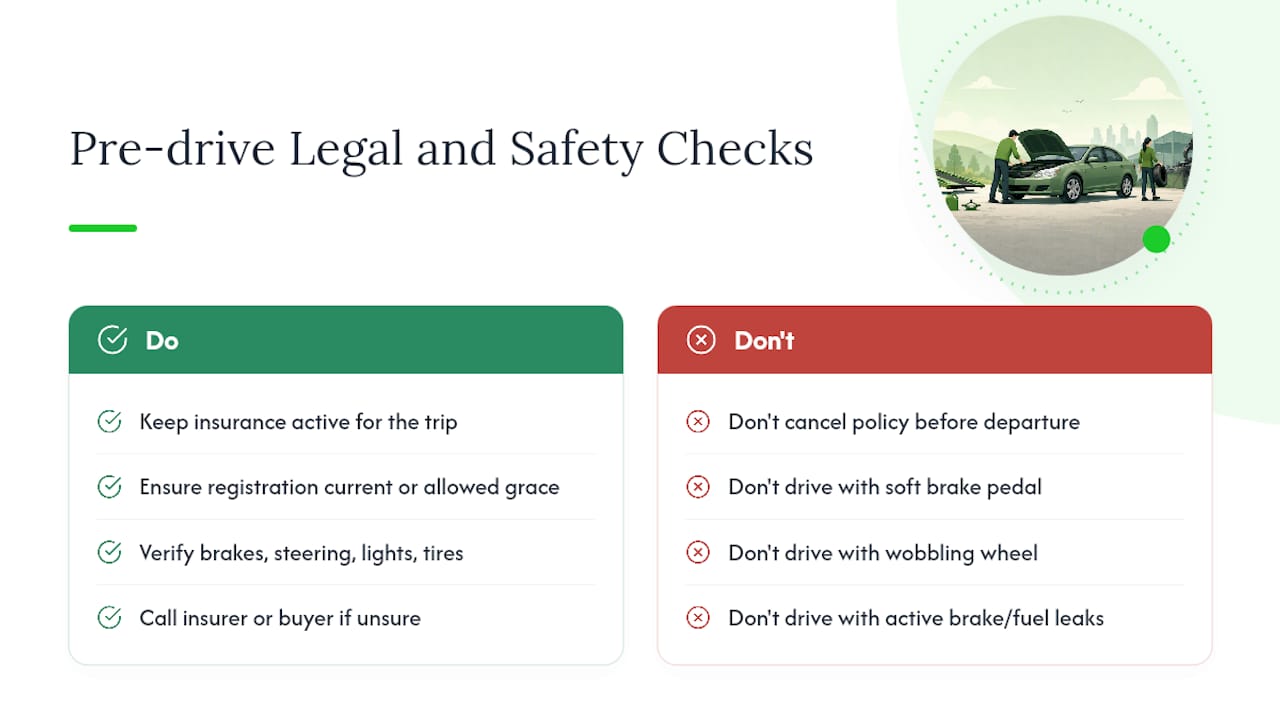
Insurance and registration come first. Your policy needs to be active for the entire trip, and canceling it before the car physically leaves your property can void coverage if something goes wrong en route. Registration should also be current unless your state or province allows a short grace window for transporting a vehicle to a buyer.
Beyond paperwork, the car needs to pass a basic functional check. Brakes should stop the vehicle in a straight line without pulling or grinding. Steering should respond without excessive play. Headlights, brake lights, and turn signals all need to work, since a burned-out bulb is an easy ticket on a car already headed for scrap. Tires need enough air and tread to hold the road, and there should be no active fluid leaks, especially brake fluid or fuel, that could create a hazard behind you.
A car with a soft brake pedal, a wheel that wobbles, or a check-engine light tied to a transmission fault isn't a "drive it carefully" situation. Those are tow situations. If you're unsure whether your local rules allow moving an unregistered or previously failed-inspection vehicle on public roads, call your insurer or the buyer before you turn the key. A five-minute phone call beats a roadside citation.
What Do Tow Trucks Cost, and Which Type Do You Need?
Three main methods move a disabled car: wheel-lift, flatbed, and winch recovery. A wheel-lift cradles the front or rear tires and drags the other end on its wheels, which works fine for a car that rolls freely. A flatbed loads the entire vehicle onto a deck, which is required when a car won't roll, has a locked steering column, missing wheels, or all-wheel drive that can't be put in neutral safely. Winch recovery comes into play when a vehicle is stuck off the roadway, in a ditch, or in a spot a truck can't back up to directly.
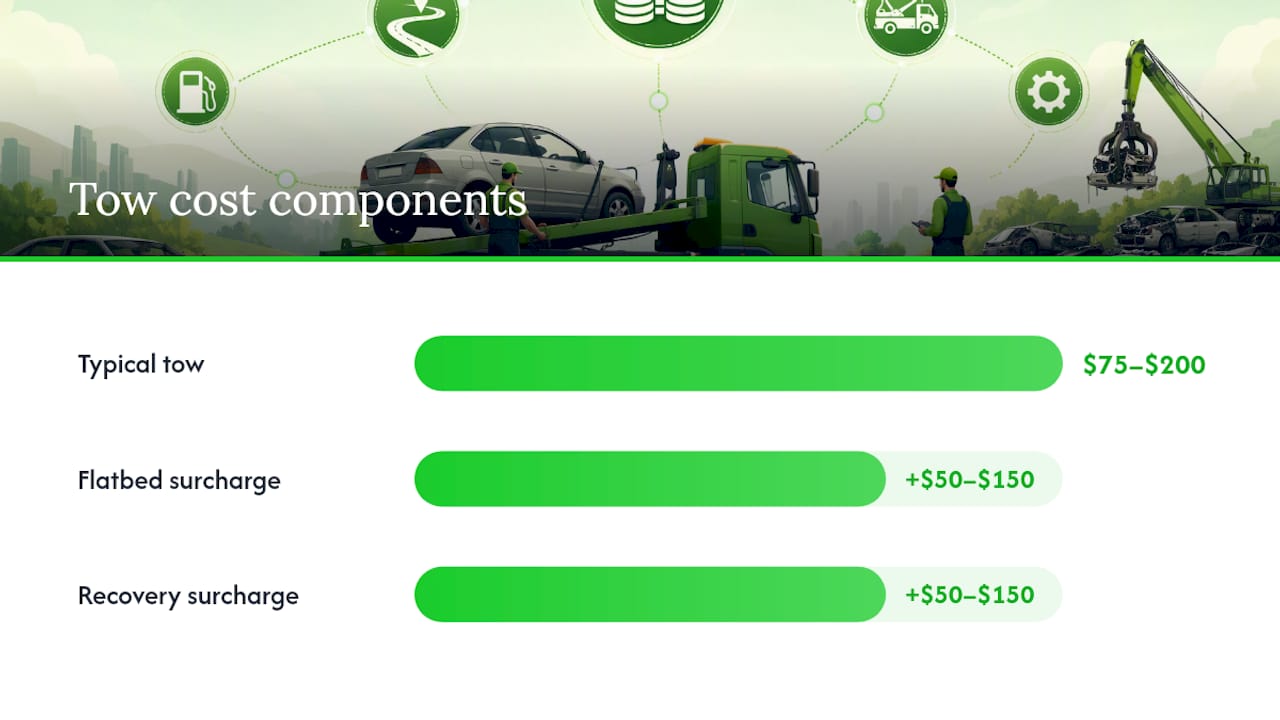
Pricing follows a predictable pattern nationally. A typical local tow of a non-running car costs between $75 and $200, built from a base hook-up fee of $75 to $125 plus $3 to $7 per mile after that. Flatbed and recovery work can add another $50 to $150 on top, since it takes more time and specialized equipment.
| Cost factor | Typical range |
|---|---|
| Base hook-up fee | $75–$125 |
| Per-mile charge (beyond base distance) | $3–$7 |
| Flatbed surcharge | $50–$150 |
| Recovery fee (off-road, stuck, or seized wheels) | $50–$150 |
Distance, seized brakes, and missing wheels are what push a tow into the higher end of that range. Flatbeds become mandatory when a car can't roll safely, since forcing a wheel-lift on a locked axle risks tearing up the drivetrain.
Pro Tip: If your tires are flat but the wheels turn and steering works, adding a little air and pointing the car nose-out sometimes lets a driver use a cheaper wheel-lift instead of a flatbed. Only try this if it's safe to do, since a car that won't hold air or has a bent rim needs a flatbed regardless.
What Should You Prepare Before Pickup or Drop-Off?
Scrap car removal generally follows the same sequence everywhere: you contact the buyer, they verify you own the vehicle, they load and haul it away, and you get paid on the spot with services like Odkup vozil — takojšnje plačilo. Preparing a few things in advance keeps that sequence from stalling out on pickup day.
- Gather your title or proof of ownership along with a photo ID; most buyers need both to transfer ownership legally in one visit.
- Clear out personal items from the trunk, glovebox, and under the seats, since anything left behind is usually gone for good once the tow truck pulls away.
- Unlock the doors and make sure the driveway or curb is accessible, especially if a flatbed needs a straight approach.
- Photograph the odometer and the car's overall condition before the driver arrives, so there's no dispute about condition later.
- Confirm three things with the buyer before pickup day: that towing is included free in the quoted price, how you'll be paid, and the exact pickup window.
That last point matters more than people expect. Reputable junkyards build pickup into the purchase price, so you shouldn't be paying a separate tow bill on top of what they're offering for the car. If a buyer asks you to cover towing separately, treat that as a red flag and get a second quote.
Why a Same-Day Pickup Service Often Beats DIY Towing
Certain junk car buyers run a three-step process: you contact the team with your vehicle details, a driver comes for pickup, and you get paid in cash on the spot. That structure removes the two biggest headaches in this whole decision, finding a tow truck and trusting the payment will actually show up.
Same-day pickup and instant cash matter most for cars that don't run, sit in tight driveways, or have a mechanical fault that makes driving risky. Instead of researching tow companies, comparing quotes, and coordinating schedules, you make one call and the logistics become someone else's problem. For a car with seized brakes or a dead transmission sitting in a spot a flatbed can barely reach, that's not a convenience. It's the difference between getting paid this week and spending weeks chasing a solution yourself.
Why Letting the Buyer Handle Transport Usually Wins
Most sellers overestimate how much they'll save by driving the car themselves and underestimate the risk of doing it. In ordinary cases, letting the yard or buyer handle pickup is the smarter default, since it shifts liability, equipment, and scheduling off your plate entirely. The one lesson worth repeating from years of watching these transactions: the sellers who get burned aren't the ones who called a tow company too early. They're the ones who tried to save $100 driving a car with a sketchy brake pedal three miles down a busy road.
— Franz
How to Get Pickup From Southsidecashforjunkcars
Southsidecashforjunkcars is the direct alternative to DIY towing for anyone in Calgary or Okotoks who doesn't want to price out tow trucks or gamble on a shaky brake line. Instead of you coordinating a wheel-lift or flatbed, calling around for quotes, and hoping the payment clears, one call gets you a same-day pickup and cash in hand before the truck leaves your driveway.
When you reach out, have three things ready: your location, the vehicle's condition (running, non-running, missing parts), and your title or proof of ownership. That's enough for the team to dispatch the right equipment the first time, whether that's a standard tow or a flatbed for a car that won't roll. Pickup includes free towing built into the offer, with no hidden fees added after the fact, and payment happens on-site once the vehicle is loaded.
If your car qualifies, start at the Southsidecashforjunkcars landing page, or head straight to the junk car buyer page to get a same-day quote and lock in a pickup window.
Sources
For deeper detail beyond this guide, three references are worth keeping handy: towingcosts.com's cost breakdown for current tow pricing by method, Progressive's junkyard selling guide for confirming pickup norms, and AAA's roadside service page if you're weighing a membership as a towing fallback.
- Cost to Tow a Junk Car (2026) - Flatbed, Distance & Who Pays
- How To Sell a Car to a Junkyard | Progressive
- Scrap Car Removal: A Complete Guide for 2026 Owners - Quick Scrap Metal
FAQ
What's the most a junkyard will pay for a car?
Payout depends heavily on scrap metal weight, working parts, and local demand, so there's no fixed ceiling. Getting quotes from a couple of buyers, including Southsidecashforjunkcars for Calgary and Okotoks vehicles, is the only reliable way to know your car's actual value.
Is it better to scrap or sell my old car?
If the car runs well and has real resale value, selling to a private buyer or dealer usually nets more money. If it's non-running, damaged, or failed inspection, scrapping for instant cash is typically faster and avoids the hassle of listing a car nobody wants to buy privately.
What's the cheapest way to tow a car?
A short, local tow with a wheel-lift truck is generally the cheapest option, running toward the lower end of the $75 to $200 typical range. The cheapest option overall is usually free pickup from a junk car buyer, since that cost gets built into your payout instead of coming out of your pocket separately.
What is the minimum scrap value of a car?
Scrap value tracks current metal prices and vehicle weight, so it shifts with the market and varies by region. Rather than guessing, contact a local buyer directly for a same-day quote based on your specific vehicle's condition and weight.