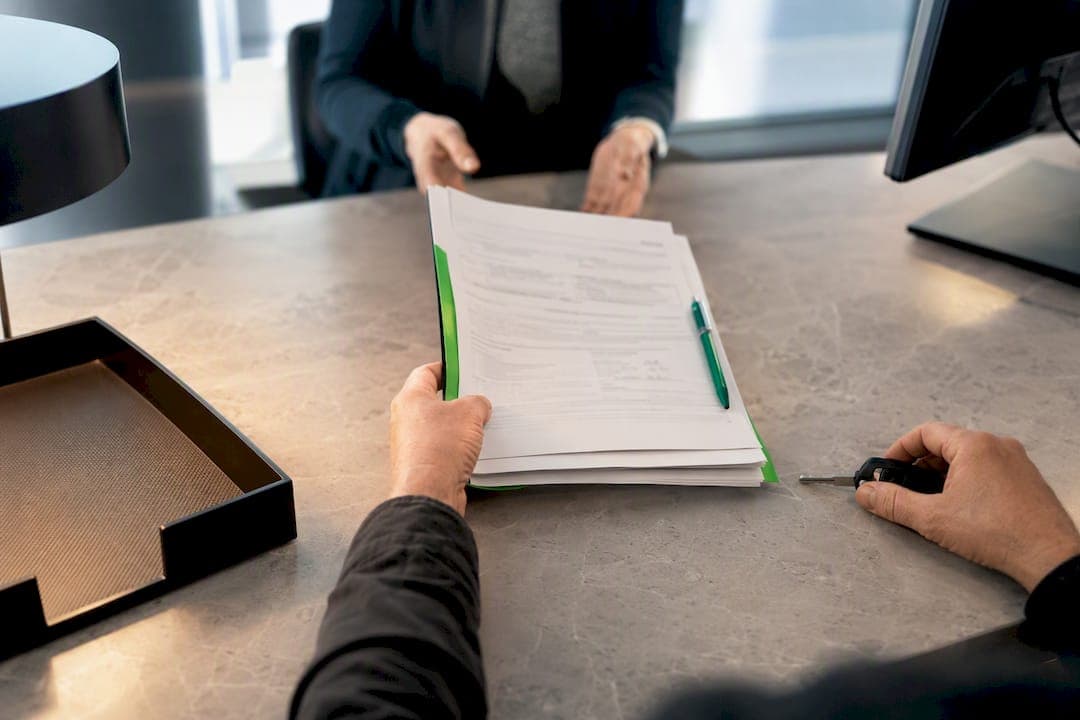
Liability after a scrap car pickup in Canada doesn't end the moment the tow truck leaves your driveway. It ends when you have documented proof of transfer, usually a bill of sale plus a certificate of destruction or scrap certificate, and your provincial registry reflects the vehicle as sold or scrapped. Until then, remove your plates, keep every receipt, and notify your insurer and lender if a lien exists.
TL;DR:
- You must have a signed bill of sale, a certificate of destruction, and proof that your provincial registry reflects the vehicle as scrapped or sold to legally sever ownership liability.
- Removing your plates immediately and notifying your insurer and the registry within the first few days are critical to prevent future liabilities or fines.
- If the vehicle has a lien, you need a lien release from the lender before scrapping, and missing or incomplete ownership documents can delay or block proper transfer.
- Confirm with your provincial registry that the record updates correctly, and keep all documentation in one easily accessible place for future reference.
- A licensed recycler providing a signed bill of sale and scrap certificate is essential to avoid liability issues from fraud, theft, or paperwork discrepancies.
Table of Contents
- What Documents Prove You No Longer Own the Vehicle
- Your First 7 Days After Pickup: A Checklist
- How Liens and Missing Titles Complicate Liability
- Province-by-Province Differences That Affect Your Liability
- If the Car Was Scrapped Without Authority or Fines Show Up Later
- What a Properly Documented Pickup Looks Like
- Get It in Writing or Don't Bother
- Sources
- FAQ
What Documents Prove You No Longer Own the Vehicle
A pickup with a handshake and a check isn't enough. If the vehicle later shows up in a police report, a bylaw dispute, or a lender's paperwork, you need a paper trail that proves you handed off both possession and legal responsibility on a specific date.
Start with the bill of sale. This is the backbone document, and it needs to include the VIN, the full legal names of both buyer and seller, the date of transfer, both signatures, and the sale amount (even if it's a scrap value of a few hundred dollars). Courts and insurers treat an incomplete bill of sale as weak evidence, so don't accept a scribbled note on a receipt pad.
Next comes the certificate of destruction, sometimes called a scrap certificate depending on your province. This document confirms a licensed recycler has processed the vehicle for parts or scrap metal, and it's what tells the provincial registry the car is gone for good, not just resold to someone else. Without it, the vehicle can technically still exist "on paper," which leaves the door open for future registration fees or, worse, someone else's traffic violations landing on your record.
If a lender still shows a security interest on your vehicle, you need a lien release before anything else happens. The vehicle certificate of title proves ownership and is required by reputable recyclers, and without a clean title, you may not be able to legally transfer the car at all.
Lost your title? Most provinces allow a duplicate title application through the registry, though processing times vary. In the meantime, keep:
- Photos of the vehicle's condition and VIN plate taken before pickup
- Payment records (e-transfer confirmation, cash receipt, or check stub)
- A signed pickup receipt noting mileage, date, and condition
Related reading: what happens to a scrapped car in Canada breaks down which documents actually sever your legal tie to the vehicle.
Your First 7 Days After Pickup: A Checklist
The week after pickup is when most owners either lock in their liability protection or leave a gap that comes back to bite them months later. Here's the order that actually matters.
- Remove your plates immediately. Don't let the tow driver take the car with plates still attached. Provincial rules vary on where plates go next (some registries want them returned, others let you keep them for a replacement vehicle), but the plates should never leave with the vehicle; for detailed guidance on this process, see Buying from an out-of-province dealer: What Canadians need to know.
- Notify your provincial registry. Whether that's ServiceOntario, an Alberta registry agent, ICBC in British Columbia, or the SAAQ in Quebec, you need the record updated to show the vehicle as sold or scrapped, not just sitting idle under your name.
- Call your insurer the same day or the next business day. Cancel or amend your policy and ask for written confirmation of the cancellation date and any refund owed. This date matters because if a claim ever surfaces from before pickup, your coverage status at that moment is what gets scrutinized.
- File everything in one place. A folder (physical or digital) with the bill of sale, scrap certificate, insurance cancellation notice, and buyer contact information saves you hours if a dispute ever surfaces.
- Verify the registry update. Most provinces let you check vehicle status online or by phone within a few business days. Confirm the record actually reflects "sold" or "scrapped" rather than assuming the paperwork processed correctly.
Pro Tip: Call your insurer before you call the registry. Insurers sometimes need proof of a completed sale before they'll issue a cancellation, and having that confirmation in hand speeds up the registry update too.
Skipping the insurance cancellation is the single most common mistake owners make here. A canceled title doesn't automatically cancel your policy, and paying premiums on a car you no longer own is money wasted on coverage that offers you nothing.
How Liens and Missing Titles Complicate Liability
A lien on the vehicle changes everything about your timeline. A vehicle with an active title loan or lien cannot legally be scrapped until the lender issues a formal lien release, and scrapping an encumbered vehicle without that release can expose you to civil claims or, in rarer cases, criminal charges tied to fraud or theft of secured property.
The fix is straightforward but takes time. Contact your lender for a payoff statement, settle the remaining balance, and request the formal lien release in writing. Some provinces then require that release to be recorded with the motor vehicle office before the registry will issue a junk or scrap certificate, so build in a few extra administrative days rather than assuming same-day processing.
If your title is missing entirely, most registries offer a duplicate title application, though a handful of provinces allow an alternative junk vehicle certificate process for vehicles clearly headed to a scrap yard rather than resale. Check with your provincial registry directly, since the paperwork name and process differ by jurisdiction.
For owners with a financed or liened vehicle, work through this before calling a scrap buyer:
- Request a written payoff statement from your lender
- Pay off the balance or confirm settlement terms
- Get the lien release in writing, not just a verbal confirmation
- Confirm the release is recorded with your provincial registry
- Only then arrange pickup and finalize the bill of sale
Province-by-Province Differences That Affect Your Liability
Canada doesn't run one uniform system for ending vehicle liability, and the differences trip up a lot of owners who assume the process is the same everywhere.
- Ontario: Plates get surrendered or kept depending on your choice, and ServiceOntario handles the registry update. Provincial registries require surrendering or cancelling plates and updating vehicle records, and Ontario recyclers typically issue a certificate confirming vehicle destruction.
- Alberta: Registry agents (private businesses licensed by the province) process the paperwork rather than a single government office. Confirm with your registry agent whether they issue a formal scrap or dismantling certificate, since documentation practices vary by agent.
- British Columbia: ICBC handles both insurance and registration in one system, which actually simplifies things. Canceling your policy through ICBC often triggers the registry update in the same transaction.
- Quebec: The SAAQ manages plate surrender and registration separately from insurance, so you'll need to contact them directly to confirm the vehicle record reflects the sale.
Check your specific provincial registry's website for record confirmation tools before assuming the paperwork went through. A phone call costs you five minutes; an unresolved registry entry can cost you months of chasing down a fine that shouldn't exist. If you're dealing with a vehicle pickup where the registered owner isn't present, Alberta's rules for junk car pickup without the owner cover that specific scenario in more depth.
If the Car Was Scrapped Without Authority or Fines Show Up Later
Discovering your vehicle was scrapped through fraud, theft, or a buyer who never filed the paperwork is rare, but it happens, and the response window matters.
- Check the VIN against your provincial registry to see whether any transfer was actually recorded.
- Contact the recycler first to ask what documentation they have on file. Then escalate to the provincial registry if the record doesn't match.
- File a police report immediately if you suspect theft or fraud. Court disputes over stolen vehicles that were scrapped show how quickly liability questions get murky once a vehicle is destroyed without a paper trail.
- Gather every photo, receipt, and written message you have before filing a claim or contacting a lawyer.
Pro Tip: Save text messages and emails with the buyer, not just the final bill of sale. If a dispute ever surfaces, the timeline of communication often matters as much as the paperwork itself.
If fines or tolls appear on your name after a legitimate transfer, that's usually a registry lag rather than an actual liability issue, but confirm the registry update rather than assuming it will resolve itself.
What a Properly Documented Pickup Looks Like
Southsidecashforjunkcars runs a three-step process built around exactly the kind of paper trail this article recommends: contact, pickup, payment. At contact, you get a firm cash offer based on your vehicle's condition. At pickup, the crew inspects the vehicle, confirms the VIN, and provides a signed bill of sale on the spot. Payment happens the same day, in cash, before the vehicle leaves your property.
That sequence matters because it gives you a bill of sale with a real signature and date the moment the vehicle changes hands, not a promise to send paperwork later. Choosing a transparent, established recycler over an unlicensed buyer reduces your legal exposure significantly, since licensed operators have a business reason to keep accurate records and issue proper documentation. For more on when a vehicle qualifies for this kind of pickup, see five signs your car is officially a junker.
Get It in Writing or Don't Bother
The advice you'll find most often online treats scrap pickup like a simple transaction: the tow truck shows up, you get paid, you're done. That framing is what causes the liability confusion in the first place. Pickup is the easy part. The paperwork is the part that actually protects you, and most owners skip it because nobody explains why a lien release or a registry confirmation matters until something goes wrong.
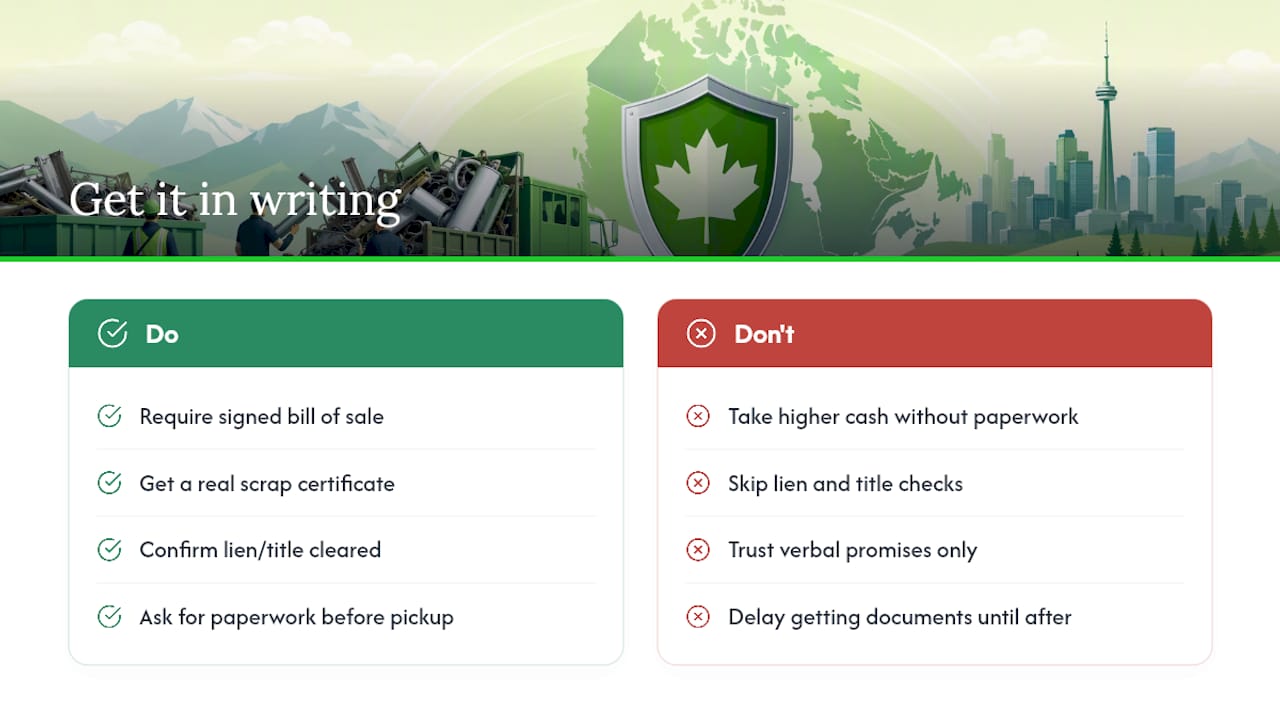
The lien and title sequence deserves more attention than it gets. Owners fixate on getting a fair cash offer and forget that an unresolved lien can turn a routine scrap sale into a civil dispute months later.
If you're arranging pickup, prioritize the documentation over the dollar amount. A same-day cash offer that comes with a signed bill of sale and a real scrap certificate is worth more than a slightly higher offer from a buyer who won't put anything in writing. Ask for the paperwork before the truck arrives, not after.
— Franz
This article is general information, not a substitute for advice from a qualified lawyer. Consult a qualified legal professional about your own circumstances before acting on anything here.
Sources
- End-of-Life Vehicle: How to scrap, donate, or recycle it - LegalClarity
- Provincial Scrap Car Removal Rules in Canada: Complete Guide - Greenway Auto Recycling
FAQ
Are You Liable for a Car After You Sell It in Ontario?
You can remain liable in Ontario if you haven't properly transferred ownership through ServiceOntario or if you kept the plates on the vehicle after the sale. A completed bill of sale and registry update are what actually end your liability, not the sale itself.
Can You Scrap a Car Without Ownership in Ontario?
No. Reputable recyclers require proof of ownership, typically the vehicle's title, before accepting a vehicle for scrap, and scrapping a car without a clean title can create legal trouble for both the seller and the recycler.
What Happens if My Scrapped Car Was Financed or Had a Lien?
You need a formal lien release from your lender before the vehicle can be legally scrapped, and some provinces require that release to be recorded with the registry before a certificate of destruction is issued.
What Should I Do if I Get a Fine for a Car I Already Scrapped?
Check your provincial registry to confirm the vehicle is marked as sold or scrapped, then contact the registry directly with your bill of sale and scrap certificate as proof. A lingering fine is usually a registry lag rather than a genuine liability issue, but you need documentation to resolve it quickly.
Does the 25-Year Rule Apply to Canadian Scrap Vehicles?
The import rule for older vehicles applies to bringing cars into Canada from other countries, not to scrapping a vehicle you already own domestically. It has no bearing on liability after a scrap pickup.