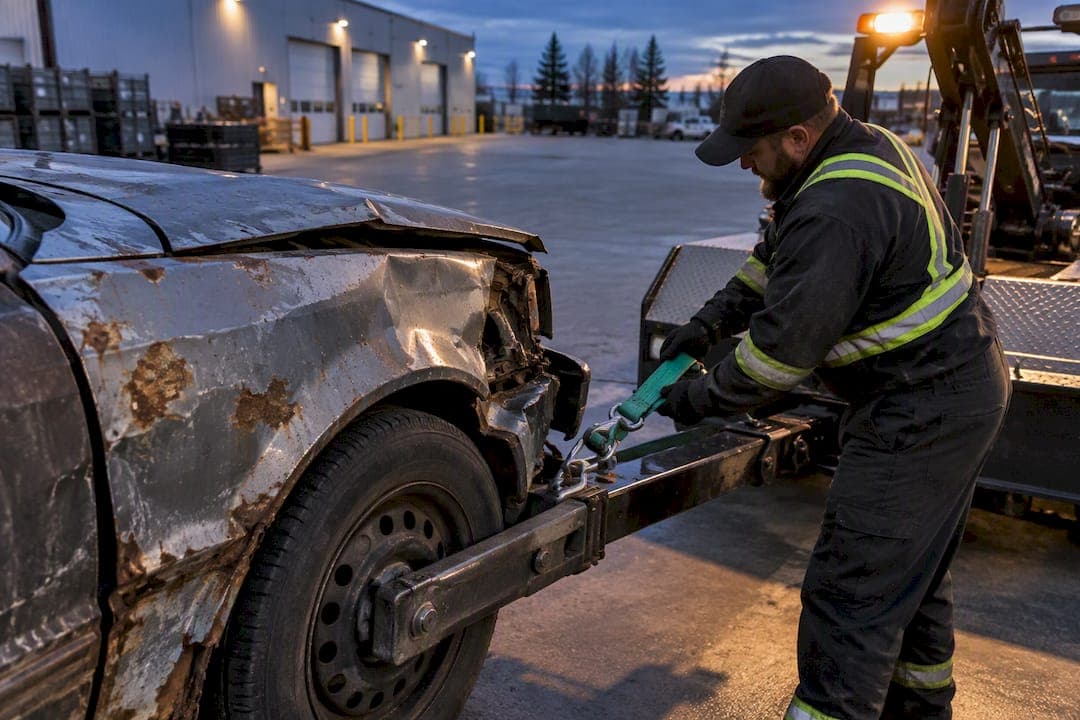
In Alberta, a vehicle qualifies as a junk car when it's no longer roadworthy and only holds value for parts or scrap, typically flagged "non-repairable" in the province's vehicle registry. Two markers confirm it: an official EVeR status change or visible structural, mechanical, or flood damage that makes repair uneconomical. If your vehicle fits either description, your next move is a quick EVeR check or a quote from a licensed recycler.
TL;DR:
- Vehicles with severe flood, structural, or mechanical damage that make repair uneconomical or unsafe qualify as non-repairable or junk cars in Alberta, and cannot be used for parts afterward.
- An official EVeR status change or visible damage are key indicators, while age alone does not determine junk status, only condition and repair feasibility matter.
- Alberta law requires a licensed salvage inspection for vehicles branded salvage, focusing on structural integrity and mechanical safety, with costs often exceeding vehicle value if repairs are necessary.
- Re-registration, registration cancellation, and plate return must be completed properly, and unpaid fines or tickets attached to the vehicle remain your responsibility even after scrapping or selling.
- Owners should compare scrap value, cash offers, and inspection estimates before proceeding with any sale or salvage, typically netting between 200 and 1,500 dollars for scrap cars.
Table of Contents
- What Legally Counts as a Junk Car in Alberta?
- How Alberta Brands Salvage, Rebuilt, and Non-Repairable Vehicles
- When Do You Need a Salvage Vehicle Inspection?
- Canceling Registration, Fees, and Outstanding Fines
- How to Actually Get Rid of a Junk Car in Alberta
- A Local Take on the Repair-or-Scrap Decision
- Getting Cash for a Junk Car in Calgary or Okotoks
- Sources
- FAQ
What Legally Counts as a Junk Car in Alberta?
Alberta doesn't have one single statute that spells out "junk car" in plain language, but industry-standard criteria from the American Association of Motor Vehicle Administrators line up closely with how the province treats these vehicles in practice. A car counts as junk when repair no longer makes financial or mechanical sense, or when damage rules out safe road use entirely.
The most common scenarios owners run into:
- A blown engine or a transmission that's failed completely, where replacement costs more than the car is worth.
- Frame or structural damage severe enough to compromise occupant protection in a future collision.
- Flood damage, which corrodes electrical systems and can cause failures months after the water recedes.
- A vehicle that's technically drivable but so rusted through or mechanically worn that it only has value stripped for parts.
Age alone doesn't make a car junk. A well-maintained 20-year-old sedan can still pass inspection and hold real resale value. What matters is condition, not the model year on the title.
How Alberta Brands Salvage, Rebuilt, and Non-Repairable Vehicles
Alberta tracks every status change through EVeR, the province's electronic vehicle reporting system run by Alberta Transportation. This registry is the authoritative record of whether a car is active, salvage, or non-repairable, and it's the first place to check before you assume anything about a vehicle's status.
The three brands work like this:
- Salvage: damaged enough that an insurer wrote it off, but potentially repairable and re-registrable after passing inspection.
- Rebuilt: a former salvage vehicle that passed a licensed salvage inspection and can legally return to the road.
- Non-repairable (parts only): damage is too extensive for safe repair; the vehicle can never be re-registered for highway use again.
Here's the detail most owners miss: once a vehicle is branded non-repairable in EVeR, Alberta law prohibits using its structural components to build or repair another highway-registered vehicle. That frame or those body panels are done, permanently, even if they look fine.
When Do You Need a Salvage Vehicle Inspection?
An SV inspection becomes mandatory the moment an insurer declares your vehicle salvage, and it's also required if you're trying to bring a previously salvaged car back onto Alberta roads. A licensed technician at an approved facility conducts the inspection, not a general mechanic, and not a dealership service department.
Here's what the process actually involves:
- Structural review: technicians check the frame and unibody against OEM or I-CAR repair standards, especially anywhere occupant protection was compromised.
- Mechanical fitness check: brakes, steering, suspension, and drivetrain all get evaluated for safe operation.
- Documentation and outcome: the inspection either upgrades the status to "rebuilt," clearing it for re-registration, or confirms "non-repairable," ending the vehicle's road life for good.
Inspections can take up to four hours, and repair work done to OEM or I-CAR standard often runs higher than owners expect.
Pro Tip: Before you pay for a salvage inspection, get a repair estimate first. If fixing the vehicle to inspection standards costs more than it's worth on the used market, you've just saved yourself an inspection fee on a car headed for parts anyway.
Canceling Registration, Fees, and Outstanding Fines
Once you've decided a vehicle is done, the paperwork side matters as much as the mechanical verdict. Canceling your registration and returning your plates is straightforward, but the details trip people up.
- Registration cancellation in Alberta carries a $10 fee plus GST.
- Any refund owed to you can be offset by unpaid fines tied to that plate or registration.
- You remain personally responsible for outstanding parking tickets or citations until they're resolved. Selling or scrapping the car doesn't erase the debt.
- Before handing a vehicle to a recycler or cash buyer, have your proof of ownership and a signed transfer ready, along with confirmation the plates are returned or canceled on your end.
Clear any citations before you finalize a sale. A buyer taking the car off your hands does nothing to settle a ticket still attached to your name in the registry.
How to Actually Get Rid of a Junk Car in Alberta
Once you've confirmed a vehicle meets the criteria, three realistic paths open up, and which one fits depends on the car's condition and how fast you need it gone.

Scrap or recycler sale works best for vehicles that are truly parts-only. You're paid based on scrap metal weight and any salvageable components, and payouts vary widely depending on make, model, and market conditions. Alberta sellers typically net $200 to $1,500 from scrap vehicles, depending on those factors.
Cash-for-cars removal suits owners who want the vehicle gone fast without haggling over parts value. A legitimate service pays on-site, tows for free if that's what was promised upfront, and handles the transaction in one visit. You'll still need your ownership documents ready, the same as any private sale, and it's worth confirming proof of ownership requirements before the tow truck shows up.
Salvage inspection and repair only makes sense if the damage is moderate and the car has enough resale value to justify the inspection and repair cost. If you're facing a blown engine or transmission failure, this route rarely pencils out.
Whichever path you choose, compare the scrap-metal value against any cash offer, check the towing terms in writing, and confirm the paperwork transfer happens the same day plates come off. Certified recyclers also handle fluid draining and airbag deployment procedures correctly, which matters for environmental compliance even on a car headed for the crusher.
Pro Tip: Get one quote from a cash-for-cars buyer and one estimate from a licensed inspection facility before you commit to either route. The gap between the two numbers usually makes the decision for you.
A Local Take on the Repair-or-Scrap Decision
Owners hang onto damaged cars longer than they should, usually because repair feels like the responsible choice. But once your repair estimate plus inspection and administration costs climb past what the car is worth on Alberta's used market, you're paying to keep a losing asset. Talk to a licensed technician before you pay for a salvage inspection. Get more than one number, whether that's a cash offer or an inspection estimate, before you sign anything. If you want a quick gut check first, this rundown of five signs your car is officially a junker covers the practical red flags worth knowing.
— Franz
Getting Cash for a Junk Car in Calgary or Okotoks
A cash-for-cars service is a straightforward alternative to a drawn-out private sale for Calgary and Okotoks owners sitting on a vehicle that fits the criteria above. No listing photos, no fielding lowball texts for weeks. The process typically involves contact, vehicle pickup, and payment, whether the car runs or not.
Before the tow truck arrives, have your ownership documents ready and confirm the terms of towing and fees. Ask for the offer in writing before pickup, especially if you're comparing it against a scrap-metal quote or a separate inspection estimate. If you're not sure whether your vehicle needs a tow truck or you can drive it in yourself, this guide to getting a junk car towed walks through the logistics.
Ready to see what your vehicle is worth? Get a cash offer on your junk car and find out if same-day pickup works for your schedule.

Sources
For definitive answers on your specific vehicle, check EVeR for status records, the salvage vehicle inspection page for licensed technician requirements, and the registration cancellation page for fees and refund rules. A licensed inspection directory can also help you locate an approved facility near you.
- EVeR — Alberta Transportation electronic vehicle reporting
- Alberta
- AAMVA — Salvage and junk vehicles
FAQ
Can I Sell My Car for $1 in Alberta?
Yes, you can legally sell a vehicle for $1 or any nominal amount in Alberta, since there's no minimum sale price requirement. What matters for the transaction is a signed ownership transfer and proof of ownership, not the dollar figure on the bill of sale.
What Are the Rules for Salvage Vehicles in Alberta?
A salvage vehicle must pass inspection by a licensed technician at an approved facility before it can return to the road. Passing upgrades its status to "rebuilt" in EVeR; failing keeps it salvage or reclassifies it as non-repairable, meaning it's parts-only from that point forward.
Is a 20-Year-Old Car Considered a Classic in Canada?
Classic car status typically depends on provincial or insurer definitions, and many classifications start around 20 years old, though this varies by insurer and by province. Age alone doesn't determine whether a car is a classic or a junker. Condition, roadworthiness, and mechanical soundness matter far more than the number on the title.
Is It Illegal to Wash Your Car in Your Driveway in Alberta?
Municipal bylaws vary across Alberta, and some cities restrict driveway car washing to limit runoff into storm drains, particularly during water restrictions. Check your specific municipality's bylaws, since this is a local rule rather than a provincial one and has no bearing on whether a vehicle qualifies as junk.
What Happens to Parking Tickets on a Junk Car After I Sell It?
You remain personally liable for unpaid parking tickets or citations tied to your registration until they're resolved, even after the car changes hands. Canceling your registration carries a $10 fee, and any refund can be reduced to cover outstanding fines, so clear tickets before finalizing a sale.