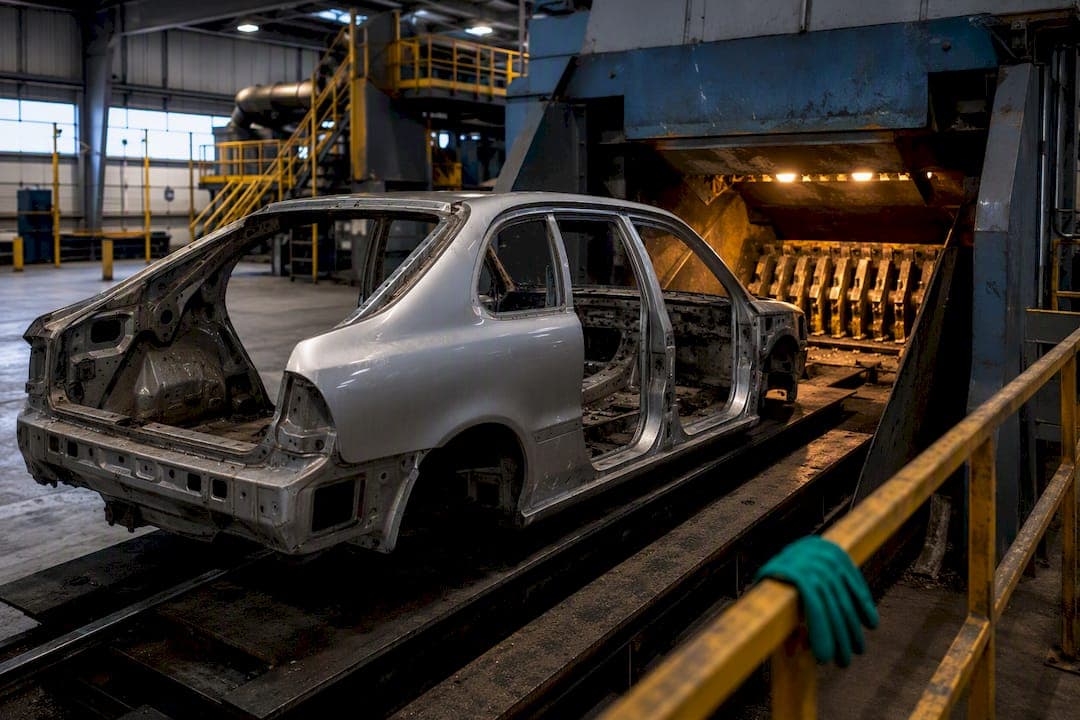
The fastest lawful way to scrap a car in Alberta is to get written quotes from a licensed local cash-for-junk buyer or the national Retire Your Ride program, then hand over the vehicle with your ID, registration, and a bill of sale. Most Calgary and Okotoks owners can have cash in hand and the car gone within a couple of days. Have your registration or proof of ownership and a government photo ID ready before you call. Southside Cash For Junk Cars is one local option worth calling first for a same-day quote.
TL;DR:
- Scrap value in Alberta varies from a few hundred to several thousand dollars, depending on the vehicle's condition and valuable parts like the catalytic converter.
- Legitimate scrap car transactions require proof of ownership, including registration, government ID, and a bill of sale, with depollution standards strictly enforced.
- Using local cash-for-junk buyers offers same-day pickup, instant payment, and minimal paperwork, especially for damaged or non-running vehicles.
- Quotes should be obtained in writing with detailed vehicle information and mechanical issues, and it's essential to verify buyer identity and receipt at pickup.
- Vehicles left stationary for over 72 hours can be treated as abandoned, making timely scrapping essential to avoid legal or environmental complications.
Table of Contents
- Quick Options: Legitimate Routes To Scrap Or Sell Your Car In Alberta
- What Documents Do You Need To Scrap A Car In Alberta?
- How Do You Prepare Your Vehicle And Complete The Sale?
- How Are Scrap Car Prices Calculated In Alberta?
- What Legal And Environmental Rules Apply When Scrapping A Car In Alberta?
- How Do You Responsibly Recycle Non-Metal Parts?
- Do You Need To Report Scrapping A Car On Your Taxes In Alberta?
- Publisher Perspective: What An Honest Local Buyer Actually Looks Like
- How Southside Cash For Junk Cars Gets Your Car Gone Today
- Sources
- FAQ
Quick Options: Legitimate Routes To Scrap Or Sell Your Car In Alberta
Not every "junk" car should go straight to the crusher. Which route makes sense depends on how much time you have, what shape the car is in, and how much paperwork you're willing to deal with.
- Sell privately: Best payout if the car runs, has a clean title, and you have a few weeks to field calls and lowball offers.
- Part it out yourself: Highest total return if you're mechanically inclined, but it eats weeks and requires a place to store a stripped shell.
- Local cash-for-junk buyers: Fastest option for non-running, damaged, or failed-inspection vehicles. Usually same-day pickup, minimal paperwork, cash or e-transfer on the spot.
- Licensed salvage or recycling yards: Solid for vehicles with genuine scrap value; some pay slightly more for weight but may take longer to schedule pickup.
- National programs like Retire Your Ride: They match you with a certified recycler, typically provide quotes within a couple of business days, and include free towing, though the payout tends to run lower than a buyer who wants your catalytic converter or an intact engine.
If your car still starts and drives, private sale almost always wins on price. If it's dead, damaged, or sitting on a failed inspection, a local buyer or alternatives to a traditional salvage yard will get it gone faster with far less hassle.
What Documents Do You Need To Scrap A Car In Alberta?
You don't need a mountain of paperwork, but you do need to prove the car is legally yours before anyone hands you cash for it.
- Vehicle registration in your name (or the registration transfer section completed if you recently bought it).
- Government-issued photo ID matching the name on the registration.
- Bill of sale if you're the buyer selling on a car you purchased informally, or one you'll sign when handing the vehicle to the recycler.
- Lien check, if the vehicle was financed. A buyer or recycler will want confirmation there's no outstanding lien before taking the car.
Licensed recyclers and national programs verify ownership against your registration and ID before they'll agree to a pickup. That's a good thing. It protects you from disputes later and it's exactly what a certified recycling program checks before dispatching a tow.
Lost your registration? You're not out of luck. Alberta registry agents can pull a registration history that confirms you as the owner of record, and a signed statutory declaration of ownership can fill the gap in most cases. Call a registry agent office, explain the situation, and ask specifically for a vehicle ownership search tied to your name.
Pro Tip: Keep a photo of your registration and ID on your phone before pickup day. Buyers often ask for a quick picture to confirm details over text, and it speeds up the whole transaction.
How Do You Prepare Your Vehicle And Complete The Sale?
Getting the best offer, and avoiding a wasted afternoon, comes down to giving buyers accurate information upfront and knowing what to expect at pickup.
Getting quotes:
- Photograph the car from all four corners, the odometer, the engine bay, the undercarriage if accessible, and any visible damage or rust.
- Note the year, make, model, mileage, whether it runs, and any known mechanical issues (blown engine, failed transmission, dead battery).
- Send this to two or three local buyers and ask for a written quote with a clear offer window (many buyers hold a quote for 48 hours).
- Confirm what the quote includes: free towing, payment method, and any conditions that could lower the price on pickup day.
What to have ready on pickup day:
- Signed bill of sale
- Government ID
- All sets of keys
- Odometer reading confirmed and matching your quote
- Personal belongings removed from the trunk, glove box, and under seats
One thing sellers consistently overlook: verify who's actually showing up. Ask the buyer's name, confirm it matches the company you spoke with, and get a printed or digital receipt at the moment of handover, not "later by email." A reputable buyer issuing clear documentation at pickup is what separates a legitimate transaction from one that could come back to bite you if the vehicle is later linked to an unpaid ticket or impound fee under your name.
After the tow truck pulls away, three things matter:
- Cancel your insurance the same day, once you have proof the car is gone.
- Keep the bill of sale and receipt for at least a few years. It's your proof if any registration question ever surfaces.
- Check your registration status with Alberta registry to confirm the vehicle no longer shows as active under your name.
For trucks or heavier vehicles, the process runs largely the same, though towing a truck sometimes requires a bigger flatbed and a slightly longer scheduling window.
How Are Scrap Car Prices Calculated In Alberta?
Two buyers can look at the same car and offer wildly different numbers, and it's rarely because one is trying to cheat you. Scrap value comes from two separate pools: raw metal weight and recoverable parts.
The shell itself is worth its weight in steel, which fluctuates with commodity markets. But the real money is usually in the parts a recycler can resell directly: an intact engine or transmission, a working catalytic converter, alloy wheels, and a functional battery. A car with a seized engine is worth far less than one with the same body damage but a drivetrain that still turns over.
Alberta buyers and scrap guides report offers ranging widely, from a few hundred dollars for a stripped or badly rusted shell up to several thousand for a newer vehicle with valuable intact components, according to Alberta market data on scrap car pricing. That spread is exactly why getting more than one quote matters.
A few things push your offer higher:
- Close-up photos of the catalytic converter and engine bay, since these parts drive a disproportionate share of many quotes.
- Full honesty about mechanical issues upfront. A surprise on pickup day gives the buyer an excuse to lower the offer.
- Leaving the catalytic converter intact. Cutting it out yourself to sell separately almost always nets you less than what a buyer would pay for the whole vehicle, once you account for the labor and the black market it feeds into.
Watch for red flags: a buyer who won't give a number until they arrive, one who refuses to put an offer in writing, or one who wants to pay in cash with no receipt at all. Legitimate operators are transparent because they have nothing to hide. For a fuller breakdown of what drives Calgary-area pricing, see this guide to scrap car values.
What Legal And Environmental Rules Apply When Scrapping A Car In Alberta?
Handing off your car isn't just a handshake and a tow truck. A few rules protect you and the environment, and skipping them can create headaches months later.
- Confirm the transfer on paper. A signed bill of sale and pickup receipt are your proof the vehicle left your name, which matters if a ticket or towing fee ever gets mistakenly attached to it.
- Insist on depollution. Licensed recyclers remove battery, fluids, and refrigerant before crushing a vehicle, a step vehicle recycling standards treat as mandatory, not optional. Skipping it risks environmental fines that can trace back to whoever last owned the car.
- Know the abandonment rule. Under Alberta traffic guidance, a vehicle left stationary for more than 72 consecutive hours can be treated as abandoned, so don't let a dead car sit indefinitely on the street while you shop for quotes.
- National programs still follow local rules. Retire Your Ride routes your car to a certified recycler, but you still need the same ownership documents and depollution standards apply either way.
How Do You Responsibly Recycle Non-Metal Parts?
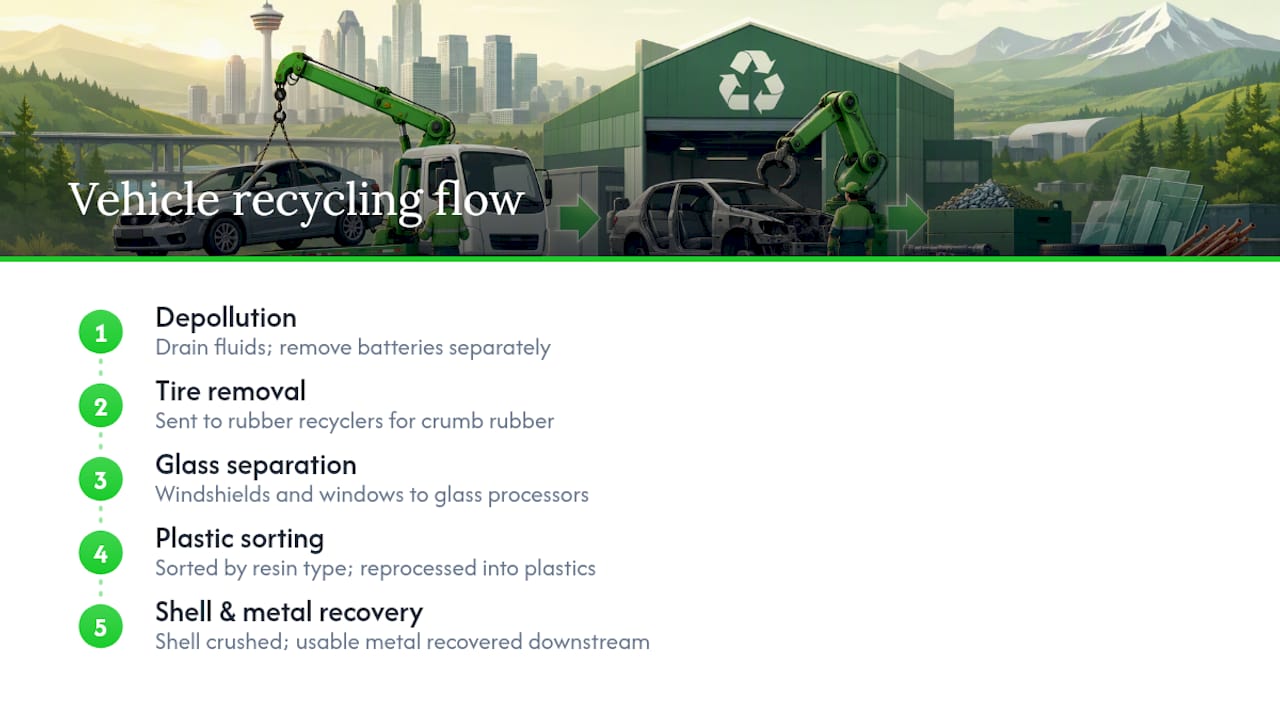
Not everything in your car is steel, and the plastic, glass, rubber, and upholstery inside it need somewhere to go besides a landfill. Licensed recycling facilities handle this as part of the standard process, but it helps to know what actually happens.
Tires get pulled and sent to dedicated rubber recyclers, often ending up as crumb rubber for playground surfacing or road material. Glass windshields and windows are separated and processed through specialty glass recyclers rather than mixed with the metal stream. Plastic bumpers, dashboards, and interior trim get sorted by resin type where possible and reprocessed into new plastic products.
Fluids and batteries fall under the depollution step covered above and get drained and handled separately before the shell ever reaches the crusher, part of the same vehicle recycling process that recovers usable metal downstream.
If you're doing any of the stripping yourself before selling the shell, don't toss old tires or a dead battery in household trash. Most Alberta municipalities and auto parts retailers accept used batteries and tires for recycling, often at no charge. A legitimate scrap buyer or recycler handles all of this for you as part of the sale, which is one more reason selling the whole vehicle intact usually beats trying to strip and dispose of parts on your own.
Do You Need To Report Scrapping A Car On Your Taxes In Alberta?
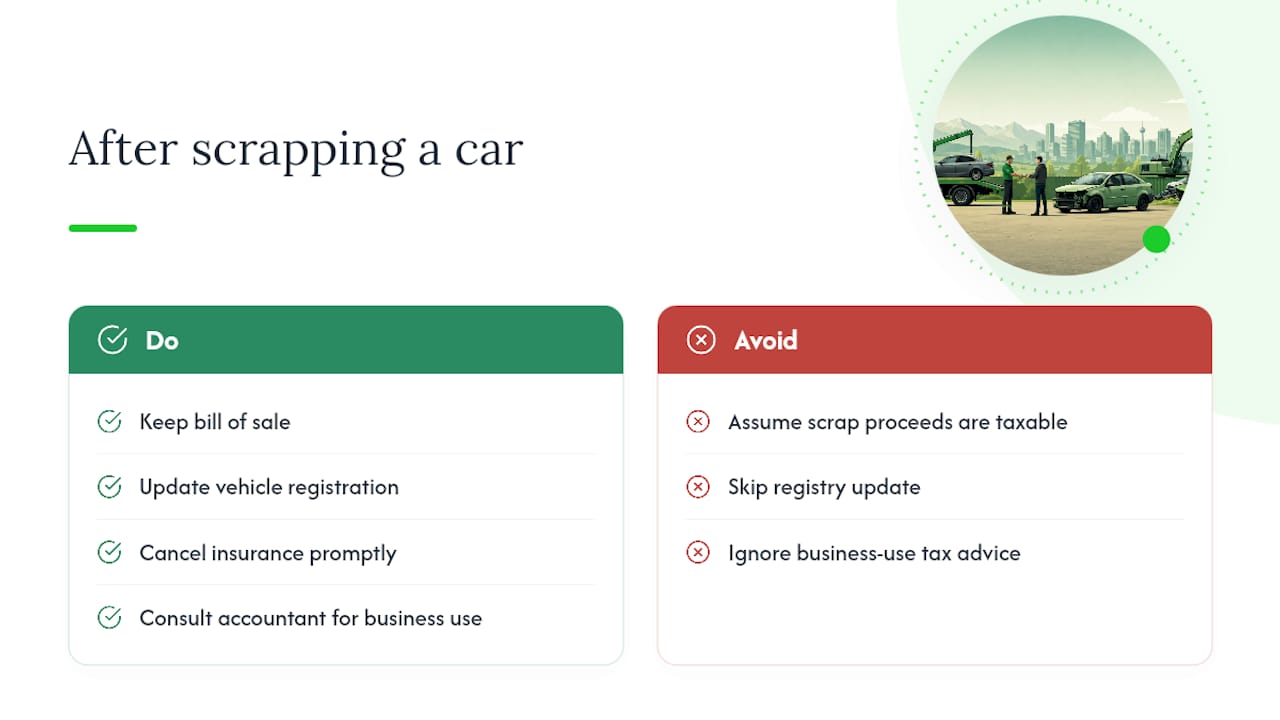
For most Alberta owners, selling a personal vehicle for scrap is not a taxable event. Cash you receive for scrapping a car you owned and drove personally is generally treated like selling any used personal item. There's typically no income tax owed on the money.
Where it gets more specific is registration. Once the vehicle is gone, update its status with Alberta registry so it no longer shows as an active, insured vehicle under your name. This isn't a tax filing, but skipping it can leave you exposed to unnecessary insurance premiums or, in rare cases, questions if the vehicle identification number ever resurfaces in a dispute.
If the vehicle was used for business purposes, capital cost allowance claims, or was part of a fleet, the tax treatment changes and it's worth a quick conversation with an accountant familiar with Alberta rules before you finalize the sale. For a typical personal vehicle sitting in a driveway, though, the paperwork burden after scrapping is light: keep your bill of sale, confirm the registration update, and cancel the insurance. That's the whole administrative tail.
Publisher Perspective: What An Honest Local Buyer Actually Looks Like
Most of the friction in scrapping a car isn't the process itself. It's not knowing which buyer to trust on the phone. A typical three-step model involves calling or sending photos, receiving a quote and scheduling pickup, and getting paid on the spot when the tow truck arrives. That structure exists because sellers get burned by vague verbal promises that shrink once a tow driver is standing in the driveway.
Transparency at pickup means a written offer confirmed before the truck shows up, a driver who can produce ID matching the company name, and a receipt handed over the moment the car leaves. If any of those three are missing, that's your signal to call someone else. Before confirming pickup with any local buyer, ask three questions: Is the quote in writing? Is the tow free? Will I get a receipt at handover? A buyer who hesitates on any of those answers isn't the one you want backing into your driveway.
— Franz
How Southside Cash For Junk Cars Gets Your Car Gone Today
Southside Cash For Junk Cars is the direct route to skip the quote shopping and paperwork guesswork most scrap car sales involve. For Calgary and Okotoks owners, the offer is simple: instant cash, same-day pickup, and no hidden fees, whether the car runs or has been sitting dead in the driveway for months.
The next step takes five minutes. Call or send photos of your vehicle, along with the year, make, model, and a description of what's wrong with it, and you'll get a written quote back fast. Have your registration and government ID ready for pickup day, since that's all it takes to finalize the sale and get paid on the spot. Whether you're dealing with a blown engine, a failed inspection, or a car that's simply not worth fixing anymore, get your cash offer started here and have the vehicle off your property before the day is out.
Sources
- Retire Your Ride – Canada's Vehicle Recycling Program
- Vehicle recycling — Wikipedia
- Traffic FAQ - Edmonton Police Service
FAQ
What Is The Scrap Car Price In Alberta?
Prices vary widely, from a few hundred dollars for a badly rusted or stripped shell up to several thousand for a newer vehicle with an intact engine and catalytic converter, according to Alberta pricing data. Getting quotes from more than one buyer is the only reliable way to know where your car falls.
What Is The Minimum Scrap Value Of A Car?
There's no fixed minimum since it depends on weight, metal markets, and whether any parts still have resale value, but even a stripped, non-running shell typically has some scrap metal value worth collecting rather than abandoning.
Is It Better To Scrap Or Sell My Old Car?
If the car runs and has a clean title, private sale almost always pays more. If it's non-running, damaged, or failed inspection, scrapping through a local buyer like Southside Cash For Junk Cars or a program like Retire Your Ride gets you paid faster with far less effort.
How Long Before A Vehicle Is Considered Abandoned In Alberta?
A vehicle can be treated as abandoned if it hasn't moved for more than 72 consecutive hours, so don't leave a dead car parked indefinitely while you shop around for offers.