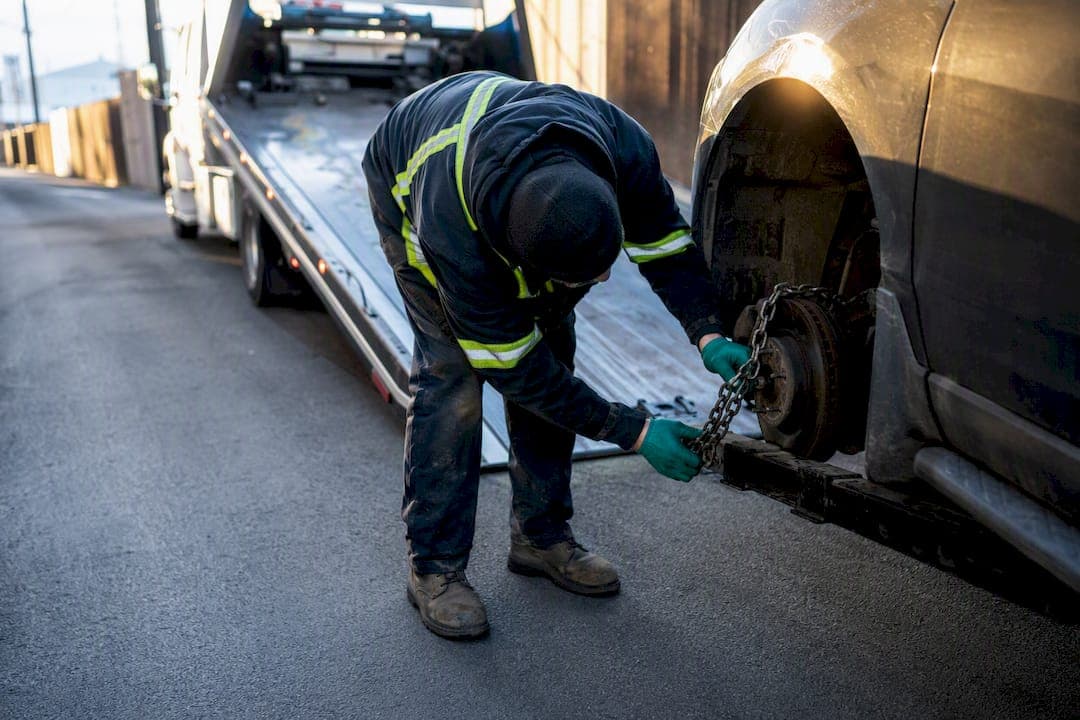
Towing a junk car yourself typically costs $75 to $200 for a local pickup, once you add the hookup fee, mileage, and any flatbed surcharge. The fastest way around that bill is to skip the tow truck entirely and sell to a buyer who includes free pickup in a cash offer. That single move turns a cost into a payout, and it's the route most Calgary and Okotoks sellers end up taking once they compare the numbers.
TL;DR:
- Most junk car sellers save money by choosing a buyer that includes free pickup in their cash offer, avoiding towing costs altogether.
- Towing charges are built from multiple line items, with local simple tows typically costing $75 to $150, depending on the car's condition and distance.
- Vehicles needing flatbeds, recovery, or long-distance transport can push towing costs above $300, often exceeding insurance industry estimates of $200 to $350.
- Ensuring all paperwork, including the title and valid ID, is prepared can prevent delays or cancellations during pickup.
- Requesting multiple offers and confirming free pickup details beforehand can secure a better deal and avoid hidden towing charges.
Table of Contents
- How Junk Car Towing Costs Are Calculated
- What Does It Actually Cost to Tow a Junk Car?
- How to Get Free Towing and the Best Cash Offer
- Paperwork and Pickup Checklist
- What Selling to a Local Buyer Actually Looks Like
- Why Free Pickup Usually Beats Paying for a Tow
- Get a Cash Offer With Free Pickup From Southsidecashforjunkcars
- Sources
- FAQ
How Junk Car Towing Costs Are Calculated
A towing bill isn't one flat number. It's a stack of separate charges, and knowing what each one covers helps you spot a fair quote from an inflated one.
- Hookup/base fee (a moderate fixed charge typically covering driver dispatch and vehicle connection): covers the driver showing up and connecting your car to the truck, whether it's a tow dolly or a flatbed.
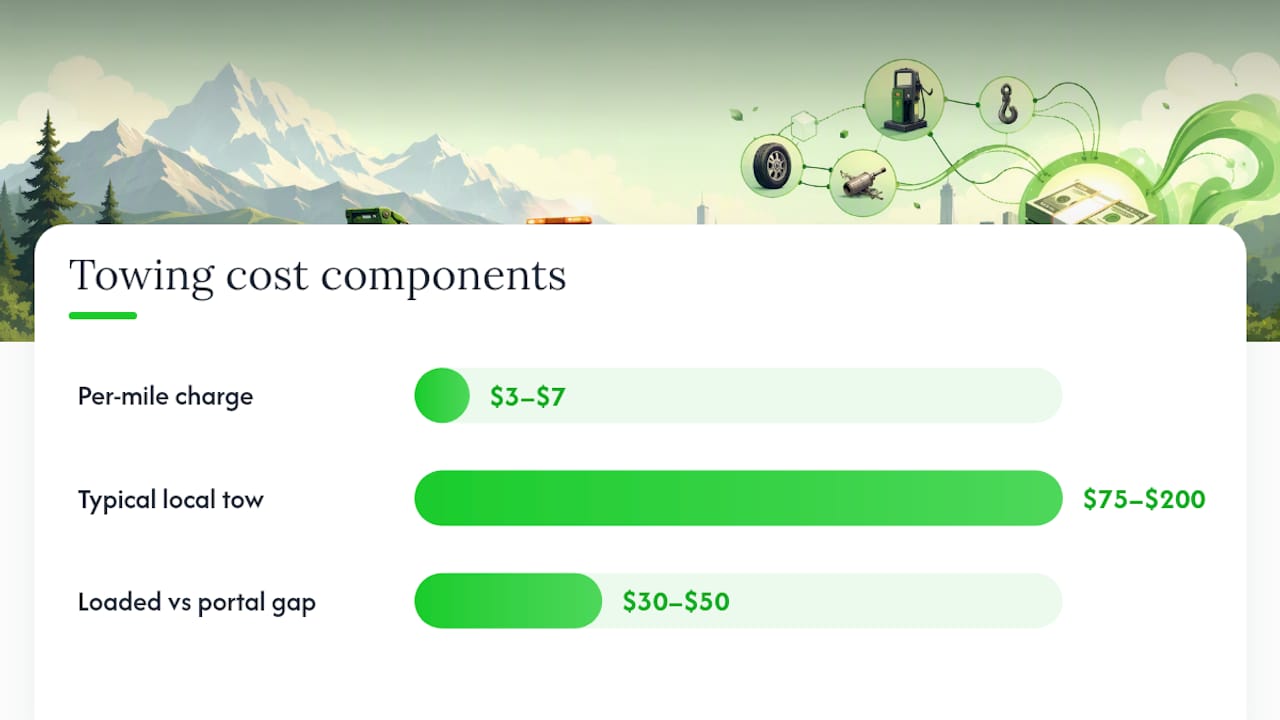
- Per-mile charge ($3–$7): billed either "loaded" (from pickup to drop-off) or "portal to portal" (including the truck's drive to reach you), so ask which method the company uses before you agree to anything.
- Flatbed surcharge: required for any car that won't roll safely, and it adds cost on top of the base fee.
- Winch or recovery fee: needed if the car is stuck, in a ditch, or otherwise hard to reach.
- After-hours premium: evening, overnight, or weekend calls often run higher than a standard weekday tow.
Pro Tip: Ask upfront whether the quote is "loaded miles" or "portal to portal." The same trip can price out $30 to $50 apart depending on which method the company uses.
Add these up and it's easy to see how a "simple tow" balloons fast. A local tow for a non-running car commonly lands between $75 and $200, but a car that needs a flatbed and a winch pull, called in after hours, can push well past that. The billing structure itself explains why so many owners end up overpaying, not because towing companies are dishonest, but because nobody explains the line items before the truck arrives.
What Does It Actually Cost to Tow a Junk Car?
Real numbers help more than ranges, so here's how three common situations shake out.
- A short local tow (5 to 10 miles), car rolls fine: Expect somewhere around $75 to $150. This is the cheapest scenario because it skips flatbed and recovery fees entirely.
- A non-rolling car requiring a flatbed: Add $50 to $150 on top of the base tow cost, since flatbed and winch-out needs are common for cars with dead transmissions, flat tires all around, or frame damage.
- A long-distance tow, 50+ miles or a rural pickup: Per-mile charges compound quickly here, and totals frequently exceed $300 once you factor in fuel surcharges and drive time.
Insurance-industry guidance on towing echoes this pattern: real-world averages once every fee is included often sit between $200 and $350, well above what a quick online estimate suggests. That gap between the "advertised" tow price and the final invoice is where most owners get caught off guard.
Here's the part that changes the math entirely: none of this applies if you sell instead of tow. A buyer who includes pickup in a cash offer absorbs every fee above, the hookup, the mileage, the flatbed, all of it. Paying to tow a car you're about to sell anyway is one of the fastest ways to shrink your net proceeds for no reason. If the plan is to get rid of the car regardless, arranging your own tow before finding a buyer almost never pays off.
How to Get Free Towing and the Best Cash Offer
Buyers who purchase junk cars build towing into the price they offer. It's baked in, not an extra line item, because reputable cash-for-cars buyers treat free removal as standard rather than a premium add-on. That's the mechanism that makes this route cheaper than hiring your own truck: someone else eats the cost you'd otherwise pay.
To get a fast, accurate offer, have this ready before you call or submit a request:
- Your VIN (found on the dash or door frame).
- The car's general condition: does it run, does it roll, any missing parts.
- A few clear photos, including the exterior, interior, and engine bay if accessible.
Getting two or three quick offers before committing is worth the extra ten minutes. Confirm that free pickup is actually included, since some listings advertise a price and then quietly add a towing charge for cars outside a certain radius. A few things tend to raise your final number: keeping the catalytic converter intact until pickup where legal, having the car mostly complete rather than stripped for parts, and being flexible enough to schedule pickup within a day or two rather than dragging it out over weeks.
Before you commit to anyone, ask three questions: when exactly will the truck arrive, how will you be paid (cash on the spot or bank transfer), and what paperwork will they need from you at pickup. Buyers who answer clearly and quickly are usually the ones who show up on time too.
Paperwork and Pickup Checklist
Missing paperwork is the single biggest reason a scheduled pickup gets delayed or canceled. Get ahead of it with a short checklist:
- Title or ownership documents: transferring ownership properly protects you from future liability tied to the vehicle. Check your province's official sell-vehicle guidance for the exact forms required where you live.
- Valid ID: most buyers need to confirm your identity matches the registered owner before handing over cash.
- No title? Ask first. Some buyers can work with alternative proof of ownership, but rules vary, so confirm this before the truck is on its way, not after.
- Prep the car: clear out personal belongings, disable any alarm system, and make sure the tow truck has clear access, especially in winter when driveways ice over.
If you're relocating a vehicle rather than scrapping it, the paperwork and prep steps look different. Long-distance vehicle transport guidance covers what to confirm with a transport company before the car ships out, useful context if you're weighing a move against a sale.
What Selling to a Local Buyer Actually Looks Like
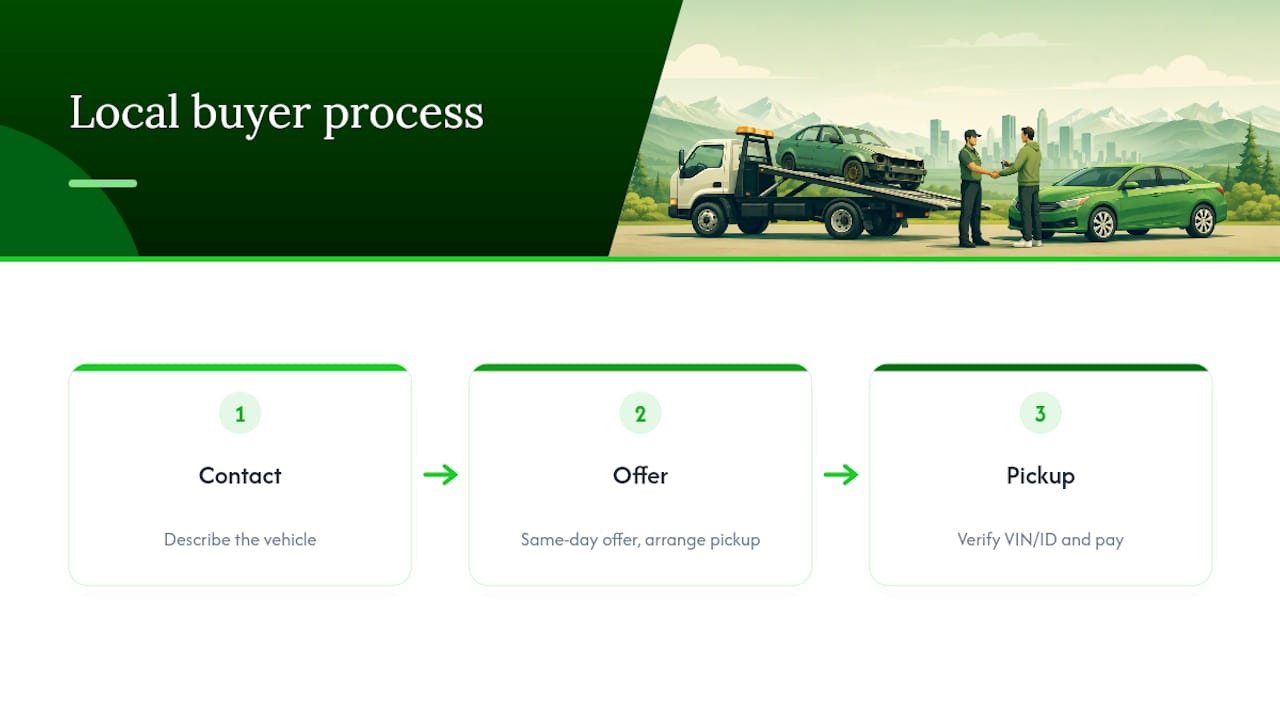
Some local junk car buyers run this as a three-step process: contact, pickup, cash. You describe the vehicle, get a same-day offer, and if you accept, a tow truck typically arrives the same day to load the car and hand over payment on the spot. There's no separate towing invoice to negotiate afterward and no waiting on a check to clear.
That's the practical difference between selling to a buyer who handles towing and paperwork locally and arranging your own truck first. The company covers the removal cost as part of doing business, since it resells usable parts and scrap metal value from the vehicles it buys, which is also why offers can stay competitive even on cars that don't run.
On pickup day, expect the driver to verify the VIN matches your paperwork, confirm your ID, and pay before the car ever leaves your driveway. No lengthy inspection, no back-and-forth on price once you've accepted the offer.
Why Free Pickup Usually Beats Paying for a Tow
The math rarely favors paying for your own tow when a sale is the end goal anyway. A $150 tow bill followed by a private sale rarely nets more than a straight cash offer that includes pickup, and it adds a step, a scheduling headache, and a truck you have to trust with your car before you've even been paid.
There are real exceptions. If you need the vehicle moved to a specific location, a mechanic, a different city, a family member, paying for a tow makes sense because no buyer is going to drop your car off somewhere for free. The same goes for recovering a car from an impound lot, where storage fees accumulate daily and waiting to "find the best offer" can cost more than the offer itself gains you. Check impound storage rates before you delay a pickup by even a day or two.
— Franz
Get a Cash Offer With Free Pickup From Southsidecashforjunkcars
Some local junk car buyers replace the guessing game of towing quotes with one number: a cash offer that already includes free same-day pickup in certain service areas. No hookup fee, no per-mile charge, no flatbed surcharge tacked on after the fact, the price you're quoted is the price you get paid.
Requesting a quote takes a few minutes. Send over your VIN, a quick description of the car's condition, and a couple of photos, and you'll typically hear back the same day with a number and a pickup window. Vehicles with blown engines, failed transmissions, or a failed inspection all qualify, running or not. If you're ready to see what your car is worth, request your cash offer and free towing today and get it off your driveway without spending a dollar on a tow truck.
Sources
- Cost to Tow a Junk Car (2026) - Flatbed, Distance & Who Pays
- How Much Does Towing Cost? Honest Pricing Guide (2026) | TheHowMuch
FAQ
What's the most a junkyard will pay for a car?
It depends heavily on weight, condition, and whether valuable parts like the catalytic converter are still intact; complete, heavier vehicles with working components command the highest offers, sometimes well above scrap metal value alone.
What is the cheapest way to tow a car?
The cheapest option is usually not to tow it yourself at all. Selling to a buyer who includes free pickup in a cash offer avoids the hookup fee, mileage charges, and flatbed surcharges entirely.
What is the minimum scrap value of a car?
Scrap value shifts with metal prices and vehicle weight, so there's no fixed minimum; a buyer that also resells usable parts, like Southsidecashforjunkcars, can often offer more than scrap value alone would suggest.
What is the minimum cost for a tow?
A basic local tow starts around $75 to $125 for the hookup fee alone, before any mileage, flatbed, or after-hours charges get added on.