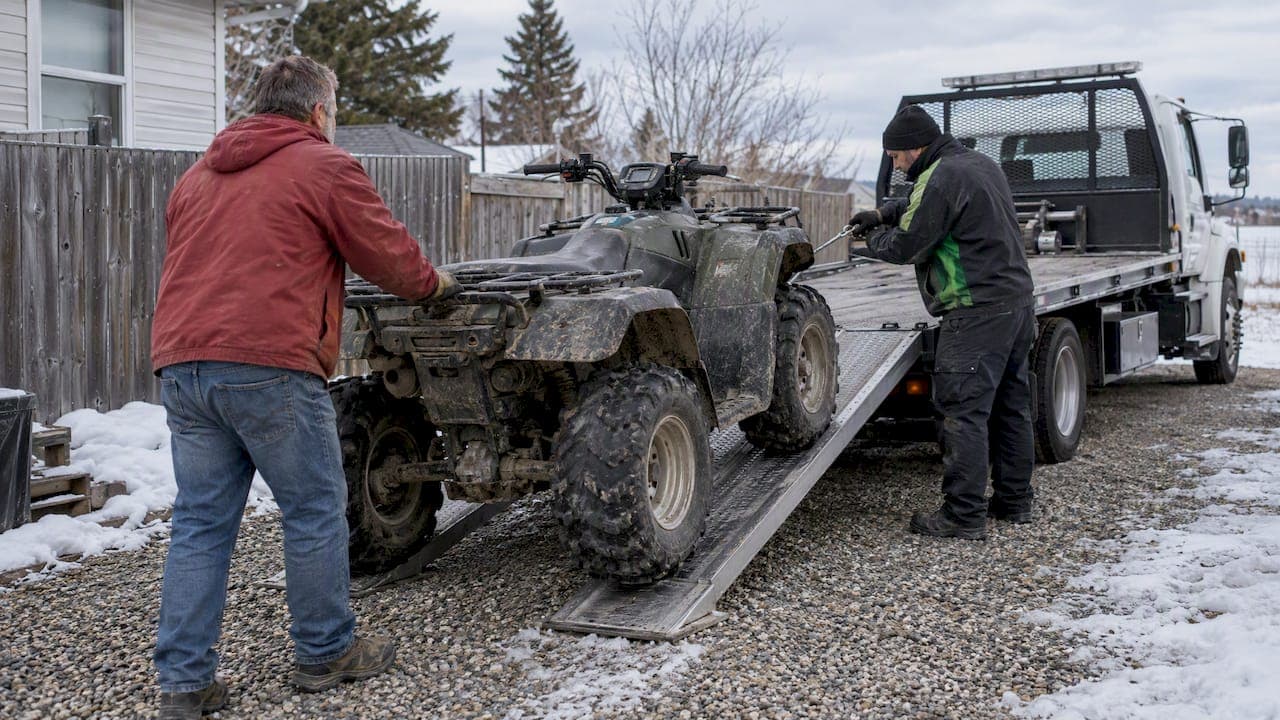
The fastest way to scrap an ATV is to contact a reputable cash-for-junk buyer for same-day pickup, or take it to a licensed salvage yard if the parts still have resale value. Your choice depends on whether the engine runs, whether the VIN plate is intact, and whether you have proof of ownership ready. Either way, drain the fuel and pull the battery before anyone shows up.
TL;DR:
- Having proof of ownership, such as a title or bill of sale, is essential for a smooth ATV scrapping process and speeds up pickup scheduling.
- Draining fluids and removing the battery are basic steps, but securing the title significantly influences whether the ATV can be scrapped or sold privately.
- Non-running or incomplete ATVs are best scrapped through cash-for-junk services for quick disposal, while salvage yards pay more if parts are still usable.
- Private sales for parts are higher paying but require time, safety precautions, and detailed documentation, especially for valuable or running units.
- Licensed recyclers follow strict environmental rules to handle hazardous fluids and batteries, making it vital to verify proper environmental management before disposal.
Table of Contents
- Which route actually makes sense for your ATV
- How to prepare an ATV for scrapping or pickup
- What to expect: timelines, payouts, and pickup logistics
- The environmental rules behind responsible ATV disposal
- What actually happens once you call a scrapper
- What the research actually tells you to prioritize
- How Southside Cash For Junk Cars can help
- Sources
- FAQ
Which route actually makes sense for your ATV
The right method depends on the ATV's condition and how much of your own time you want to spend.
A cash-for-junk pickup service is the quickest option. You call, describe the unit, get a quote, and someone hauls it away, often the same day. This works well when the ATV is non-running, missing parts, or just taking up space, and you want it gone with minimal effort.
A salvage yard or dedicated parts buyer tends to pay more, but only when the engine, frame, or drivetrain is still usable. You will likely need to transport the unit yourself or schedule a drop-off, and payout depends on what the buyer can resell.
Selling privately for parts offers the highest potential return, since you cut out the middleman, but it takes time to list, answer questions, and meet buyers safely, often in person with cash changing hands.
Municipal bulky-waste programs or licensed recyclers are the safest choice for environmental compliance, since they are built to handle fuel, oil, and batteries correctly, though they sometimes involve wait times or require you to arrange your own transport.
- Cash-for-junk pickup: fastest, least effort, best for non-running units.
- Salvage yard: better payout if parts are usable, but you handle transport.
- Private sale: highest potential return, most time and risk.
- Municipal or licensed recycler: safest for compliance, sometimes slower.
How to prepare an ATV for scrapping or pickup
A little prep work keeps the transaction legal and smooth for everyone involved.
- Gather proof of ownership, such as a title or bill of sale, and photograph the ATV, including the VIN plate and overall condition.
- Drain and capture the fuel, oil, coolant, and brake fluid into sealed containers, then remove the battery and set it aside for recycling.
- Pull any parts you want to keep, such as a winch, tires, or accessories, and make sure the frame is stable enough to load or tow safely.
- Note any problems upfront, like a missing VIN tag or a seized engine, and tell the buyer before they arrive so there are no surprises on pickup day.
Pro Tip: Take photos of the VIN and odometer before you drain any fluids: a buyer will often ask for these to confirm the unit's history before quoting a price.
What to expect: timelines, payouts, and pickup logistics
Most cash-for-junk services can offer same-day pickup if your location is reasonably accessible, though rural or hard-to-reach spots may take longer to schedule.
- Payout usually reflects a mix of scrap-metal weight and any resalable parts, so a cleared title, a working battery, and intact body panels tend to raise the offer.
- Extra fees can apply for remote pickups, winching a stuck unit out of a field, or handling leftover hazardous fluids, so ask about these before you agree to a price.
- Proof of ownership is typically required for the transfer, and Alberta's vehicle registration guidance notes that off-highway vehicles like ATVs often skip the inspections required for road vehicles, though VIN and ownership rules still apply when you transfer one.
- A written quote before pickup protects both sides and avoids last-minute renegotiation at the curb.
The environmental rules behind responsible ATV disposal
Scrapping an ATV is not just about speed. It involves fuel, oil, and a lead-acid battery, all of which carry real environmental risk if handled carelessly.
Licensed recyclers follow the National Code of Practice for Automotive Recyclers, which sets out how hazardous fluids, batteries, and refrigerants should be recovered and how contaminated soil should be stored to prevent spreading. The Canadian Auto Recyclers' Environmental Code adds detail on lead-acid battery handling, requiring a licensed waste transporter and manifests for shipments when provincial rules call for them.
Vehicle dismantlers handling multiple wet vehicles a year generally need an environmental management plan and must follow registration and manifesting rules under provincial waste legislation.
Provincial guidance such as the British Columbia vehicle dismantling guidebook spells out exactly which thresholds trigger these requirements. Dumping fuel on the ground or crushing a battery instead of recycling it can create cleanup costs that fall back on the owner, not the scrapper. Before you hand over an ATV, ask the buyer for a written receipt and evidence that they follow an environmental management plan. A legitimate operation will not hesitate to show you.
What actually happens once you call a scrapper
A typical job runs the same way regardless of who picks up the ATV: you describe the unit and get an instant quote, confirm you have proof of ownership, then schedule same-day pickup.

Most delays and lower payouts come from avoidable mistakes. Owners who cannot locate the title, leave a full tank of fuel in the ATV, or skip photographing the VIN often see pickup pushed back a day or the offer adjusted downward once the crew arrives and finds a problem that was not mentioned upfront.
A clear, written quote with a specific pickup window solves most of this. It sets expectations on both sides and means the price you are told on the phone is the price you get paid at the curb.
What the research actually tells you to prioritize
The advice that gets repeated most, drain the fluids and pull the battery, is correct but incomplete. The bigger factor in how smoothly an ATV gets scrapped is whether the owner has proof of ownership sorted out before making a single call. Buyers and recyclers can work around a seized engine or a missing part. They cannot work around a title nobody can find.
The conventional wisdom also overstates how much extra money DIY parting-out actually delivers for most owners. Dismantling videos and forum guides make it look simple, but the time, fluid handling, and liability involved usually eat into whatever premium you would earn over a straightforward pickup. If your ATV runs or has valuable parts, selling privately still makes sense. If it is sitting broken in a shed, a same-day pickup from a service that follows proper environmental handling is the better trade of time for money.
— Franz
How Southside Cash For Junk Cars can help
If you would rather skip the research and just get the ATV gone, Southside Cash For Junk Cars offers instant cash with same-day pickup and no hidden fees, a direct alternative to hauling the unit to a salvage yard yourself or waiting on a private buyer.
The process stays simple: contact us with a description or photos of the ATV, including the VIN if you can find it, confirm a pickup time that works for you, and get paid in cash the moment it's loaded.
- Have proof of ownership ready, along with your location and any access notes.
- Mention the ATV's condition upfront, including whether it runs or has missing parts.
- Confirm your pickup window so there are no surprises on the day.
We buy ATVs, side-by-sides, and cars in any condition across Calgary and Okotoks, and our scrap car removal service works the same way for a full vehicle. Read more about how we handle scrap ATVs and side-by-sides or check out our cash for junk cars near me page to see what to expect before you call.
Sources
- National Code of Practice for Automotive Recyclers (Retire Your Ride / Adieu Bazou)
- Canadian Auto Recyclers’ Environmental Code (CAREC)
- Vehicle dismantling and recycling industry guidebook to environmental compliance (BC)
- Alberta
FAQ
Where can I find used ATV salvage yards?
Search online for "ATV salvage yard" or "quad parts yard" along with your area, and check that the facility can show a written environmental management plan or recycling receipts. A legitimate yard will answer questions about how it handles fuel and batteries without hesitation.
Is it better to scrap or sell an old ATV?
If the engine runs or key parts are intact, selling privately or to a parts buyer usually pays more, though it takes longer. If the ATV is broken down or missing pieces, scrapping through a cash-for-junk pickup is faster and avoids the hassle of listing and meeting buyers.
What is the best way to sell my ATV?
The best approach depends on condition: list it privately for parts if it runs or has resalable components, or contact a cash-for-junk service for a same-day pickup if it's non-running or incomplete. Having your title and VIN photos ready speeds up either option.
Will a scrap buyer take an ATV with no title?
Most buyers want some proof of ownership, such as a bill of sale or registration, before they can legally take the vehicle. If you've lost the title, contact the buyer first, since some can still proceed with alternate documentation depending on your situation.