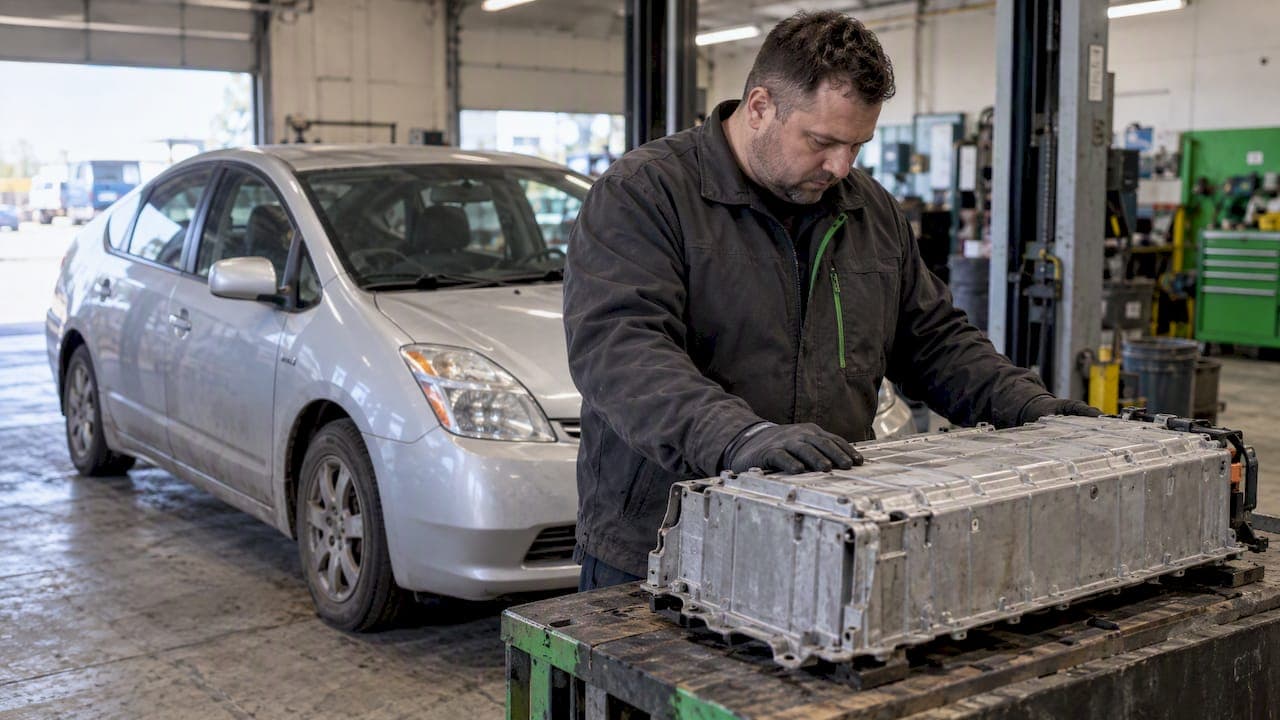
A hybrid with a dead battery still holds cash value, often similar to a comparable gas-only car in scrap condition, and sometimes more if certain parts are sellable. The final number depends on battery chemistry, recoverable materials, and parts demand for your specific model. The fastest way to find out what yours is worth is to request quotes from a few reputable junk-car buyers or recyclers who explicitly say they handle hybrids.
TL;DR:
- Battery chemistry, age, and condition affect recoverable materials; lithium ion packs may yield more than nickel metal hydride packs, while parts demand varies by model.
- Compare at least three written quotes: scrap yards may deduct outside battery processing costs, while specialist recyclers may price the pack separately.
- Disclose battery damage before pickup; buyers may charge for special handling, and lithium packs at risk of overheating can be restricted from transport.
- Prepare proof of ownership, matching identification, and a signed bill of sale with the VIN and price; disclose any lien or lease before agreeing.
Table of Contents
- What determines the cash or scrap value of a hybrid with a dead battery
- How buyers and recyclers evaluate a dead-hybrid car
- Safety and transport rules that affect pickup and price
- Paperwork you need to complete a legal cash sale
- How to maximize payout on a dead-battery hybrid
- Why a local cash buyer often beats the repair-shop route
- Get a same-day quote for your dead-battery hybrid
- FAQ
- Sources
What determines the cash or scrap value of a hybrid with a dead battery
A dead hybrid battery does not erase your car's value. It just shifts where that value comes from. Buyers stop thinking about horsepower and start thinking about materials and parts they can resell.

Battery chemistry matters. Lithium-ion packs tend to hold more recoverable value than older nickel-metal hydride packs, because lithium, cobalt, and nickel inside them can be reclaimed and resold. The battery's age and condition also influence value even within the same chemistry.
Beyond the battery, several components carry their own worth:
- Recoverable metals inside the pack, including lithium, cobalt, and nickel
- Electronic control modules and the inverter, if intact
- Copper windings in the electric motor
- The car's metal weight sets a baseline scrap-metal price
Model year and parts demand also swing offers. A popular hybrid with a steady used-parts market can bring a premium over a straight scrap quote, while a less common model with a degraded battery may land close to what a similar gas car would fetch. Industry analysis on hybrid scrap valuation confirms this pattern: battery condition and recyclable materials content are the biggest swing factors, and specialized recycling costs can offset that value when a facility isn't set up to process hybrid packs efficiently.
How buyers and recyclers evaluate a dead-hybrid car
Different buyer types look at different things, so it helps to know who you're talking to before you accept an offer.
- Local junk buyers typically give a fast, all-in cash quote based on weight, condition, and whether the car still has sellable parts.
- Scrap yards often quote lower if they can't process hybrid batteries on-site and have to pay a third party for that step.
- Specialized battery recyclers may pay separately for the pack itself if it has recoverable material value.
- Parts harvesters look for resellable components like the inverter, motors, or control modules before the rest of the car goes to scrap.
Most buyers will ask for your VIN, the battery's approximate age, service records if available, visible damage, and whether the car can be driven or needs a tow. Components like the inverter, electric motor, and control modules often attract separate value, while a damaged battery pack can attract handling fees instead. Asking a buyer directly whether they handle hybrids and how they price the battery avoids a lower number showing up after pickup.
Safety and transport rules that affect pickup and price
A dead hybrid battery isn't automatically a hazardous shipment, but a damaged or defective one can be. Transport Canada's guidance on damaged lithium batteries requires them to be packed according to UN Packing Instructions P908 or LP904 and marked as "Damaged/Defective Lithium Ion Batteries" under special provision 137. Batteries considered likely to overheat or vent gas can be restricted from transport entirely until properly contained.
That matters for your payout because:
- Some scrap yards may charge extra for handling damaged batteries or refuse pickup
- Buyers needing specialized handling might deduct those costs from their offer
- Towing a vehicle with a compromised battery may need special equipment
Be upfront about the battery's condition when you request quotes, and ask the buyer directly how they plan to meet packing and marking requirements. A buyer who can't answer that clearly may not be equipped to handle the car safely.
Pro Tip: Take a few photos of the battery pack and dash warning lights before calling buyers, it speeds up accurate quoting and avoids disputes at pickup.
Paperwork you need to complete a legal cash sale
Paperwork is where a lot of cash sales stall, and it's easy to avoid with a few documents ready in advance.
A standard bill of sale needs the full names and addresses of buyer and seller, the VIN, make, model, year, the agreed sale price, odometer reading, and both signatures. If your car is leased or still has a lien against it, disclose that upfront. Buyers generally won't complete a purchase without clear title, since a lien complicates their ability to resell or scrap the vehicle.
Expect to show:
- A signed bill of sale
- Government-issued ID matching the vehicle's registered owner
- Proof of ownership, such as the registration or title
If someone other than the registered owner is selling, or the car has multiple owners, Alberta's required ownership documents outline the extra authorization and signature steps involved. Our guide to vehicle transfer forms walks through which form applies to your situation.
How to maximize payout on a dead-battery hybrid
A little preparation before you call anyone usually adds up to a better final number.
- Get written quotes from at least three buyers and ask specifically whether battery-handling or disposal fees are deducted from the total.
- Pull together your VIN, service records if available, and any battery date stickers, then present them to buyers as proof of condition.
- Leave battery removal to the buyer; a damaged pack should never be pulled or shipped by hand, so ask instead whether they offer parts-harvesting or a separate battery buy-back.
- Settle who covers towing and containment costs before agreeing to a price.
- Confirm the sale with a complete bill of sale and insist on payment on-site at pickup.
Pro Tip: If two quotes differ by a wide margin, ask the lower bidder what specifically they're deducting for. Battery handling fees are often negotiable once you push back with a competing offer.
Why a local cash buyer often beats the repair-shop route
Once you know the battery itself isn't salvaging the car's drivability, a repair quote stops being the relevant comparison. A straightforward cash sale settles the matter in one visit instead of weeks of estimates and parts sourcing.
A car that can't be fixed economically is still worth something the moment you stop treating it as a repair project and start treating it as a sale.
— Franz
Get a same-day quote for your dead-battery hybrid
You can sell junk cars, including hybrids with a dead battery, in any condition: running or not, damaged, failed inspection, or sitting unused. The typical process involves contacting the buyer, who often picks up the vehicle the same day and provides payment on the spot without hidden fees afterward.
Before we arrive, have the following ready:
- Your VIN and proof of ownership (registration or title)
- A signed bill of sale
- Keys, if available
- Any lien release paperwork, if applicable
| What you prepare | Why it matters |
|---|---|
| VIN and ownership proof | Confirms you're authorized to sell |
| Signed bill of sale | Completes the legal transfer |
| Keys (if available) | Speeds up pickup, not required |
Check out our cash for cars page or request a free quote on our junk car buyer page to see what your hybrid is worth today.
FAQ
Is a hybrid with a dead battery worth less than a running car?
Yes, generally, since a non-running car is valued mainly for scrap metal, recoverable battery materials, and resellable parts rather than as a drivable vehicle. The exact gap depends on whether the battery or drivetrain components still hold resale value, which varies by model and condition.
Can I sell a hybrid without fixing the battery first?
Yes, most cash-for-cars buyers purchase hybrids with a dead battery as-is and do not require repairs before pickup. Repairing a hybrid battery is usually far more expensive than the value it adds to a cash sale.
What paperwork do I need to sell my hybrid for cash?
You typically need a signed bill of sale with the VIN, sale price, and both parties' information, plus proof of ownership such as your registration. If the vehicle has a lien or lease, that needs to be disclosed and resolved before transfer.
Is it safe to transport a car with a damaged hybrid battery?
A damaged or defective lithium battery must be packed and marked according to Transport Canada's special provision 137, and it can be restricted from transport if it's likely to overheat. A buyer experienced with hybrids will know how to handle this safely during pickup.
How long does it take to sell a dead-battery hybrid for cash?
With local buyers offering same-day pickup, the process from contact to payment can often be completed quickly. Getting your paperwork and VIN ready beforehand is the main thing that speeds it up.
Sources
- Transport requirements for damaged or defective lithium metal/ion cells and batteries (Transport Canada, 2025)
- Alberta
- Are hybrid cars worth more or less when scrapped? - Scrap Car Network