A sagging corner, steady hissing, or a compressor that never shuts off is the clearest sign of air suspension failure. If braking or steering feels affected, stop driving and call a tow. Otherwise, start with a quick visual check, listen for leaks, and pull any dashboard codes before you book a shop visit.
TL;DR:
- Spray soapy water on bags, lines, and fittings to locate leaks, and report any ride height difference above 5 millimeters across the same axle.
- An unresolved leak forces the compressor to run constantly, risking overheating and failure, so repair a leaking fitting or line before replacing larger components.
- Use a scan tool that reads the suspension module; low air mass, failure to reach target height, overheating, or braking effects call for professional diagnosis.
- After winter, inspect for salt damage, check ride height monthly, and replace dryer cartridges on schedule to limit moisture buildup and compressor wear.
- Before deciding to sell, get itemized estimates and compare repair costs with a realistic 24 month expense forecast, accounting for corrosion driven labor.
Table of Contents
- Common Symptoms to Watch For and How They Present
- What Commonly Fails Inside the Air Suspension System
- Step-by-Step Diagnostic Checks From Owner to Shop Level
- How Common Failures Get Fixed and What They Cost
- Preventive Maintenance and Winter Best Practices
- Repair vs. Sell: A Short Decision Guide
- Practical Priorities for Owners and Technicians
- If Repair Is Uneconomic: A Local Quick-Sale Option
- FAQ
- Sources
Common Symptoms to Watch For and How They Present
The most reliable early warning is a corner that sits noticeably lower than the others, especially after the vehicle has sat overnight. According to Monroe's technical guidance, sagging ride height, rough ride, and poor handling are the symptoms owners report most often, frequently paired with a "Service Air Suspension" message on the dash.
A compressor that runs far more than usual, or cycles on within seconds of parking, points to a slow leak somewhere in the system. Steady hissing near a wheel well or under the vehicle is another strong indicator, and it rarely resolves on its own.
- A corner that sags overnight or sits visibly lower than the others.
- Compressor noise that runs longer or more frequently than normal.
- A steady hissing sound from an air bag, line, or fitting.
- A "Service Air Suspension" or "Leveling Unavailable" dashboard warning.
- Rough ride quality or uneven tire wear developing over weeks.
Any one of these on its own is worth investigating. Two or more together usually mean the problem has moved past a minor nuisance and into something that needs attention soon.
What Commonly Fails Inside the Air Suspension System
Failures almost always start small and cascade if ignored. The air bags themselves are the most common failure point: rubber bellows crack, dry rot, or puncture over time, and road salt accelerates that breakdown through winter months. Air lines and fittings come next, failing from rubbing against chassis components, corrosion at connection points, or a loose fitting that lets air bleed out slowly.
Leveling and height sensors can stick or drift out of calibration, especially when contamination builds up around the linkage, causing the system to misread ride height and overcorrect. The compressor and its dryer or filter take the brunt of any upstream leak: a small leak elsewhere forces the compressor to run constantly, which wears it out faster and lets moisture into the dryer, where it then causes further faults.
- Air bags: cracks, dry rot, and punctures, worsened by winter salt exposure.
- Air lines and fittings: rubbing, corrosion, and loose or partially seated connectors.
- Leveling and height sensors: sticking, contamination, or calibration drift.
- Compressor and dryer: overwork from leaks, moisture intrusion, and burnout.
- Wiring and connectors: corrosion that triggers fault codes or erratic behavior.
As heavy-duty air suspension guidance notes, a constant hissing almost always indicates an air leak, and an unaddressed leak will keep overworking the compressor until it fails outright.
Step-by-Step Diagnostic Checks From Owner to Shop Level
Before touching anything, park on level ground, chock the wheels, and gather a spray bottle with soapy water, a tape measure, and a basic code reader if you have one.
- Walk around the vehicle and visually inspect each air bag and visible line for cracks, wear, or wet spots.
- Do a bounce test on each corner and watch how quickly it settles back to ride height.
- Listen closely near each wheel well and fitting for a steady hissing sound.
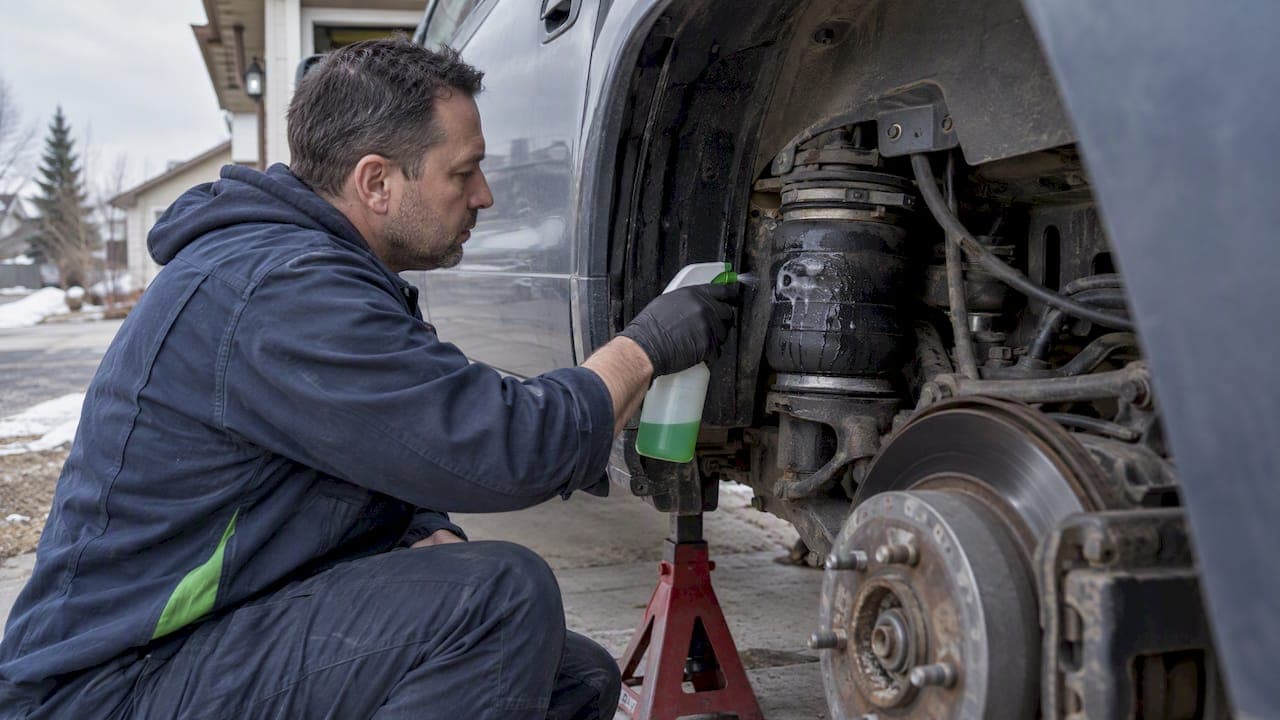
- Spray soapy water on bags, lines, and fittings; bubbling pinpoints the exact leak location.
- Measure ride height at each corner with a tape measure and compare side to side.
- Start the vehicle and watch whether the compressor cycles immediately or runs longer than normal.
- Pull diagnostic trouble codes with a scan tool capable of reading the air suspension module.
Owner-level checks like the bounce test and soapy-water method are reliable first steps that can save a diagnostic fee if the leak is obvious. When measuring corner heights, a difference of more than 5 millimeters side to side on the same axle is worth recording and reporting to a technician, since OEM diagnostic procedures use precise height and air-mass tolerances to confirm a fault before parts get replaced.
A scan tool may return codes for low air mass, an inability to reach target ride height, or a compressor temperature fault. Any of these, along with a compressor housing that feels hot to the touch or any sign the issue is affecting braking, means it is time to hand the vehicle to a professional rather than continue troubleshooting at home.
Pro Tip: Note which corner leaks first and whether another corner seems overinflated: a one-way check valve can mask the real leak location.
How Common Failures Get Fixed and What They Cost
Many air suspension problems start as something small and stay that way if caught early. A leaking fitting or chafed line is often a same-day repair, since it just needs resealing, replacing, or rerouting away from the point of contact. An air bag with visible cracking or dry rot, on the other hand, usually needs full replacement rather than a patch, since the rubber has already lost its integrity.
A compressor that runs hot or struggles to build pressure has often been overworked by an upstream leak for months before it finally fails. Sensor and valve issues sometimes resolve with a firmware update to the control module rather than a part swap, which is why OEM diagnostic sheets recommend checking fuses and software versions before replacing hardware.
| Repair type | Typical cost range (CAD) |
|---|---|
| Suspension inspection | a moderate amount |
| Air suspension repair (fitting, line, single bag) | a wide range depending on parts and labour |
| Full suspension rebuild | can be several thousand dollars |
These ranges reflect Canadian shop data from Ontario, and the wide spread comes down to parts availability, labor time, and how much corrosion a technician has to work around.
- Small fitting or line repairs: often resolved same day for the lower end of the range.
- Single air bag replacement: moderate labor, parts cost varies by vehicle.
- Compressor or dryer replacement: higher labor if access is tight or corroded.
- Full system rebuild: justified when multiple components have failed together.
Preventive Maintenance and Winter Best Practices
A monthly glance at ride height and a listen for hissing catches most problems before they become expensive. Scheduling a full professional inspection every spring, after winter salt and freeze-thaw cycles have had their chance to do damage, is worth building into your routine.
- Drain the air reservoir periodically and replace dryer cartridges on schedule.
- Keep inlet filters clean so the compressor is not drawing in debris.
- Route air lines away from abrasion points and sleeve them where they cross moving parts.
- Replace a bag showing early cracking before it fails completely and strains the compressor.
- Check for unusual compressor noise or cycling frequency during routine service.
Winter driving conditions speed up rubber degradation and moisture buildup inside the system, which is why a post-winter inspection matters more for air suspension than for coil springs.
Pro Tip: Replacing a dryer cartridge on schedule is a low-cost preventive measure that can help avoid costly compressor failures.

Repair vs. Sell: A Short Decision Guide
If braking, steering, or inspection compliance is affected, repair is not optional: get it fixed before driving again. Otherwise, collect a few itemized written estimates and calculate a realistic 24-month repair run-rate, factoring in that rust and corrosion can add significant labor time to any job.
- Get the vehicle's safety-critical repairs addressed first, regardless of other factors.
- Compare itemized estimates against a 24-month repair run-rate, not just the first bill.
- Weigh corrosion and labor complexity, since rust-heavy vehicles often cost far more to repair than the estimate suggests.
- If the numbers do not work, look into parts value and compare a few cash offers before confirming pickup.
This mirrors the safety-first framework in most repair-vs-sell checklists: fix what is legally required, then let the math decide the rest.
Practical Priorities for Owners and Technicians
Treat hissing or a compressor that never stops cycling as urgent, not cosmetic. Early repair of small leaks is consistently the cheapest path through an air suspension problem, since waiting almost always means paying for a compressor on top of the original leak. Inspection costs a fraction of what neglect does.
— Franz
If Repair Is Uneconomic: A Local Quick-Sale Option
When the estimate comes back higher than the vehicle is worth, removal without the repair bill is often the better math. We buy junk, non-running, and damaged vehicles, including cars with failed suspensions, blown engines, or transmission problems, with same-day pickup and no hidden fees.

- Get a written repair estimate first so you know the real cost of fixing it.
- Compare that cost against what the vehicle is worth as is, including parts and scrap value.
- If repair does not make sense, Alberta owners can also compare online offers for mechanically compromised vehicles before choosing a buyer.
- When you are ready, get a cash offer and we will confirm pickup the same day.
FAQ
How do you know if your air suspension is broken?
The clearest signs are a sagging corner, a steady hissing sound, or a compressor that runs constantly or more often than usual. A "Service Air Suspension" warning on the dashboard is another strong indicator worth acting on quickly.
My air lift compressor isn't turning on. What should I do?
Check the fuse and power connections first, since corrosion at the connector is a common cause of a dead compressor. If power is present but the compressor still will not run, it has likely burned out from being overworked by an unrelated leak and needs professional diagnosis.
Can you drive with air suspension down?
Driving with a sagged corner is possible for a short distance, but it puts uneven strain on tires, wheel alignment, and other suspension components. If the sag affects braking or steering response, treat it as unsafe to drive and arrange a tow instead.
What are the disadvantages of air suspension?
Air suspension systems have more components that can fail compared to traditional coil springs, including bags, a compressor, lines, and sensors, each of which adds a potential failure point. Repair costs for air suspension issues typically run higher than standard suspension work, particularly once corrosion or a burned-out compressor is involved.
Sources
The diagnostic steps and symptom checklist above draw on OEM procedure sheets, Monroe's published tech tips, and shop-level guidance from Canadian repair data. These sources cover trouble codes, compressor test procedures, and regional repair-cost ranges used throughout this guide.
- Diagnosing Air Spring Problems
- Heavy truck air suspension: air bags, failures and maintenance
- OEM diagnostic sheet (Maserati Levante example)
- Truck suspension repair cost guide (Ontario)