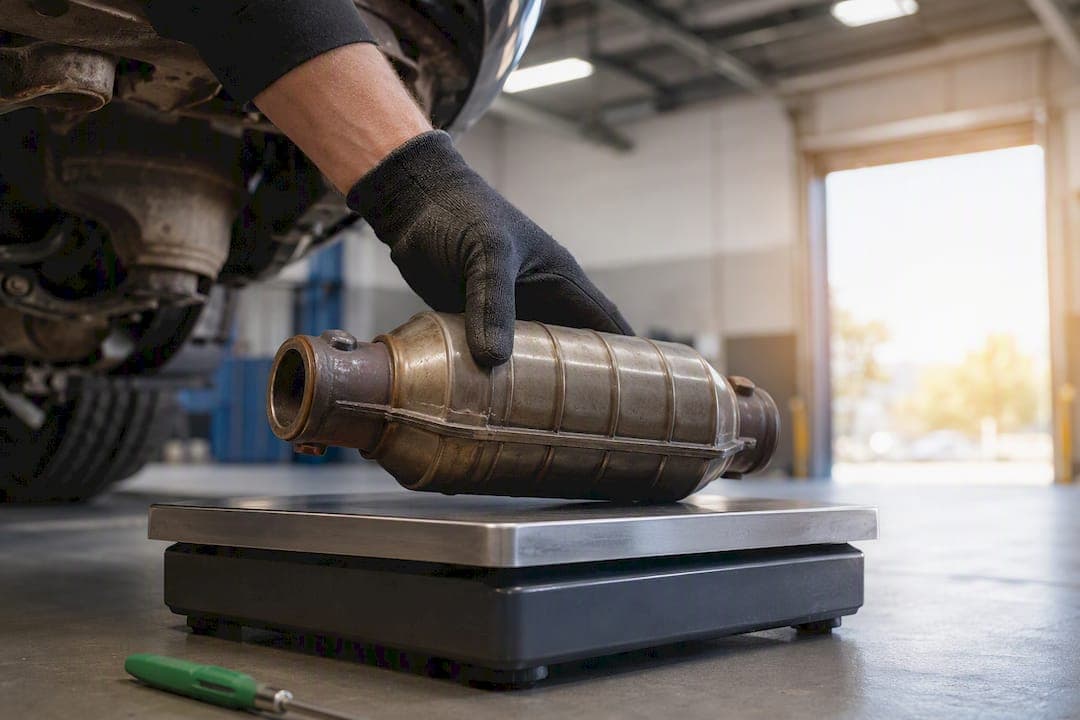
Junk car buyers pay the most for an intact vehicle with its catalytic converter, a clear title, and an honest, documented condition. Sellers who compare at least three written offers, disclose converter and title status upfront, and skip pulling parts before quoting typically walk away with the strongest number. The rest comes down to preparation, which is exactly what the next sections cover.
TL;DR:
- Buyers pay more for vehicles with a working catalytic converter, a clean title, and in-demand parts such as engines and transmissions.
- Weight and regional scrap steel prices primarily determine the base offer, with converters and resaleable parts adding significant premiums.
- Preparing paperwork, clear photos, and leaving parts like the converter installed can increase offers and speed up the sale process.
- Collecting at least three written offers ensures you receive the best possible price, especially for vehicles with high resale potential.
- Avoid scams by refusing vague towing fees, signing titles before payment, and confirming offers in writing before proceeding.
Table of Contents
- What Junk Car Buyer Preferences Actually Come Down To
- How Buyers Calculate Offers: The Baseline Formula
- Prepare the Car: Paperwork, Photos, and What Not to Remove
- Where to Sell: Comparing Online Buyers, Yards, and Private Sales
- Negotiation Tips and Red Flags to Watch For
- How Southside Cash For Junk Cars Handles a Pickup
- Environmental Considerations and Hazardous Materials
- Author Perspective: How to Capture the Last $100 to $300
- Ready to Sell? What Southsidecashforjunkcars Offers
- Sources
- FAQ
What Junk Car Buyer Preferences Actually Come Down To
Buyers are running math on your car within seconds of hearing about it, and five things move that math more than anything else.
- Curb weight. Heavier vehicles carry more scrap steel, and that weight sets the price floor before anything else gets added.
- Catalytic converter status. A missing or stolen converter can shave hundreds off an offer, so buyers ask about it early and often.
- Parts demand. Popular makes and models with usable engines, transmissions, or trim pieces attract resale buyers willing to pay above scrap rate.
- Running condition. A car that starts and rolls onto a flatbed costs less to move than one requiring a winch or a flatbed with a specialty hookup.
- Title and registration. A clean title speeds up the transaction; a missing or lien-encumbered title can delay payment or shrink the offer.
Most junk cars sell somewhere between $200 and $750, though a complete running vehicle with a working converter and in-demand parts can land well above that range. Trucks and SUVs often outperform sedans simply because they weigh more and carry more resalable parts.
How Buyers Calculate Offers: The Baseline Formula
The math behind a junk car quote isn't a mystery, even though most buyers never explain it out loud. It starts with a baseline and builds up from there.
The core formula recyclers use is vehicle weight multiplied by the local scrap steel price. That number sets the floor. Everything after that is an overlay:
- A working catalytic converter adds a meaningful premium, sometimes the single biggest line item on the offer.
- A usable engine or transmission raises the number further if the buyer resells parts rather than just scrapping metal.
- Good wheels, tires, and batteries often add small but real bumps.
- Tow distance gets deducted, since someone has to pay for the truck and the driver's time.
Scrap steel prices shift monthly, and industry tracking shows payouts running higher in recent years than in past cycles, so it pays to check current local rates before assuming last year's quote still applies. Regional demand for specific parts also swings the number: a Honda four-cylinder engine might be worth more in a market flooded with older Civics than in one where nobody's looking for that part.
Prepare the Car: Paperwork, Photos, and What Not to Remove
A little prep work before you call anyone can be the difference between a quick, clean sale and a haggling match at pickup.
- Gather your title, registration, and any lien release paperwork. A missing title doesn't always kill a deal, but it usually lowers the offer or adds steps.
- Photograph the VIN plate, all four sides of the car, interior condition, and any major damage. Clear photos speed up quotes because buyers can price with confidence instead of guessing.
- Take a photo of the catalytic converter area if you can access it. This single image often moves an offer from vague to firm faster than any other detail.
- Leave the catalytic converter and common bolt-on parts installed. Removing them before you get quotes rarely pays off; buyers price the whole vehicle expecting those parts to still be there.
Pro Tip: Send your VIN and converter photo to buyers before they even see the car in person. Sellers who lead with that information tend to get faster, more confident written offers.
Where to Sell: Comparing Online Buyers, Yards, and Private Sales
Not every buyer pays the same way, and the channel you pick changes both the number and the hassle involved.
Online junk car buyers often outbid traditional scrap yards because they resell usable parts instead of pricing strictly by tonnage. Local yards remain useful as a backup, especially when you need same-day pickup and don't want to wait on a written quote. Private buyers can occasionally beat both, but they usually want a running vehicle and rarely offer free towing.
Before you accept anything, run the offer through this checklist:
- Is the dollar amount in writing, not just a verbal quote?
- Does towing come free, or is it deducted from the total?
- How soon can they actually pick up the vehicle?
- What payment method do they use, and is it something you'll actually receive same day?
- How do they handle the title transfer paperwork?
Collecting at least three written offers before you commit is the single habit that protects you most, since identical vehicles can generate quotes that differ by $100 to $300 between buyers. If you're weighing a dealer trade-in against a straight junk sale, it's worth reviewing how trade-in valuation differs from a direct sale before deciding which route fits your situation.
Negotiation Tips and Red Flags to Watch For
A little skepticism goes a long way once someone shows up to haul away your car.
Walk away if a buyer insists you sign the title before any cash changes hands, gives you a vague towing fee that "depends on the day," or pushes hard for a cashless transfer they can't explain clearly. Those are the classic setups for junk car scams that leave sellers with a missing car and no payment.
On the flip side, you have leverage too. Reference current local scrap prices, point to comparable parts listings for your make and model, and don't hesitate to mention that you have competing written offers in hand. Close the deal only after you've got a signed bill of sale, confirmed the payment method, and documented the handover with a final photo of the odometer and VIN.
Pro Tip: Never hand over keys and title in the same motion as accepting a verbal number. Get the cash first, then sign.
How Southside Cash For Junk Cars Handles a Pickup
Southsidecashforjunkcars runs a straightforward three-step process: contact, pickup, cash. During that first contact, expect questions about your VIN, title status, whether the catalytic converter is present, and whether the car starts. Each answer changes the math directly.
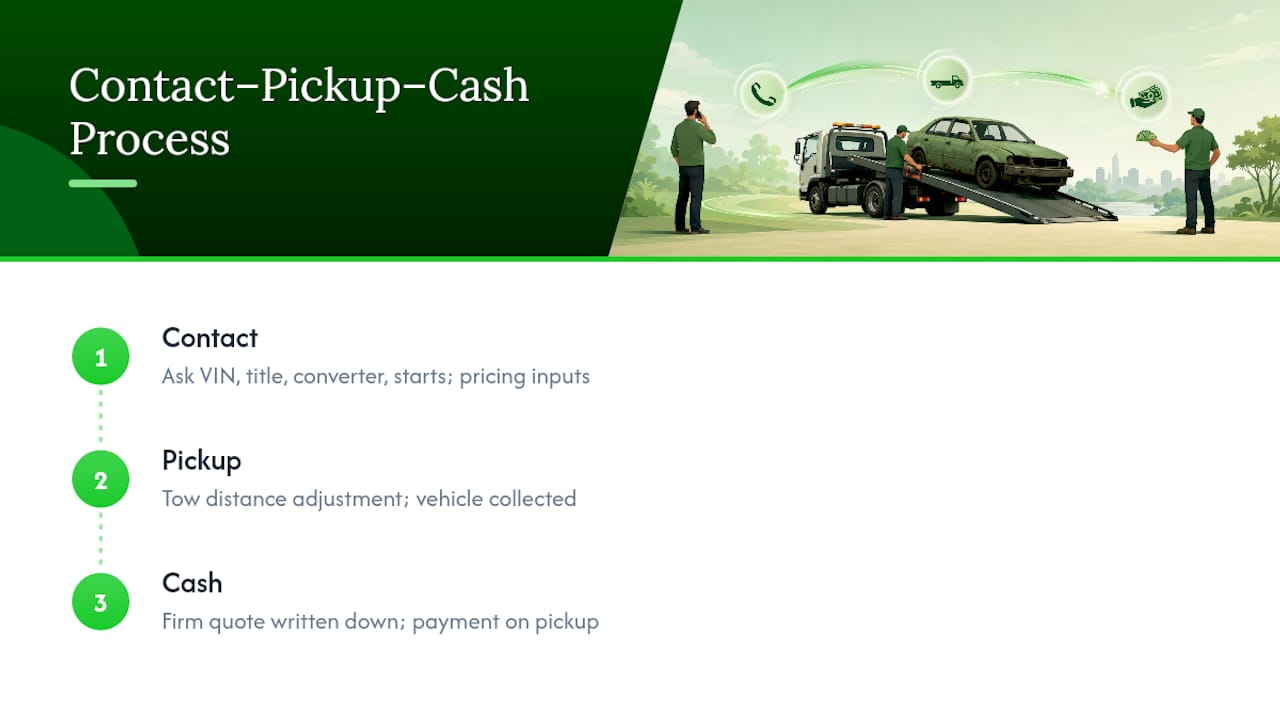
That information lets the buyer apply the same pricing logic covered above: weight sets the baseline, the converter and any usable parts add overlays, and tow distance gets deducted before a firm number gets written down. The result is a quote you can compare against other offers instead of a guess.
Environmental Considerations and Hazardous Materials
Every junk car carries fluids and materials that can't just go into a landfill or sit leaking in a driveway. Motor oil, transmission fluid, coolant, brake fluid, and battery acid all count as hazardous waste under most provincial and state environmental rules, and responsible buyers drain and recycle these before the vehicle gets crushed or parted out.
Electric vehicles complicate the picture further. Battery packs contain recyclable materials that can add real value to the sale, but they also require certified handling that not every yard is equipped for. If you're selling an EV, ask upfront whether the buyer processes battery packs in house or subcontracts that step, since it affects both the payout and how long the process takes.
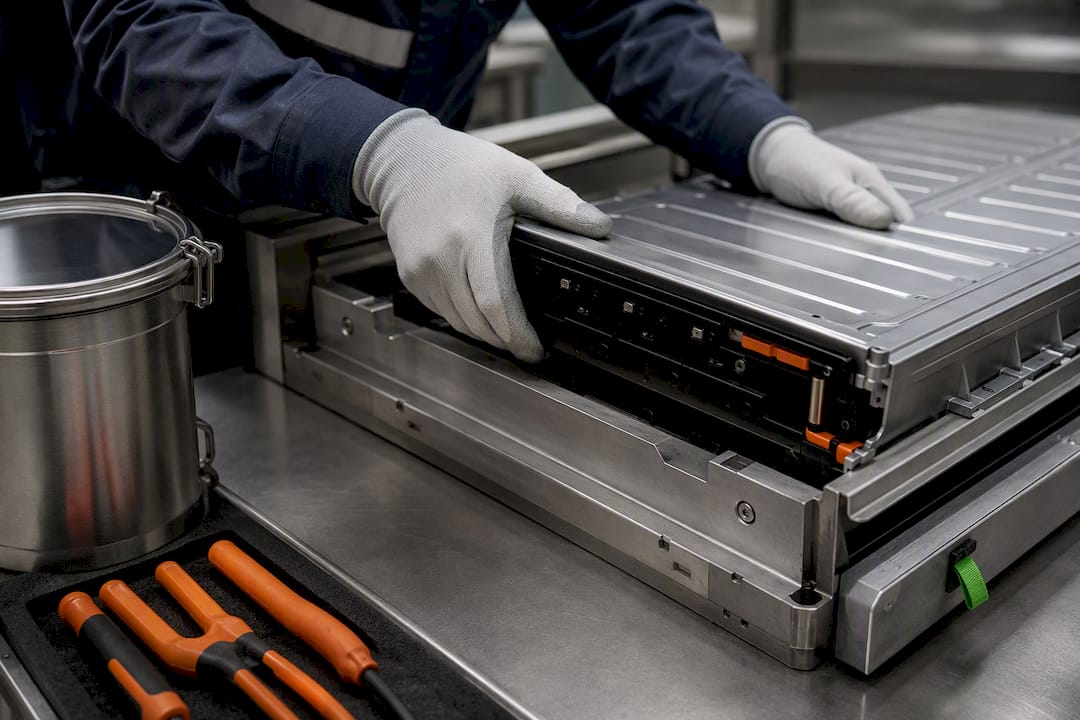
Freon from older air conditioning systems, mercury switches in some pre-2003 vehicles, and lead components in older wiring all fall under similar handling rules. A buyer who asks detailed questions about your car's fluids and battery type before quoting a price is usually one who actually follows proper disposal steps rather than dumping the problem on someone else down the line.
Author Perspective: How to Capture the Last $100 to $300
Get three offers before you sign anything. Document your converter and title status in the first phone call, not after someone's already on the way. If you need the car gone today, take the faster offer even if it's slightly lower; if you can wait a week, the extra patience usually buys you the better number.
Parting the car out yourself rarely beats a whole-car offer once you account for time and the risk of losing converter value in the process. My rule of thumb: if a written offer beats your rough weight times scrap price estimate, take it. If it falls short, ask why before you say yes.
— Franz
Ready to Sell? What Southsidecashforjunkcars Offers
Southsidecashforjunkcars is the alternative to hauling your car to a yard yourself or waiting days on a private buyer to show up. You can get a cash offer and fast vehicle pickup without hidden fees.
If your car doesn't run, has failed inspection, or has sat in the driveway with a blown engine for months, that's exactly the kind of vehicle this service is built to move fast. You skip the paperwork headaches too. The three-step process covers contact, pickup, and payment, with towing handled as part of the deal in Calgary and Okotoks. If you want to see what your car might bring, check current cash-for-cars options near you and get a real number instead of a guess.
Sources
Check NerdWallet's guide to selling a junk car for channel comparisons, U-Pull-It's value calculator for typical price ranges, and local scrap yards for current steel rates before accepting any offer.
- How to Price Junk Cars in 2026: The Auto Recycler's Guide
- Junk Car Value calculator — U-Pull-It
- How much is your junk car worth? — SellCarAdvisor
FAQ
Who Pays the Most for Junk Cars?
Buyers who resell usable parts, rather than yards that pay strictly by scrap weight, typically pay the most because they can recover more value than tonnage alone provides. Getting three written offers is the most reliable way to find out who that is for your specific vehicle.
What's the Most a Junkyard Will Pay for a Car?
Most junk cars sell somewhere between $200 and $750, though a running vehicle with a working catalytic converter and in-demand parts can exceed that range. Heavier vehicles like trucks and SUVs tend to land at the higher end.
How Do I Check the Scrap Value of My Car?
Multiply your vehicle's curb weight by the current local scrap steel price to get a rough baseline, then add expected value for the catalytic converter and any resalable parts. Comparing that estimate against at least three written offers tells you quickly whether a quote is fair.
Does Southsidecashforjunkcars Buy Non-Running Cars?
This service purchases running and non-running vehicles, including those with engine or transmission issues, and operates a contact, pickup, and payment process with same-day removal in its service area.
Should I Remove the Catalytic Converter Before Selling?
No. Removing it before getting quotes usually lowers your total payout, since whole-car buyers price the vehicle expecting the converter to remain in place. Disclosing its condition upfront gets you a faster, more accurate offer than pulling it yourself.