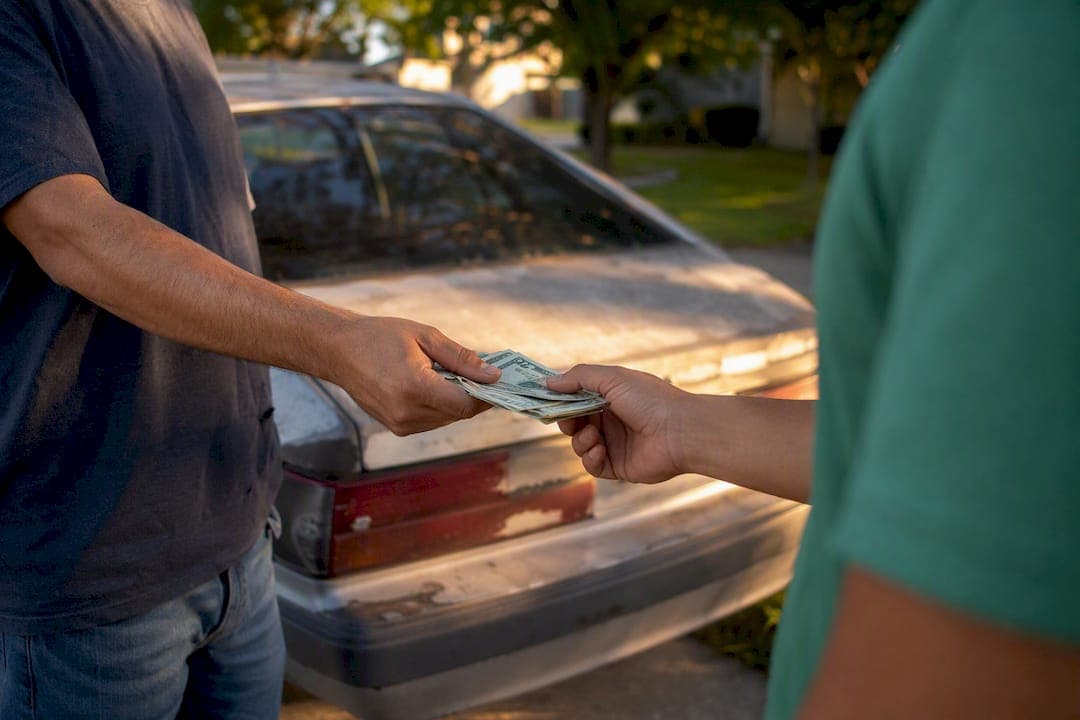
Junk car offers are negotiable, and sellers who shop around routinely add meaningful money to that first number a buyer gives them. Most junk vehicles carry a pure scrap value of $100 to $500, but that floor jumps once you account for salvageable parts, the catalytic converter, and a little competitive pressure. Buyers expect you to negotiate. The first offer is almost never their best one.
By the numbers: Getting three quotes instead of one commonly turns up price differences of $100 to $500 for the exact same vehicle in the same region.
Before you call anyone, do three things:
- Gather your title, registration, and any recent repair or service records.
- Photograph the car from all four sides, the engine bay, and the odometer.
- Line up at least three quotes so you have real leverage, not a guess.
Key Takeaways
Junk car offers are negotiable, and combining multiple quotes with clean paperwork and photo documentation reliably increases the final payout above a buyer's first number.
| Point | Details |
|---|---|
| Get three quotes minimum | Comparing offers from a local recycler, a cash-for-cars service, and one other source exposes price gaps of $100 to $500. |
| Know your car's real value | Add scrap baseline, parts value, and catalytic converter worth before accepting any first offer. |
| Keep the title and paperwork ready | A clear title widens your buyer pool; missing one can cut $50 to $200 off the offer. |
| Lock the price before pickup | Confirm an all-in, no-deduction quote in writing to prevent bait-and-switch changes at the door. |
| Consider a guaranteed, no-hassle option | Southsidecashforjunkcars offers same-day pickup with free towing and a confirmed cash price for Calgary and Okotoks sellers who want to skip negotiating altogether. |
Table of Contents
- Why Buyers Often Make Low First Offers
- How to Estimate Your Car's True Value Before Calling Buyers
- How to Get Multiple Quotes and Compare Them Fairly
- Negotiation Tactics That Actually Work
- Paperwork, Red Flags, and Safe Closing Practices
- Preparing the Vehicle to Maximize the Offer
- How Southsidecashforjunkcars Protects You From These Same Pitfalls
- What Most Sellers Get Backward About Negotiating
- Get a Guaranteed Cash Offer Without the Back and Forth
- Sources
- FAQ
Why Buyers Often Make Low First Offers
The first number a junk car buyer gives you is a starting position, not a final answer. Most buyers assume you have not shopped around, so they lead low and see if you accept it. Understanding what actually drives their math turns you from an easy mark into someone they have to negotiate seriously with.
Three factors set the ceiling on what a car is worth to a buyer:
- Scrap metal baseline. Weight and current scrap-steel pricing set the absolute floor, and this number moves with commodity markets.
- Parts and resale value. A working transmission, intact wiring harness, or newer tires can add hundreds of dollars beyond scrap weight alone.
- Catalytic converter value. This single component is often the most overlooked high-value part on the car, and its worth varies a lot by make and model.
Middlemen matter too. Lead-generation sites that collect your information and resell it to a network of buyers usually pay less than a direct recycler, since every layer between you and the yard takes a cut. Missing paperwork, missing parts, or a car that has been sitting outside for years all give a buyer a reason to shave dollars off the quote, whether or not the shave is fair.
How to Estimate Your Car's True Value Before Calling Buyers
You cannot negotiate from strength if you do not know what your car is actually worth. A rough estimate takes twenty minutes and changes how every phone call goes.
- Start with the scrap baseline. Check current scrap-metal pricing for your region and multiply by your vehicle's approximate weight, which you can usually find in the owner's manual or a quick VIN lookup.
- Add parts and resale value. Search your make, model, and year alongside "used parts" to see what a working transmission, alternator, or infotainment unit sells for separately.
- Price the catalytic converter. Converter values swing widely by vehicle type, so look up your specific model rather than assuming a flat number.
- Pull your documentation together. Recent repairs, service records, mileage, and clear photos all support asking for more than the scrap floor.
Most non-running vehicles land somewhere between the bare scrap price and a few hundred dollars higher once parts and the converter are factored in, based on typical industry ranges cited by Car Amaze. A car with full service records and no missing components should quote near the top of that range, not the bottom.
How to Get Multiple Quotes and Compare Them Fairly
Getting three offers is the single highest-impact thing you can do before selling, and it is the consensus recommendation across nearly every reputable guide on the topic. The order you call in, and what you ask, determines whether those three quotes are actually comparable.
- Call a local direct recycler or junkyard first. Direct recyclers often pay more than national lead-generation services, since fewer intermediaries mean more of the car's value stays with you.
- Call a dedicated cash-for-cars service next. Compare their quote against the recycler's, noting whether towing is included.
- Try one online platform or private buyer as a third data point. This confirms whether the first two numbers are in a reasonable range.
Ask every buyer the same four questions: Is towing included in this price? How and when do you pay, cash or e-transfer? What paperwork do you need from me? And will this price change at pickup? Write the answers down.
Pro Tip: Ask each buyer to confirm their quote is "all-in, no deductions" before you hang up. If they hesitate or add qualifiers, that quote is worth less than it sounds.
Negotiation Tactics That Actually Work
Once you have quotes in hand, negotiating is mostly about timing and confidence, not aggression. A calm, informed seller who mentions a competing number almost always does better than one who accepts the first offer out of fatigue.
The simplest script works because it is honest: "I have a quote for $X from another buyer. Can you match or beat that?" You do not need to name the competitor or share every detail. A vague reference to "another local buyer" is enough to signal you have done your homework, and most buyers will move on price rather than lose the sale outright.
Timing matters more than most sellers realize. Buyers who run trucks on a schedule often need to hit a weekly or monthly pickup quota, so calling near the end of a month can work in your favor. Scrap demand also tends to run warmer in spring and summer construction season, when metal recyclers are processing more volume and paying slightly better than in the dead of winter.
Once you agree on a number, lock it down explicitly. Say clearly: "So the price is $X, towing included, cash at pickup, no deductions?" and get a yes on record, whether that is a text, email, or recorded confirmation. If the driver shows up and tries to renegotiate downward, citing a damaged part or "more rust than expected" that was visible in the photos you sent, you have every right to hold the driver to the original quote or turn them away.
- Reference a real competing quote, but keep details vague.
- Push for the offer near the end of the buyer's month or quota period.
- Get the final price confirmed in writing before pickup day, not verbally on the phone.
Pro Tip: Text your photos to the buyer before pickup and get written confirmation the price stands. This closes the door on the classic "it looks worse in person" excuse.
Paperwork, Red Flags, and Safe Closing Practices
The right paperwork raises your offer before negotiation even starts, and it protects you from the buyers who try to walk it back afterward.

A clear title is the single biggest paperwork factor. Having one widens the pool of buyers willing to make an offer, and selling without one commonly reduces offers by a modest amount depending on local regulations and buyer risk tolerance. Bring the title, a signed bill of sale, your keys, and current registration to every transaction.
Watch for these red flags before you agree to a pickup:
- A quote that changes at pickup. Deducting towing or "processing" fees after already quoting a price is a common bait-and-switch tactic.
- Vague payment terms. If a buyer will not confirm cash or verified e-transfer in advance, that is a problem.
- Pressure to skip the paper trail. A legitimate buyer wants your title and a signed release, not a rushed handshake deal.
When it is time to close: confirm cash in hand or a verified transfer before the car leaves your driveway, get a signed release of liability, remove your plates, and cancel your insurance the same day. Skipping any of these steps can leave you on the hook for a vehicle you no longer own.
Preparing the Vehicle to Maximize the Offer
Small prep work before you make a single call pays off disproportionately. None of the steps below take more than an hour combined.
- Clean it out and photograph everything. Clear photos of the exterior, interior, engine bay, and odometer give buyers confidence and make sellers harder to lowball.
- Confirm the catalytic converter is still present. Converter theft is common on parked vehicles, and a missing one can drop your quote noticeably.
- Leave the tires and battery in place. These are easy to strip but add real resale value that most sellers underestimate.
- Note any recent repairs. A new alternator or fresh brakes six months ago is worth mentioning, even on a car headed for scrap.
Resist the urge to pull parts and sell them separately before calling a buyer. A complete vehicle typically earns a higher combined offer than the same car stripped of a few components, since junkyards price whole vehicles higher than the sum of what is left after parting it out. Scrap demand and payouts also tend to run higher during spring and summer, when recyclers process more volume than in the coldest winter months.
How Southsidecashforjunkcars Protects You From These Same Pitfalls
The negotiation tactics above work, but they take time and a few phone calls most people would rather skip. That is exactly the gap a straightforward three-step process is built to close: you contact the buyer, they come pick up the vehicle, and you get paid on the spot.
Southsidecashforjunkcars runs on that same three-step model, contact, pickup, cash, specifically to eliminate the red flags covered earlier in this guide. Free towing removes the risk of a surprise towing deduction, and the quoted price is confirmed before the truck ever shows up, which addresses the bait-and-switch problem that trips up so many sellers at pickup.
Sellers lose the most money not because they fail to negotiate, but because a buyer changes the terms after the truck arrives. A guaranteed price with towing included removes that risk entirely.
For Calgary and Okotoks vehicle owners, that means the same-day pickup process replaces the back-and-forth of chasing three separate quotes with one confirmed number, paid in cash on the spot.
What Most Sellers Get Backward About Negotiating
Most advice on this topic treats negotiation like a haggling contest, all pressure and clever lines. That is not what the evidence supports. The sellers who consistently get more money are not the most aggressive ones. They are the most prepared ones. A clean title, a folder of photos, and three quotes in hand do more work than any script.
The conventional wisdom oversells the confrontation and undersells the paperwork. Buyers do not lower their offers because a seller sounded tough on the phone. They lower offers when a seller looks unprepared, and they raise them when a seller clearly knows the car's value and has already done the legwork of shopping it around.
If you take one thing from this guide, prioritize documentation before you prioritize your negotiating voice. And if the whole process still sounds like more hassle than it is worth for the amount of money at stake, a guaranteed same-day cash offer with no negotiation required is a perfectly reasonable choice, not a failure to negotiate well.
Get a Guaranteed Cash Offer Without the Back and Forth
Southsidecashforjunkcars is the alternative to chasing three quotes and hoping nobody changes the number at pickup. For Calgary and Okotoks vehicle owners, that means one confirmed cash price, same-day free towing, and no hidden deductions when the truck arrives, whether the car runs, has a blown engine, or failed inspection months ago.
Every negotiation tactic in this guide exists to protect you from a lowball first offer or a last-minute fee. Southsidecashforjunkcars builds those protections into the process itself: the price you agree to on the phone is the price you get paid, in cash, the day of pickup. There is no towing bill, no "processing fee" surprise, and no need to compare three separate quotes if you would rather skip that step entirely.
If your vehicle is sitting non-running, damaged, or scrap-bound in Calgary or Okotoks, get a cash offer for your junk car today and schedule same-day pickup on your own timeline.
Sources
- How Much Are Junk Cars Worth? Full Value Guide - Car Amaze
- Tips for negotiating better scrap car prices - Scrap Car Network
- How to junk a car - Bumper
- How to quickly sell your junk car: a step-by-step guide - Pull-A-Part
FAQ
Are junk car offers actually negotiable?
Yes. Junk car buyers routinely start with a lower number and expect sellers to counter, especially once you present a competing quote or better documentation.
Who offers the most money for junk cars?
Local direct recyclers and dedicated cash-for-cars services tend to pay more than lead-generation platforms, since fewer middlemen take a cut before the offer reaches you. Comparing at least three sources is the most reliable way to find the highest number for your specific vehicle.
How do you politely ask a buyer for a lower price, or a better one?
Simply state that you have a competing quote and ask if they can match or beat it, such as "I have an offer of $X from another buyer, can you do better?" Most buyers will negotiate rather than lose the sale.
How much can you realistically negotiate on a junk car offer?
Price differences of $100 to $500 for the same vehicle between different local buyers are common, and negotiating with a competing quote in hand is often what closes that gap in your favor.

Does the time of year affect junk car offers?
Yes. Scrap demand and payouts tend to run higher in spring and summer construction season, while quotes can soften slightly during the slowest winter months.