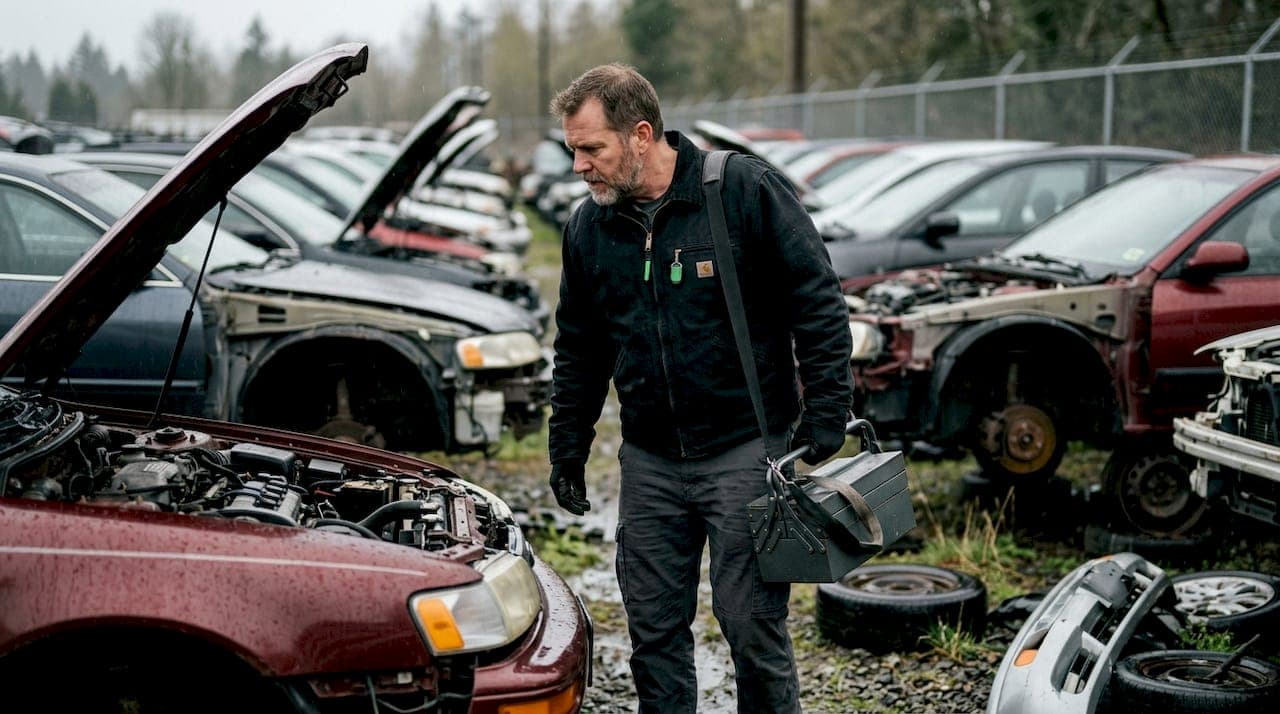
Self-service salvage yards, known in the industry as "u-pull-it" or "pick-and-pull" lots, are defined as facilities where customers remove parts themselves from donor vehicles. The best alternatives to pick n pull in Alberta range from full-service auto recyclers and cash-for-junk-car programs to online salvage networks, each solving a different version of the same problem: getting value from a vehicle you no longer need. Southsidecashforjunkcars serves Calgary and Okotoks with same-day pickup and instant cash payment, making it the fastest option for owners who want money rather than parts.
1. What are self-service salvage yards as pick n pull alternatives?
Self-service salvage yards are the closest places similar to pick n pull. You walk the lot, find your vehicle, pull the part yourself, and pay at the gate. The model keeps overhead low, and those savings pass directly to you.
The cost advantage is real. Self-service yards save customers 55–75% on parts like alternators, starters, and brake calipers compared to full-service pricing. Alternators specifically run 65–75% cheaper, and starters fall 67–72% below retail. That spread matters when you are repairing a vehicle worth less than $5,000.
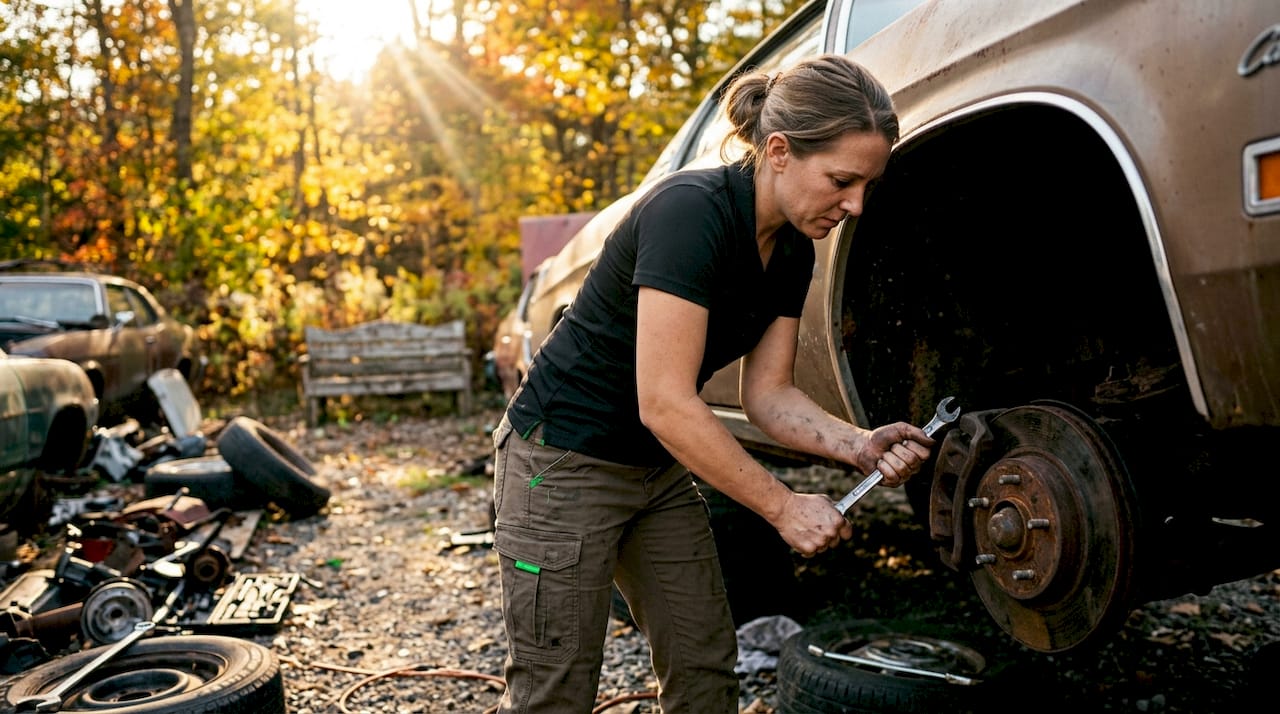
The tradeoff is effort and risk. Self-service lots carry no warranties. You buy what you see, and if the part fails, the cost is yours. Customers value hands-on inspection before pulling a part, since online or catalog orders give you no such option. That control is the core appeal of the u-pull-it model.
Pro Tip: Bring specialized tools, gloves, and penetrating oil before you visit any self-service lot. These yards offer minimal onsite equipment, and many require you to sign a liability waiver due to hazards like uneven terrain and broken glass.
2. How to prepare for a self-service yard visit
Preparation separates a productive trip from a wasted one. Inventory changes rapidly at salvage yards, so call ahead or check the yard's digital stock list before driving out. Most modern lots update their fresh-arrival inventory online daily.
Bring the right tools for your specific job. A basic kit covers sockets, wrenches, screwdrivers, a breaker bar, and zip ties for bundling loose parts. Add safety glasses and steel-toed boots. The terrain on most lots is rough, and the vehicles are not stabilized.
Know your part number before you go. Cross-reference your vehicle's year, make, model, and engine size against the donor vehicle on the lot. A wrong-fitment pull wastes your time and your entry fee.
3. Full-service auto recyclers: a less hands-on option
Full-service auto recyclers are the next step up from self-service yards. Staff pull the part for you, test it, and back it with a warranty. Full-service recyclers test every part for quality and offer warranties, which eliminates the "buying blind" risk common in self-service lots.
You pay more for that assurance. Full-service pricing typically runs 30–50% above what you would pay at a u-pull-it yard for the same part. The premium buys you a tested component, professional removal, and a return policy if the part does not perform.
Many salvage yards now offer professional part-pulling and delivery to serve customers who lack the tools or time for self-service. Some operate as hybrid models, letting you choose your service level at checkout. This flexibility makes full-service recyclers a practical middle ground between a pick-and-pull lot and a new-parts retailer.
Full-service recyclers suit you best in these situations:
- You need a high-value part like an engine or transmission where a warranty matters.
- You lack the tools or physical ability to pull parts yourself.
- You are buying remotely and need the part shipped.
- The vehicle is rare and the part is hard to source, making a tested unit worth the premium.
4. Cost comparison: self-service vs. full-service recyclers
The price gap between these two models is significant. Engines in self-service yards start near $200 but can exceed $1,000 depending on the vehicle and condition. A full-service recycler selling the same engine with a tested warranty will price it considerably higher, often $400–$1,500 or more.
The right choice depends on your risk tolerance and mechanical skill. If you can diagnose a part on the car before pulling it, self-service is almost always the better financial decision. If you cannot, the warranty from a full-service yard is cheap insurance.
| Situation | Best option |
|---|---|
| You want the lowest price and can pull parts yourself | Self-service salvage yard |
| You need a warranty and professional removal | Full-service auto recycler |
| You want to sell the whole car fast for cash | Cash-for-junk-car service |
| You need a rare part and cannot visit in person | Online salvage marketplace |
5. Selling your junk car for cash instead of parting it out
Cash-for-junk-car programs are the right pick n pull cash for junk cars alternative when you want money from the vehicle rather than parts from it. Selling a junk car for cash includes fast payment, free pickup, and paperwork handling, removing every friction point from the disposal process.
The process is straightforward. You call or submit your vehicle details online, receive an offer, and schedule a pickup. The buyer handles towing and title transfer. You receive cash the same day in most cases.
Southsidecashforjunkcars operates this model in Calgary and Okotoks. The service accepts vehicles in any condition, running or not, with no hidden fees and no negotiation delays. For Alberta owners sitting on a non-running vehicle, this option converts a liability into cash without requiring a single tool.
Pro Tip: Before calling any cash-for-cars buyer, remove personal items and confirm you have the vehicle title or registration. Having documents ready speeds up the transaction and prevents delays on pickup day.
Key benefits of cash-for-junk-car programs:
- Same-day or next-day pickup in most urban Alberta areas.
- No towing costs charged to the seller.
- Payment in cash at the time of pickup.
- The buyer handles all recycling and environmental compliance.
- No requirement to diagnose, repair, or clean the vehicle.
6. Online salvage marketplaces and digital parts networks
Online platforms have changed how Alberta drivers source used auto parts. Instead of visiting a single lot, you can search inventory across dozens of licensed yards from your phone. Licensed salvage yards in online marketplaces adhere to EPA standards and industry regulations, giving you confidence that the parts come from compliant operations.
Digital networks let you filter by vehicle year, make, model, and engine size before you commit to a purchase. You confirm fitment before the part ships. That specificity reduces the risk of buying a part that does not fit, which is a common problem with generic online listings.
"Viewing salvage yards as a network connected via digital platforms enhances part sourcing success and environmental compliance. Checking online 'fresh arrival' inventories and confirming the presence of needed vehicles prevents wasted trips and maximizes efficiency."
The limitations are real, though. You cannot inspect the part in person before buying. Photos may not show hidden damage. Shipping adds cost and time. For high-value or fitment-critical parts, calling the yard directly and asking specific condition questions is worth the extra step.
Tips for buying used parts online:
- Use platforms that list only licensed, insured salvage yards.
- Request additional photos of the specific part before paying.
- Confirm the return policy before completing the transaction.
- Cross-reference the part number against your vehicle's VIN.
7. Donation programs and charitable vehicle disposal
Donating a vehicle is a legitimate alternative to both salvage yards and cash buyers. Several Canadian charities accept running and non-running vehicles, sell them at auction or to recyclers, and issue a tax receipt for the fair market value. For Alberta residents in higher tax brackets, the receipt can offset more value than a cash sale.
The process mirrors cash-for-cars in simplicity. You contact the charity, schedule a pickup, and receive a receipt by mail. The vehicle goes to auction or a licensed recycler. You get a deduction rather than immediate cash.
Donation works best when the vehicle has low scrap value but some market value, and when you want to support a specific cause. If the car is worth less than $500 in scrap, a cash buyer will likely offer more net value than the tax receipt provides.
8. Municipal and provincial recycling programs
Alberta's Automotive Recyclers of Canada (ARC) network and provincial end-of-life vehicle programs provide a regulated path for disposing of vehicles that have no remaining parts value. These programs focus on proper fluid removal, battery recycling, and metal recovery. They do not pay cash for vehicles, but they handle disposal responsibly and at no cost to the owner in some cases.
This option suits owners of vehicles that are too damaged or stripped to attract a cash buyer. The environmental compliance aspect matters in Alberta, where improper vehicle disposal can result in fines under provincial environmental protection regulations.
Key takeaways
The most cost-effective approach to vehicle disposal in Alberta depends on whether you need parts, cash, or simply a responsible way to remove a vehicle you no longer use.
| Point | Details |
|---|---|
| Self-service yards save the most on parts | Savings of 55–75% on alternators, starters, and calipers make u-pull-it lots the top choice for DIY repairs. |
| Full-service recyclers reduce buying risk | Tested parts with warranties justify higher prices when fitment certainty matters. |
| Cash-for-junk-car programs are fastest | Services like Southsidecashforjunkcars offer same-day pickup, free towing, and instant cash with no tools required. |
| Online networks expand your search | Digital salvage platforms connect you to EPA-compliant yards across the region without requiring a physical visit. |
| Preparation prevents wasted trips | Calling ahead to confirm inventory saves time at both self-service and full-service yards. |
What I have learned from years of watching people choose the wrong option
The most common mistake I see Alberta car owners make is defaulting to a self-service yard when they have no intention of pulling the part themselves. They drive out, realize they forgot tools, and either overpay at the counter for staff assistance or leave empty-handed. The u-pull-it model rewards preparation. Without it, you are paying for an experience you are not equipped to use.
The second mistake is the opposite: spending full-service recycler prices on a low-stakes part. A door handle or a trim panel does not need a warranty. Pull it yourself, save 60%, and spend the difference on something that matters.
Where I have seen cash-for-junk-car services genuinely outperform every other option is with non-running vehicles. A car that cannot move has no value at a self-service yard because you cannot get it there. A full-service recycler will lowball you because they factor in towing. A service like Southsidecashforjunkcars absorbs that cost and still pays a fair rate. For a dead vehicle sitting in a Calgary driveway, that math is hard to beat.
My honest advice: match the option to the outcome you actually want. If you want parts, go to a yard. If you want cash, call a buyer. If you want to minimize effort entirely, get a fast cash offer and let someone else handle the rest.
— Franz
Vehicle disposal made simple with Southsidecashforjunkcars
Southsidecashforjunkcars offers Calgary and Okotoks residents a direct path from unwanted vehicle to cash in hand. No tools, no yard visits, no negotiation.
The process takes three steps: contact the team with your vehicle details, schedule a free pickup, and receive cash on the spot. Southsidecashforjunkcars accepts vehicles in any condition, running or not, and handles all paperwork and towing at no charge. For Alberta owners who want top dollar for their scrap car without the hassle of a salvage yard visit, this is the most direct route available. Get your offer today and clear that driveway.
FAQ
What is the cheapest way to get used auto parts in Alberta?
Self-service salvage yards offer the lowest prices, with savings of 55–75% on common parts like alternators and starters compared to full-service pricing. You pull the part yourself, which keeps costs down but requires tools and preparation.
How does cash for junk cars work compared to a pick-and-pull yard?
Cash-for-junk-car services pay you for the whole vehicle and handle free towing and paperwork, while pick-and-pull yards require you to bring the car in and pull parts yourself. Cash programs suit owners who want fast disposal rather than individual parts.
Are online salvage marketplaces reliable for used auto parts?
Online platforms that list licensed, EPA-compliant yards are generally reliable, but you cannot inspect parts in person before buying. Always confirm the return policy and request detailed photos before completing a purchase.
Do I need tools to visit a self-service salvage yard?
Yes. Self-service yards provide minimal onsite equipment, so you need to bring your own sockets, wrenches, and safety gear. Penetrating oil and gloves are also recommended, since many bolts are rusted and the lots contain physical hazards.
When should I choose a full-service recycler over a self-service yard?
Choose a full-service recycler when you need a high-value part like an engine or transmission, require a warranty, or cannot remove the part yourself. The higher price buys you a tested component and professional removal.