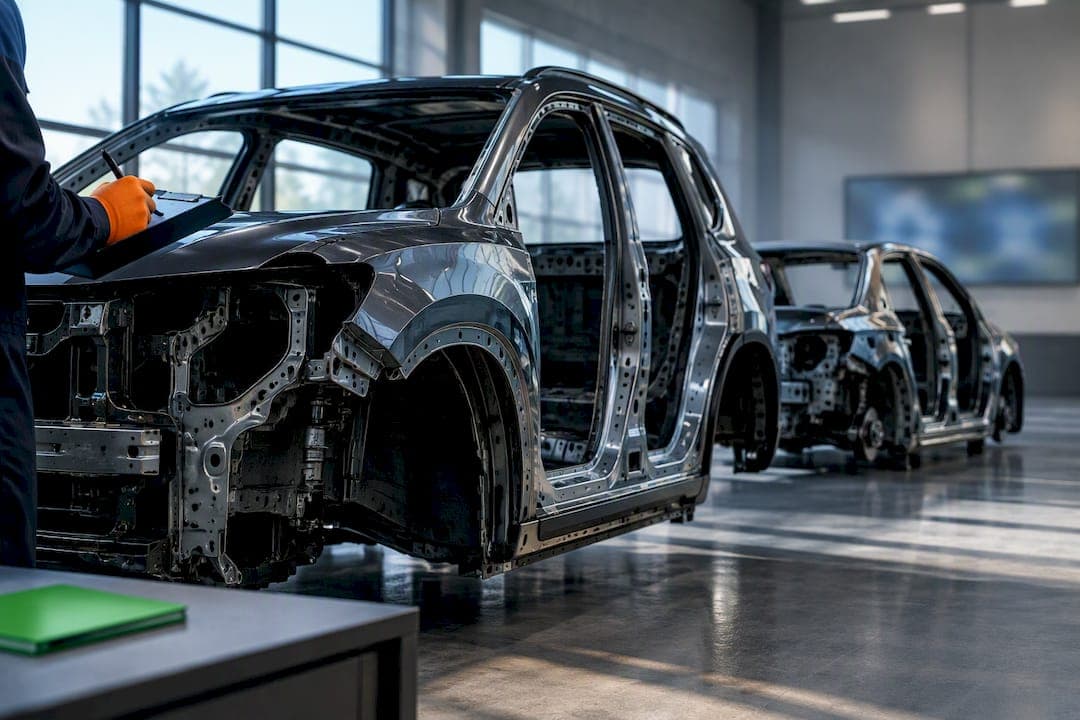
SUVs typically scrap for more than passenger cars, often by several hundred dollars, because they weigh more and pack in extra steel, aluminum, and sometimes a larger catalytic converter. But weight alone doesn't decide the number on the check. Metal prices, converter condition, and how complete the vehicle is all swing the final offer, whether you're calling a scrap yard or a same-day buyer like Southside Cash For Junk Cars.
TL;DR:
- SUVs typically pay more than passenger cars because they are heavier and contain more aluminum, steel, and high-value components like catalytic converters and alloy wheels.
- The scrap value depends on weight, material composition, and the resale demand for parts like converters, wiring, and electronics, which can swing offers by hundreds of dollars.
- Vertical market demand influences prices regionally, with heavier and aluminum-rich SUVs generally fetching higher payouts in provinces like Ontario and Alberta.
- Factors such as vehicle condition, missing parts, and environmental disposal costs can significantly reduce the final offer, even for high-value vehicles.
- Obtaining itemized quotes, photographing key components, and understanding regional rates can maximize your payout when selling for scrap.
Table of Contents
- SUV vs Car Scrap Value: How Yards Calculate What They'll Pay
- SUV vs Car Scrap Value: Weight and Materials Compared
- What Else Changes Your Scrap Offer
- Estimate Your Vehicle's Scrap Value: A Quick Worksheet
- How to Get the Best Payout From a Scrap Buyer
- Publisher Perspective: When a Cash Buyer Beats a Metal-Only Scrapyard
- Environmental Rules That Affect What Yards Will Pay
- Used Parts: What SUVs and Cars Are Really Worth
- Age, Depreciation, and What They Do to Scrap Value
- Why SUV Demand at Scrap Yards Runs Higher
- Our Take: Stop Chasing the "Average" Number
- Get a Same-Day Cash Offer From Southside Cash For Junk Cars
- Where to Check Rates Before You Sell
- Sources
- FAQ
SUV vs Car Scrap Value: How Yards Calculate What They'll Pay
Every scrap offer starts with the same basic math: estimated weight multiplied by the metal rate per kilogram, plus whatever separate parts are worth, minus towing and processing costs. That's the formula behind almost every quote you'll get, whether it's scribbled on a notepad or spit out by software at a bigger recycling operation.
Weight drives the base number because a typical car holds roughly 1,100 to 1,400 kilograms of metal, and that metal is what a yard actually resells by the ton. The composition matters just as much as the total weight:
- Steel makes up the bulk of most vehicles and sold for roughly $0.07 to $0.14 per kilogram in Ontario and Alberta through 2026.
- Aluminum shows up in wheels, engine blocks, and body panels on newer SUVs, and it fetches a noticeably higher per-kilogram price than steel.
- Copper, found in wiring harnesses and motors, commands the highest scrap price of the three by a wide margin.
Pro Tip: Catalytic converters and copper wiring are the two single items most likely to swing a quote by hundreds of dollars, so photograph the converter before you call anyone.
The catalytic converter is where quotes get interesting. A working converter with intact honeycomb material can add a meaningful chunk to an offer on its own, separate from the metal calculation entirely. Batteries and alloy wheels work the same way, priced as standalone items rather than folded into the per-kilogram weight math.

This is exactly why two buyers can look at the identical vehicle and land on two different numbers. One might be quoting pure shredded-metal value, while another factors in resale demand for the converter or the wheels sitting on it.
SUV vs Car Scrap Value: Weight and Materials Compared
Weight bands tell most of the story. A compact car typically runs 1,200 to 1,400 kilograms. A mid-size sedan sits around 1,500 to 1,700 kilograms. A compact SUV climbs to 1,600 to 1,900 kilograms, and a full-size SUV can hit 2,200 kilograms or more. Every extra hundred kilograms is extra metal a yard pays for.
That gap compounds with materials. Many SUVs and trucks lean harder on aluminum for body panels and structural components to offset their extra bulk, and aluminum's higher per-kilogram price stacks on top of the weight advantage they already have over sedans.
Provincial numbers back this up. Ontario's typical 2026 payout ranges show sedans landing around $250 to $800, while SUVs and crossovers run $400 to $1,500. Alberta tracks a similar pattern, with heavier vehicles pulling ahead consistently.
That said, a sedan isn't always the loser here. A few scenarios flip the script:
- A luxury sedan with a large, high-grade catalytic converter can out-earn a base-model SUV missing its converter entirely.
- Aluminum-intensive performance cars sometimes carry more resale-grade metal per kilogram than an older, steel-heavy SUV.
- A car with intact luxury components (premium wheels, working electronics) can beat a stripped SUV shell every time.
What Else Changes Your Scrap Offer
Weight and materials set the ceiling, but several other factors decide where your actual offer lands within that range.
- Running condition matters more than people expect. A vehicle that still runs can sometimes be sold for parts at a premium over pure scrap value, while a non-running shell gets priced on metal and salvageable components alone.
- Completeness changes the math fast. A missing catalytic converter, pulled rims, or a removed battery can shave hundreds off an otherwise solid quote.
- Regional demand shifts prices week to week. Buyer density varies by province, with Atlantic Canada generally seeing fewer buyers and softer offers than Ontario or Alberta.
- Expect standard deductions. Towing, environmental processing fees, and paperwork handling are common line items that get subtracted from the headline number, so ask upfront what's included.
Estimate Your Vehicle's Scrap Value: A Quick Worksheet
You don't need a shop appointment to get a ballpark number before you start calling buyers.
- Find your curb weight. Check your owner's manual, a manufacturer spec sheet, or a quick online lookup by year, make, and model.
- Apply a conservative metal rate. Use $0.07 to $0.14 per kilogram for steel as a 2026 baseline, and bump the estimate up if your vehicle has significant aluminum content.
- Add separate-item values. Tack on estimated amounts for an intact catalytic converter, a working battery, and alloy wheels if you still have them.
- Subtract towing and processing. Most buyers deduct these costs unless they explicitly offer free pickup.
Worked example: A 1,300-kilogram compact sedan at $0.10 per kilogram runs roughly $130 in base metal value, plus a modest bump for a working converter, landing in the lower end of typical national scrap ranges of $150 to $1,500. A 1,800-kilogram compact SUV at the same rate starts around $180 in base metal alone before parts are added, pushing it toward the middle or higher end of that same range. Treat both numbers as estimates. Actual offers shift based on each buyer's assumptions and whatever high-value parts are still attached.
How to Get the Best Payout From a Scrap Buyer
A little prep work before you make the call can add real money to your final offer.
- Gather your title and ID ahead of time. Most buyers won't finalize a deal without proof of ownership.
- Clear out personal belongings and take photos of the VIN, the catalytic converter, and the wheels.
- Present the vehicle as complete wherever possible. A stripped car almost always earns less than one left intact.
- Ask every buyer for an itemized quote showing their assumed metal rate and any deductions, not just a lump number.
- Collect at least three quotes before committing. Prices vary more between buyers than most owners expect.
- Ask about pickup and towing fees specifically, and see if a same-day offer beats a delayed one once you factor in the wait.
Pro Tip: If a buyer refuses to break down their quote into metal value, parts value, and deductions, or pressures you to sign before you've compared offers, walk away. Legitimate buyers itemize without hesitation.
Publisher Perspective: When a Cash Buyer Beats a Metal-Only Scrapyard
A straightforward process changes what a vehicle is worth to a buyer. The process runs in three steps: you contact the buyer, they schedule same-day pickup, and you get paid on the spot. That speed matters most to sellers who need a vehicle gone today, not in two weeks.
Buyers who resell parts, engines, transmissions, converters, can pay above pure metal-only value because those components carry resale demand separate from shredded metal pricing. That premium tends to matter most for non-running vehicles, salvage-title cars, and owners who simply need fast removal without haggling over line items.
Environmental Rules That Affect What Yards Will Pay
Environmental regulation touches scrap value more than most sellers realize. Vehicles need fluids drained, batteries removed safely, and hazardous components handled according to provincial environmental standards before a yard can process them for metal recovery. Buyers who handle this properly often build the processing cost into their quote as a deduction, which is one reason final numbers come in lower than the raw metal math would suggest.
Catalytic converters sit at the center of this too. They're regulated separately in many jurisdictions because of the precious metals inside them (platinum, palladium, rhodium), and legitimate buyers document converter serial numbers partly for environmental compliance and partly to deter theft. That documentation step can slow down a quote slightly, but it protects you as the seller from being tied to a stolen-parts transaction later.
Fluid disposal rules also explain part of the weight-based advantage SUVs sometimes carry. Larger vehicles hold more oil, coolant, and transmission fluid, all of which require proper handling under provincial environmental rules. A buyer equipped to manage that disposal correctly can process a bigger vehicle more efficiently, which sometimes translates into a better offer since they're not passing disposal costs on to a third party. Ask any buyer how they handle fluid removal. It's a reasonable question, and a legitimate operation will have a straight answer.

Used Parts: What SUVs and Cars Are Really Worth
Parts resale value diverges sharply between SUVs and cars, and it's driven by fleet size on the road. Common sedan models have huge numbers of matching vehicles still in service, which keeps steady demand for used doors, mirrors, and interior parts, but also means supply is abundant and prices per part stay modest.
SUVs flip that equation in certain markets. In regions with truck and SUV heavy vehicle fleets, demand for used SUV parts, transfer cases, larger brake components, roof racks, tends to run higher relative to supply, which can push individual part prices up even when the overall vehicle count is lower than sedans.
Engines and transmissions follow their own logic entirely. A running SUV engine with reasonable mileage can often out-earn a sedan's engine in raw dollar terms, simply because SUV engines are frequently swapped into work trucks or used as replacements in a wider range of models. Alloy wheels tell a similar story: larger SUV wheels with less common bolt patterns sometimes sell slower but at a higher price point than the smaller, more universal wheels found on compact cars.
Age, Depreciation, and What They Do to Scrap Value
Depreciation on the resale market and depreciation in scrap value are two completely different curves, and mixing them up costs sellers money. A car's trade-in value drops fast in its first five years, but its scrap value barely moves in that window because the metal content stays the same regardless of mileage or model year.
Where age actually matters for scrap is parts compatibility and material shifts. Older SUVs, particularly those built before automakers leaned into aluminum body panels, tend to be heavier in pure steel terms, which can mean a higher metal-only payout despite the vehicle's age. Newer SUVs with more aluminum content scrap for less per kilogram in raw weight but often carry higher-value individual components, larger catalytic converters, more sophisticated electronics, that offset the lighter metal weight.
Cars generally hit a point around 12 to 15 years old where parts demand drops off a cliff, since fewer matching vehicles remain on the road to need replacement parts. SUVs tend to hold parts value longer because owners keep them in service longer on average, which sustains demand for used components well past the point where an equivalent sedan's parts would have gone cold.
Why SUV Demand at Scrap Yards Runs Higher
Demand at the yard level isn't just about what a vehicle weighs. It's about what a yard's local buyers are looking for. In markets with heavy work truck and SUV usage, local demand for salvaged parts for larger vehicles runs higher, which pushes yards to offer more for SUVs specifically to secure inventory their customers want.
Sedans face steadier, more predictable demand because there are simply more of them. That keeps prices stable but rarely pushes them higher. SUVs see more volatile demand tied to seasonal factors, work truck fleets typically buy more replacement parts before winter, and regional economic conditions, but that volatility cuts both ways. When demand spikes, SUV offers can jump noticeably above their usual range. When it softens, they can drop back toward what a comparable sedan would earn.
Our Take: Stop Chasing the "Average" Number
The biggest mistake sellers make is treating scrap value like a fixed number they can look up once and trust. It isn't. The research backs a clear pattern, SUVs generally out earn cars because of weight and materials, but the spread within each category is wider than most people expect. A stripped SUV can lose to a well equipped sedan. A converter alone can swing an offer by a few hundred dollars.
Conventional advice tells you to "get a few quotes and pick the highest one." That's incomplete. The smarter move is getting itemized quotes so you can see whether one buyer is paying more because they value your converter correctly, or simply because they're padding a number to win your business without a documented breakdown.
Prioritize documentation over speed of decision. Photograph your VIN, your converter, your wheels, before you make a single call. That single habit does more to protect your payout than any amount of price shopping ever will.
— Franz
Get a Same-Day Cash Offer From Southside Cash For Junk Cars
Some buyers pay for the whole picture, not just shredded metal weight, because reselling engines, transmissions, and catalytic converters allows them to offer more than a metal-only scrapyard on many non-running vehicles. The process includes three steps: you contact the buyer, they handle same-day pickup at no cost, and you get instant cash before the tow truck leaves your driveway. There are no hidden fees or waiting on a check in the mail.
This service fits best if you're sitting on a non-running car, a salvage-title vehicle, or anything you simply need gone today without the back-and-forth of a private sale. If speed and a straight answer matter more to you than squeezing out an extra few dollars over a week of phone calls, get a free quote and same-day pickup started, or check current offers for scrap cars near you to see what your vehicle could bring today.
Where to Check Rates Before You Sell
Before calling any buyer, confirm current numbers against a few reliable sources. Ontario's 2026 provincial payout ranges give a solid benchmark for sedan versus SUV pricing. Canada-wide payout ranges by vehicle type help confirm you're not being lowballed regionally. For Alberta-specific context, our Calgary scrap value guide and notes on Alberta payout examples break down local numbers. If you're weighing a private sale instead, this trade-in value guide covers general timing considerations worth a look.
Sources
- New Ontario Regulations That Affect Scrap Car Prices in 2026
- Average Scrap Car Price by Province in Canada | Scrap Car Prices Per Ton
- How Much Scrap Metal Is in a Car?
- Is It Better to Scrap or Sell a Car? How to Decide
FAQ
Who Pays the Highest Price for Scrap Cars?
Buyers who resell parts, engines, transmissions, catalytic converters, typically pay more than yards that only price vehicles by metal weight. Southside Cash For Junk Cars falls into that first category, which is often why a specialist buyer's quote beats a metal-only scrapyard on the same vehicle.
What Is the Average Value of a Scrap Car in Canada?
Canada-wide payouts for a typical passenger vehicle commonly range from roughly $150 to $1,500, with SUVs and trucks usually landing at the higher end because of their greater weight and stronger parts demand. Ontario examples specifically put sedans around $250 to $800 and SUVs at $400 to $1,500.
Is It Better to Scrap or Sell My Old Car?
If your vehicle still runs and could reasonably sell privately for more than roughly $1,000 to $2,500, a private sale usually nets more money, but it takes longer and involves more effort. If it's non-running, damaged, or you need it gone fast, scrapping or selling to a cash buyer is almost always the simpler, faster option.
How Do I Calculate the Scrap Value of My Car?
Multiply your vehicle's approximate weight by the current metal rate per kilogram, then add estimated values for any intact catalytic converter, battery, or alloy wheels, and subtract towing or processing fees. A 1,100 to 1,400 kilogram car at roughly $0.07 to $0.14 per kilogram gives you a rough base number to start comparing quotes against.