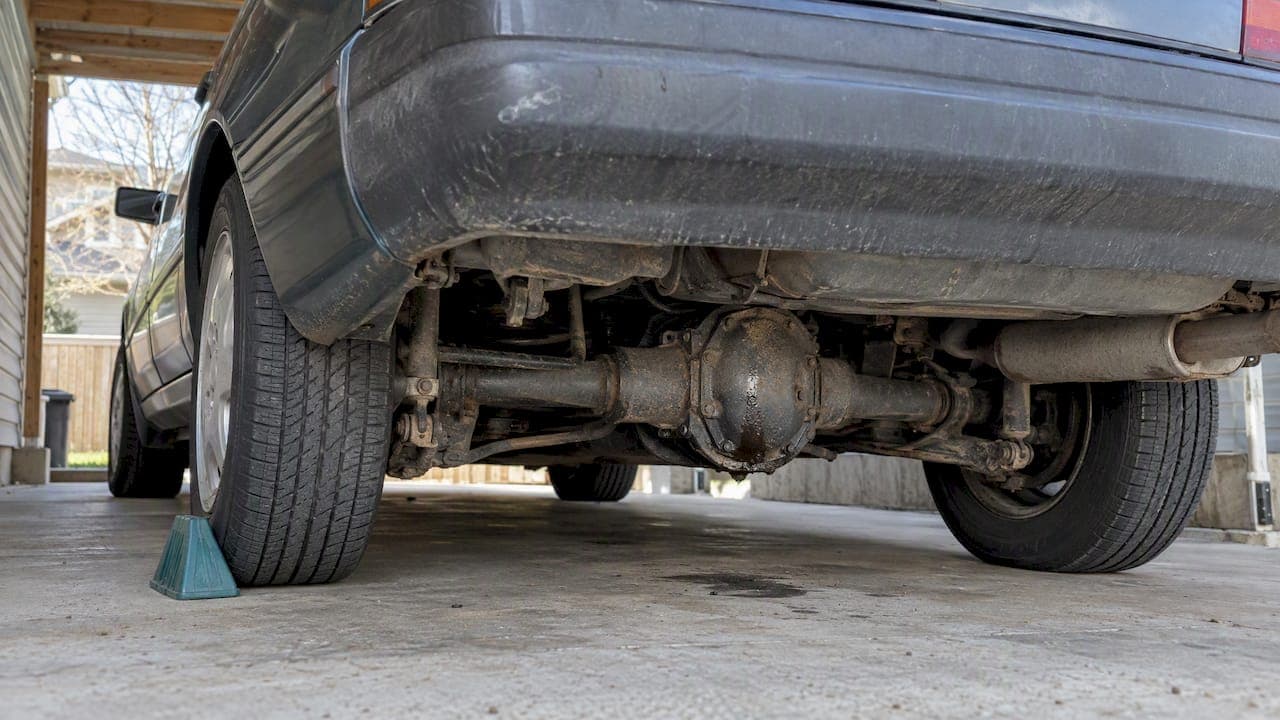
You can sell a car with a bad differential, and you don't need to fix it first. The realistic options are a private as-is sale, a sale to a dealer or wrecker, or a sale to a local junk car buyer who tows the car away. If the repair bill is larger than what the car would be worth running, the last option is usually the quickest and least stressful. Below we cover what a failed differential costs to fix, how to describe it honestly, and how to get paid in Calgary or Okotoks.
TL;DR
- A differential replacement often costs $2,500 to $6,000, which is more than many older cars are worth.
- Seals and bearings are the cheap end of the repair range, so get a diagnosis before you decide to scrap.
- A private buyer will discount hard for a whining or locked-up axle. A junk car buyer prices the car on parts and scrap value and removes it for you.
- In Alberta, a signed standard bill of sale is what transfers ownership, so fill one out whichever route you pick.
- We buy cars with differential failure in Calgary and Okotoks, with same-day pickup and cash on the spot.
Table of Contents
- What a bad differential actually means
- What the repair costs, and why that decides everything
- Does the warranty cover it?
- Your options for selling, compared
- Paperwork in Alberta
- How we handle a car with a bad differential
- Our perspective
- Handling fluids and the environment
- Mistakes to avoid
- FAQ
- Sources
What a bad differential actually means
The differential is a set of gears that lets the drive wheels on one axle turn at different speeds, for example when the car goes around a corner. Rear-wheel-drive cars, trucks and most SUVs have one at the back. Front-wheel-drive cars build it into the transaxle. All-wheel-drive vehicles can have two or three.
When it goes bad, the signs are hard to miss. A steady whine that changes with throttle often points to ring-and-pinion wear or a setup problem. Other common signs are clunking when you turn, howling at highway speed, vibration, and metal shavings in the fluid. In the worst case the gears or bearings seize, and the car stops moving.
The severity matters for how you sell:
| Condition | What you'll notice | Typical way to sell |
|---|---|---|
| Early wear | Faint whine, car drives normally | Private as-is sale with a clear discount, or a repair if the car is worth it |
| Advanced failure | Loud whine or clunk, vibration | Junk car buyer or wrecker, or a heavily discounted private sale |
| Seized or catastrophic | Car won't move, or drives only a short way | Junk car buyer with towing |
If the car can't be driven safely, don't drive it to a buyer. A seized differential can lock a drive wheel. Have it towed, or sell to someone who collects it.
What the repair costs, and why that decides everything
Before you sell, it helps to know what fixing the car would cost, because that figure sets the floor for any buyer's thinking.
According to ConsumerAffairs, a rear differential replacement typically runs $2,500 to $6,000, seal or bearing repairs $300 to $900, and rebuilds, where available, $1,000 to $2,500. Those are U.S. figures from late 2025, so treat them as a guide. Calgary shop rates and parts pricing will differ, and you should get a local quote.
Here is a quick way to decide:
- Get a written diagnosis from a shop you trust. A whine can be a worn bearing or a bad pinion seal, not a ruined gearset.
- Ask for two prices: a repair and a used-assembly replacement.
- Compare the repair total with what the car would sell for running. If the repair is more than about half of that value, repairing rarely makes sense on an older vehicle.
- Factor in everything else the car needs. A differential on top of worn brakes, rust and a pending safety inspection adds up quickly.
One point surprises many owners. A simple rebuild is not always on the menu. Some shops refuse rebuilds because specific components are hard to source, so a full assembly swap from a salvage unit is often the more predictable route for older vehicles, according to the same ConsumerAffairs breakdown. That pushes the cost up and puts the fix in a shop's hands rather than yours.
The cheapest differential repair is the one you avoid. If you keep a vehicle, the differential fluid change interval is worth knowing, since old, sludgy or low fluid is a common reason these gears fail. Most guides, including Popular Mechanics, call it one of the most overlooked maintenance jobs on rear-drive vehicles, because it sits under the car and gets little attention.

Does the warranty cover it?
Only in narrow cases. Powertrain warranties can cover failures caused by manufacturing defects, but they generally exclude normal wear and tear, towing beyond capacity and neglected maintenance, as ConsumerAffairs explains. If your car is still within its original powertrain term, call the dealer's service department before selling and ask in writing whether the failure is covered. If it's an older car out of warranty, which is the case for most vehicles we see, skip this step.
Your options for selling, compared
Private sale as-is
You can list the car and say plainly that the differential is faulty. Buyers who respond are usually mechanics, flippers and people hunting for parts. They will want to test drive, hear the noise, and haggle. Expect a lot of messages, no-shows and lowball offers, and expect to deal with a car that may not move under its own power.
If you go this route:
- Describe the symptom honestly: where the noise comes from, at what speed, and whether the car drives.
- State "sold as is, where is" in the ad and in the bill of sale.
- Price it against comparable cars with the repair cost deducted, not against running examples.
- Don't let strangers test drive a car with a possible seizure risk without being clear about it.
Honesty protects you. Hiding a known mechanical fault invites a dispute after the sale, and a written description in the bill of sale is your best record of what the buyer knew.
Trade-in at a dealership
Some dealers will take a car with a mechanical problem as part of a trade, but they will price in the repair, the risk and the cost of moving it. A non-running car often ends up at auction or with a wrecker. If you are buying another vehicle from them anyway, ask, but compare the number with a direct cash offer.
Selling to a wrecker or scrap yard
Wreckers price on the car's weight in metal and on parts that can be resold: the engine, body panels, wheels, electronics. A bad differential is a small drag on that value, since the rest of the car still has worth. The catch is logistics. Not every yard picks up for free, and some quote one price on the phone and a lower one at the gate.
Selling to a local junk car buyer
This is what we do. You call, describe the car, get an offer, and we come to you. The differential problem doesn't stop the sale, because we are not buying the car to drive it. For a car that has also failed a safety inspection, has a blown engine, or just sits in the driveway, it is typically the shortest path from problem to cash. If your car has more than one issue, our page on selling a car with blown engine or transmission failure in Calgary covers the related situation.
Paperwork in Alberta
Paperwork is where owners tend to worry most, and it is simpler than it sounds.
In Alberta, the vehicle registration certificate is not proof of ownership, and it doesn't have to travel with the vehicle in a private sale. What you need is a clear bill of sale signed by both parties. Alberta.ca offers a free standard form for this. The AMA also provides a printable bill of sale and says it should include the date, buyer and seller names and signatures, and the vehicle's make, model, year and VIN.
A practical checklist:
- Fill out the bill of sale with the sale price and the line "sold as is".
- Keep a copy, and take a photo of the signed page.
- Remove your plates if your buyer is not taking them, and cancel or transfer your insurance after the vehicle has left.
- Take photos of the odometer and the car at pickup.
- Take your personal belongings out, including anything in the glovebox and trunk.
If the vehicle will leave Alberta, other jurisdictions may ask for a registration certificate as proof of ownership. For a car heading to a local scrapper or wrecker, that is rarely an issue.
How we handle a car with a bad differential
We buy junk, non-running, damaged, scrap and failed-inspection cars, plus ATVs and side-by-sides, in Calgary and Okotoks. The process has three steps:
- Contact us. Tell us the make, model, year, location and what's wrong. "Bad differential" is enough, but it helps to mention if the car moves.
- We pick up the car. Same-day towing is free, and there are no hidden fees.
- You get paid. Cash is paid when the car is collected.
If you want to start now, our cash for junk cars page is where to ask for an offer, or you can start from our main page. For the broader picture of what a stalled car can bring, see our guide to selling a non-running car.
We don't publish a fixed price list, because the offer depends on the car: make, model, year, weight, which parts are intact and current scrap metal prices. Ask for the number and compare it with what you'd net from any other route after towing costs and time.
Our perspective
Most people who call us about a differential have spent weeks wondering whether to fix it. The pattern is almost always the same. The car is ten to twenty years old, it has a noise or a seized axle, a shop has quoted a four-figure repair, and the car's running value is not much higher than that. At that point the repair is a bet that nothing else will fail next month.
We make our money from parts and scrap value, so we look at a car differently from a private buyer. A seized differential is one problem on a vehicle with an engine, wheels, panels and a catalytic converter that can all be recovered. That is why we can take cars that others won't touch, and why a clear description on the phone is worth more to you than any bargaining.
Our advice: get one diagnosis, because it is cheap and sometimes the news is better than expected. If it is a seal or a bearing and the car is otherwise solid, fix it. If it is a full gearset on a tired car, sell it, and don't pay a tow truck to move it somewhere first. Our blog covers the cost side in skipping a $100 to $300 tow.
— Franz
Handling fluids and the environment
If you drain the differential or other fluids before the car goes, don't pour them out or put them in the trash. The City of Calgary accepts automotive fluids such as motor oil, transmission fluid and antifreeze at its household hazardous waste drop-off sites for free, with a maximum container size of 20 litres. The city also lists grease, gear oils and lubricants among the automotive chemicals you shouldn't dispose of in carts or drains. Differential fluid is a gear oil, so it belongs in that group.
You don't have to drain anything to sell the car to us. Leaving that to a professional recycler is usually the more responsible choice for a vehicle with a major drivetrain failure. Pollution-prevention guidance in the City's automotive wastewater compliance document favours avoiding waste first and proper disposal last, and recycling a whole car through a professional sits well within that thinking.
Mistakes to avoid
- Driving it "one last time". A failing differential can lock up, and a tow is cheaper than a collision or a destroyed axle.
- Hiding the problem. A buyer who discovers it after the fact can turn a simple sale into a dispute. Say it up front and put "as is" in writing.
- Pricing it as a running car. Subtract the repair cost, or the car will sit unsold.
- Paying for a tow to a buyer you haven't checked. Ask whether pickup is free and whether the quoted price stands at pickup.
- Skipping the bill of sale. It is the record that ownership changed hands, and it's free.
- Choosing a donation by mistake. If you need money, a donation won't provide it. Our comparison of car donation versus cash in Calgary explains the difference.
FAQ
Can I sell a car with a bad differential?
Yes. Cars with differential, engine or transmission failure are bought every day by wreckers, scrappers and junk car buyers. A private buyer is possible too, but expect a heavy discount. Describe the fault accurately and sell as is.
How much is a car with a bad differential worth?
It depends on the make, model, year and the condition of the rest of the car. A buyer will start from the car's value running and subtract the repair. With a differential replacement often running $2,500 to $6,000, the deduction can be large. A junk buyer values the parts and metal instead, so contact us with the details for an offer.
What does a failing rear differential sound like?
Typically a whine or howl that changes with speed or throttle, and a clunk or grinding on turns. CarParts.com describes a steady whine that shifts with throttle as a possible sign of ring-and-pinion wear. A mechanic should confirm the cause before you decide on the repair.
Do I need the registration to sell a non-running car in Alberta?
The registration certificate isn't proof of ownership in Alberta. A signed bill of sale is what transfers the vehicle. Have your ID and the VIN ready, and ask the buyer what else they need.
Sources
- Rear differential replacement cost, ConsumerAffairs
- Standard bill of sale, Alberta.ca
- Bill of Sale in Alberta, AMA
- Register an Alberta vehicle in other jurisdictions, Alberta.ca
- Differential, Cars.com
- How to Maintain Your Car's Differential, Popular Mechanics
- Household Hazardous Waste acceptable items, City of Calgary
- How to safely dispose of automotive chemicals, City of Calgary
- Automotive industry wastewater compliance, City of Calgary
- Differential fluid change interval