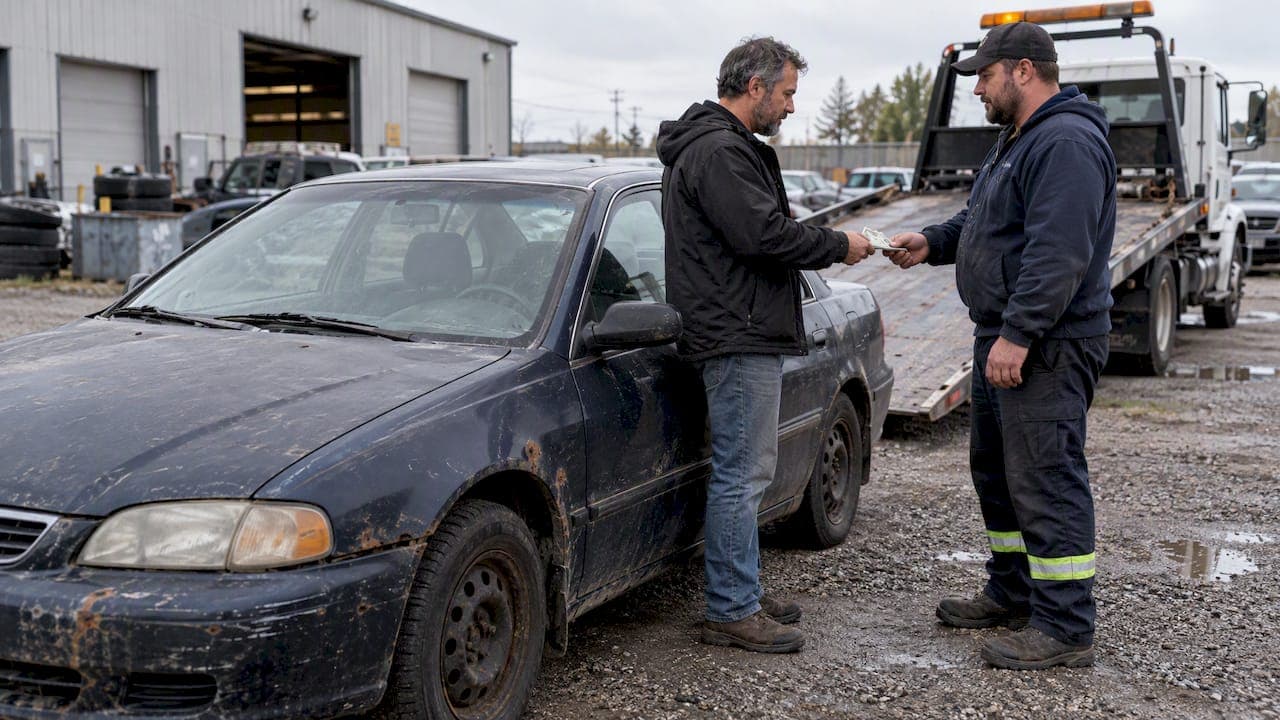
Most Calgary junk cars sell for a cash amount usually ranging in the low hundreds, with heavier vehicles or those with resellable parts sometimes fetching more. Free towing and same-day pickup are standard with reputable local buyers, but you should always get that confirmed in writing before the truck shows up. Our advice: request a written net offer that spells out pickup timing and paperwork before you say yes.
TL;DR:
- Most junk cars in Calgary sell for between $100 and $700 depending on size, condition, and resale parts, with larger vehicles often fetching higher prices.
- Buyers prioritize usable parts like catalytic converters, engines, and transmissions over scrap metal weight when calculating offers, especially if components are intact or functional.
- Always obtain a written quote that confirms free towing and specifies pickup time to avoid unexpected fees or last-minute deductions.
- Confirm buyer credentials by asking questions about fees, payment method, and paperwork to avoid scams or unlicensed operators.
- Prepare your vehicle by removing personal belongings, plates, and taking photos of the VIN and odometer before scheduling pickup.
Table of Contents
- Typical payouts and realistic cash ranges in Calgary
- What determines the offer: the factors buyers use
- Process, timeline, and fees: how removal and payment happen in Calgary
- How to get a reliable offer: questions to ask and red flags to avoid
- Why choose a local specialist and what Southside offers
- Practical seller perspective: a quick checklist to maximize net cash
- How to get a fast quote from Southside and schedule removal
- FAQ
- Sources
- Authoritative Calgary and Alberta links to check before you sell
Typical payouts and realistic cash ranges in Calgary
Headline ads promising huge payouts for "any junk car" almost always describe the exception, not the rule. A reputable buyer bases the offer on weight, parts, and condition, not a flat number pulled from a billboard.
Here's roughly what to expect based on vehicle condition:
- Stripped or very old compact cars: often sell for lower amounts, since there's little usable metal or salable parts left.
- Mid-size sedans or SUVs in rough but complete condition: typically sell for moderate amounts, reflecting their higher scrap weight and some resale value in parts.
- Larger trucks, vans, or vehicles with intact engines, transmissions, or catalytic converters: often command higher prices, as those components resell well on their own.
A car with a blown engine but an intact catalytic converter and usable body panels will usually out-earn a complete but heavily rusted car of the same size. Ads showing "up to $1,000" describe rare vehicles with unusually high-value parts, not the typical Calgary scrap car. Our scrap value guide for Calgary breaks down how these ranges get calculated in more detail.
What determines the offer: the factors buyers use
Buyers weigh several things when they put a number on your car, and understanding them helps you anticipate what you'll get before you make a call.
- Make, model, and year: certain models have stronger demand for used parts, which pushes offers up.
- Usable parts: a working transmission, alternator, or set of tires adds real dollars beyond scrap weight.
- Catalytic converter presence: these are among the most valuable single components on an older vehicle.
- Vehicle completeness: a car missing its engine or major body panels scores lower than one that's whole, even if neither runs.
- Scrap metal weight: heavier vehicles generally fetch more for their raw steel content.
- Lien or salvage status: unresolved liens or salvage titles can complicate or reduce an offer until cleared.
For most buyers, parts resale potential outweighs raw metal value. A dismantler can sell a used transmission for far more than its weight in scrap steel, so that part alone can swing an offer by a wide margin.
Pro Tip: Be upfront about what's missing or broken. Transparency about damage tends to produce a more accurate first offer instead of a lowball number that gets renegotiated at pickup.
Process, timeline, and fees: how removal and payment happen in Calgary
The transaction usually follows a predictable sequence, and knowing it ahead of time helps you avoid surprises on pickup day.
- Get a quote: describe the vehicle's make, model, year, and condition, either by phone or online.
- Receive a written offer: a reputable buyer gives you a specific dollar figure, not a vague range.
- Schedule pickup: many Calgary buyers offer same-day service, though some sellers choose a scheduled time that fits their day.
- Vehicle inspection on arrival: the driver confirms the vehicle matches what was described.
- Payment on the spot: cash or another agreed method changes hands once the car is loaded.
"Free towing" should mean exactly that: no charge for the tow truck, no deduction from your quoted price. Watch for buyers who quote a number, then subtract a towing fee, an "environmental fee," or a paperwork charge at pickup. Confirm the final net amount in writing before the truck arrives, and treat any last-minute fee change as a reason to call someone else. Our fast pickup explainer walks through what a typical same-day appointment looks like from start to finish.
How to get a reliable offer: questions to ask and red flags to avoid
A few direct questions before you commit will save you a frustrating pickup day.
- Is towing really free, and is that confirmed in the written offer?
- Who pays any fees, and is the number you're quoted the final net amount?
- What payment method is used, and is it paid at pickup?
- What documents do you need from me, and what will you provide?
- What's the realistic pickup window, same-day or scheduled?
For paperwork, Alberta requires specific information on a standard bill of sale, including buyer and seller names and addresses, the VIN, a vehicle description, the agreed price, the odometer reading, and signatures from both parties. Have your ID, registration, and VIN ready, and ask about cancelling your license plate once the sale is complete.
Watch for red flags: requests for an advance payment, pressure to decide immediately, vague or missing paperwork, or a seller who won't verify their business licensing. The AMVIC consumer guide on spotting a curber recommends checking any business against AMVIC's database and avoiding anyone who avoids in-person verification or rushes the transaction.
Why choose a local specialist and what Southside offers
Our process follows three straightforward steps: you contact the buyer, the vehicle is picked up, and payment is made on the spot. This typically includes prompt payment, free towing, and same-day pickup with no hidden fees added at the curb.
Many local buyers serve Calgary and Okotoks and are familiar with local pricing and paperwork rather than working off a national call center script. Customer reviews generally reflect a straightforward approach. Whatever buyer you choose, insist on a written bill of sale consistent with Alberta's standard requirements so there's no ambiguity about the sale once the truck pulls away.

Practical seller perspective: a quick checklist to maximize net cash
Before the tow truck arrives, pull out anything personal, and snap a photo of the VIN and odometer for your own records. Have your ID and vehicle title ready, and jot down any known mechanical issues so you can answer questions accurately.

Call a few buyers and compare written offers rather than accepting the first number you hear. A slightly lower offer with guaranteed same-day pickup can beat a higher one that takes a week to schedule.
Drop batteries and fluids at a Calgary Eco Centre rather than leaving them in the vehicle. Some eco-centre services are free, though heavier mixed loads may carry a weight-based charge.
Pro Tip: Take your plates off before pickup. Most buyers don't need them, and Alberta sellers are generally responsible for canceling their own registration.
— Franz
How to get a fast quote from Southside and schedule removal
If you're ready to turn that car into cash, you can reach out to local buyers with your VIN, location, and a quick description of the vehicle's condition. Many respond quickly and can arrange same-day pickup in most cases.
What you get with us:
- Instant cash on pickup or immediate payment depending on the buyer.
- Free towing commonly included in the quoted price.
- No hidden fees, so the number quoted is typically the amount you receive.
Compare any offer you get against ours, confirm the paperwork, and then book your pickup through our junk car buyer page.
FAQ
How much does it cost to remove junk in Calgary?
Reputable junk car buyers in Calgary don't charge you to remove a vehicle. Instead, they pay you, with typical cash offers ranging from roughly $100 for a stripped compact to $700 or more for a complete vehicle with resellable parts.
What's the most a junkyard will pay for a car?
The top end depends heavily on parts condition rather than a fixed ceiling. A vehicle with an intact engine, transmission, or catalytic converter can command several hundred dollars more than a stripped car of the same size, though published "up to" figures describe exceptional cases rather than the average sale.
Where can I get cash for my junk car in Calgary?
Local specialists serving Calgary and Okotoks, including Southside Cash For Junk Cars, offer same-day quotes and pickup. You can also check third-party options like Kamocars for comparison before committing to an offer.
How do I calculate the scrap value of my car?
A rough scrap value floor comes from your vehicle's weight multiplied by the current local scrap-metal rate, though final offers also factor in usable parts and resale potential. There's no official Alberta formula that guarantees a price, so treat any weight-based estimate as a starting point, not a final number.
Sources
Authoritative Calgary and Alberta links to check before you sell
A few official sources are worth bookmarking before your pickup:
- Standard bill of sale requirements for completing your transfer correctly.
- AMVIC's guide to spotting unlicensed sellers before accepting an offer.
- City of Calgary Eco Centre guidance for disposing of batteries and fluids safely.