Call your insurer the same day the tow truck takes your car. Do not cancel early, and do not scrap while a claim is open without written insurer approval. Once the vehicle is gone, cancel or transfer your policy, ask for a prorated refund in writing, hand your plates to the province, and keep the recycler's bill of sale as proof the car is legally off the road.
TL;DR:
- Cancel your insurance only after your vehicle has been physically removed and confirmed off your policy in writing by the insurer.
- Request a prorated refund if you cancel mid-term, as scrapping a car typically qualifies for the better prorated calculation rather than a short-rate penalty.
- Never scrap a car while an insurance claim is open without explicit insurer approval, since early disposal can void the claim and delay payouts.
- Use licensed recyclers who provide proper documentation like a bill of sale or certificate of destruction to avoid environmental and insurance compliance issues.
- Returning your license plates to the provincial registry is your responsibility, and keeping proof of disposal ensures smooth deregistration and insurance transition.
Table of Contents
- Insurance to Scrap Car Canada: The Step-by-Step Process
- Prorated vs. Short-Rate Refunds: What You're Owed
- Never Scrap a Car Mid-Claim Without Sign-Off
- Does Scrapping a Car Hurt Your No-Claims Discount?
- How to Get the Most Cash When You Scrap Your Car
- Provincial Rules Aren't Identical Across Canada
- Can Scrapping a Car Actually Put Money Back in Your Pocket?
- Where Insurance Rules Meet Environmental Disposal Law
- What Owners Get Wrong About Scrapping and Insurance
- Get Same-Day Cash Without the Insurance Headache
- Sources
- FAQ
Insurance to Scrap Car Canada: The Step-by-Step Process
Getting this sequence right protects your refund, your claims history, and your ability to insure a replacement vehicle without a gap. Skip a step and you either leave money on the table or create a paperwork headache with your provincial registry months later.
Here's the order that actually works:
- Lock in a pickup date with your recycler first. Don't call your insurer to cancel until you have a confirmed removal date. Coverage should stay active until the car physically leaves your property.
- Wait until the vehicle is gone, then call your insurer. Have your policy number, VIN, the pickup date, and the recycler's name ready. Ask them to confirm in writing that the vehicle is off your policy, since cancellation is never automatic just because a car got scrapped.
- Get and store your proof of disposal. A legitimate buyer provides a bill of sale or certificate of destruction. Photograph the VIN plate and odometer before pickup, too.
- Return or transfer your plates. Most provinces treat plates as your responsibility, not the recycler's, and expect you to close out registration at the motor vehicle office.
- If you're buying a replacement car, transfer coverage instead of starting fresh. A straight transfer avoids the gap in coverage that can spike your next quote, and it usually skips a fresh underwriting review.
Pro Tip: Take a photo of your odometer and VIN plate right before the tow truck arrives. If your insurer disputes mileage or vehicle condition later during a refund calculation, that photo settles it in seconds.
For a Calgary-area rundown of what the pickup day itself looks like, our guide on how to scrap a car in Calgary walks through the same-day process end to end.
Prorated vs. Short-Rate Refunds: What You're Owed
Insurers calculate cancellation refunds one of two ways, and the difference affects how much money lands back in your pocket. A prorated refund returns the exact unused portion of your premium, day for day. A short-rate refund applies a penalty on top of the daily math, which means you get back less than the time you have remaining.
Scrapping a car for permanent disposal is exactly the kind of reason that should qualify for prorated treatment rather than the short-rate penalty insurers sometimes apply to voluntary mid-term cancellations. Don't assume you'll get the better deal automatically.
Ask these questions before you hang up the phone:
- Which method is being used to calculate my refund, prorated or short-rate?
- Are there administrative or cancellation fees, and can they be waived since the car is permanently gone?
- How will the refund be issued (check, direct deposit, or credit to a new policy) and how long will it take?
- Can you send the refund calculation in writing so I can review it?
Refunds typically process within a few weeks, though timelines vary by insurer. If the math looks off once it arrives, dispute it in writing and reference the original cancellation call.
Never Scrap a Car Mid-Claim Without Sign-Off
If you've already filed a claim on this vehicle, stop before you call the recycler. Insurers need to physically inspect a damaged car to confirm the loss and calculate a payout, and sending it to the crusher before that inspection can void the entire claim.
Handle it this way instead:
- Contact your adjuster and ask them to arrange secure towing to a salvage yard they approve, or get written permission before you move the car yourself.
- Ask about salvage retention. Some settlements let you keep the wreck (at a reduced payout); others require the insurer to take possession.
- Save every email and note the date of every call with your adjuster. If a dispute comes up later, that paper trail is your evidence.
- Don't assume "the car's a write-off anyway" gives you permission to move it. Get that permission explicitly.
Jumping the gun here is the single most expensive mistake owners make in this whole process.
Does Scrapping a Car Hurt Your No-Claims Discount?
Not usually, and this is the part most owners worry about for no reason. Canceling a policy because a vehicle is scrapped is a legitimate reason for a lapse, and it's treated differently than a lapse from non-payment or a moving violation. Rate hikes generally come from missed payments or infractions on your driving record, not from responsibly retiring a dead car.
That said, protect yourself with a few concrete moves:
- Confirm with your specific insurer how long you can go without continuous coverage before your no-claims discount resets.
- Request a letter of experience at cancellation. This document lists your claims history and discount level, and a new insurer will want it if you buy another vehicle later.
- If you expect to go uninsured for an extended stretch, ask directly whether that gap will affect your rate when you re-apply.
Pro Tip: File that letter of experience somewhere you'll actually find it, not in the glovebox of the car you just scrapped. Insurers can take weeks to reissue it if you lose the original.
How to Get the Most Cash When You Scrap Your Car
The insurance paperwork matters, but so does the payout itself. A few habits separate owners who get a fair offer from owners who leave cash on the table.
- Gather your title, both sets of keys, and any service records before you call anyone. A complete paper trail makes buyers offer more, faster.
- Compare offers on more than just the dollar figure. Same-day pickup, free towing, and instant payment on the spot are worth real money in saved time and hassle.
- Insist on a bill of sale or certificate of destruction at pickup. You'll need it for your insurer's cancellation file and for deregistering the vehicle provincially.
- Clear out personal items and confirm who's handling your plates before the tow arrives. Some buyers remove them for you; others expect you to have already pulled them.
Southside Cash For Junk Cars runs a straightforward three-step process for Calgary and Okotoks owners: contact, pickup, cash. Same-day free towing is standard, and there's no negotiating theater to sit through.
Pro Tip: Ask any buyer point-blank whether they'll hand you signed disposal paperwork on the spot. If they hesitate, that's a signal to call someone else.
If your vehicle is on the edge between "worth fixing" and "worth scrapping," these five signs will help you decide before you even pick up the phone.
Provincial Rules Aren't Identical Across Canada
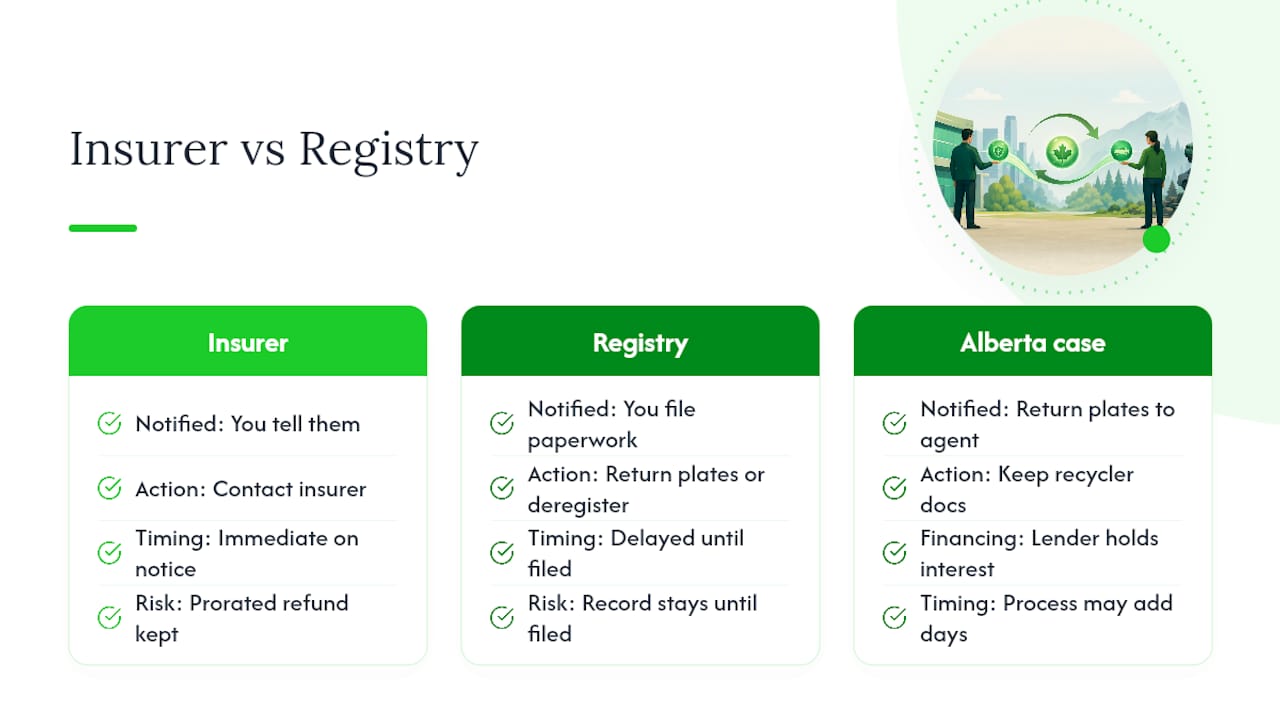
Insurance is provincially regulated in Canada, and so is vehicle registration, which means the paperwork trail differs depending on where you live. Ontario, Alberta, British Columbia, and Quebec each run separate motor vehicle registries, and none of them talk to your insurance company automatically.
That disconnect is the root of most scrap-car insurance confusion. Your insurer knows the car is gone once you tell them. Your provincial registry doesn't know anything until you file the paperwork yourself, whether that's returning plates, submitting a certificate of destruction, or formally deregistering the vehicle. Skipping that provincial step can leave a scrapped car sitting on your record indefinitely, which occasionally causes headaches with renewal notices or property tax assessments tied to registered vehicles.
Alberta owners scrapping a car in Calgary or Okotoks generally return plates to a registry agent and keep their recycler's documentation on file. If you're financing the vehicle, there's an extra wrinkle: the lender holds an interest in the car until the loan is settled, so you'll need to clear that balance or get lender sign-off before ownership can legally transfer to a recycler. That step can add days to the process, so start the conversation with your lender early rather than after the tow truck is already booked.
The safest approach anywhere in Canada is the same: assume insurer and registry are two separate systems, and notify both yourself.
Can Scrapping a Car Actually Put Money Back in Your Pocket?
Yes, in more ways than people expect. The obvious one is the cash payment from whoever buys the wreck, which reflects scrap metal value and any resalable parts. The less obvious one is your insurance refund.
If you're canceling mid-term because the car is permanently gone, a prorated refund returns every unused day of premium you already paid. On a policy with several months left, that can be a meaningful amount, especially paired with the scrap payout itself. Owners who cancel the same day the car is picked up, rather than letting the policy quietly renew, capture that refund instead of losing it.
There's also a secondary benefit that's easy to overlook: a documented, insurer-confirmed cancellation combined with a clean bill of sale makes it far easier to insure your next vehicle without underwriting delays. Some insurers ask new applicants for details about a prior vehicle's disposition, and having clean paperwork on hand speeds up that conversation instead of stalling it.
None of this replaces the value of the vehicle itself, but stacking the scrap payout with a proper refund and a smooth transition to your next policy is the realistic version of "maximizing" what a dead car is worth.
Where Insurance Rules Meet Environmental Disposal Law
Vehicles carry fluids and materials that provincial environmental regulations don't let just anyone dump. Motor oil, coolant, brake fluid, and refrigerant from the air conditioning system all need proper handling before a car gets crushed or shredded, and licensed recyclers are set up to drain and dispose of them correctly.
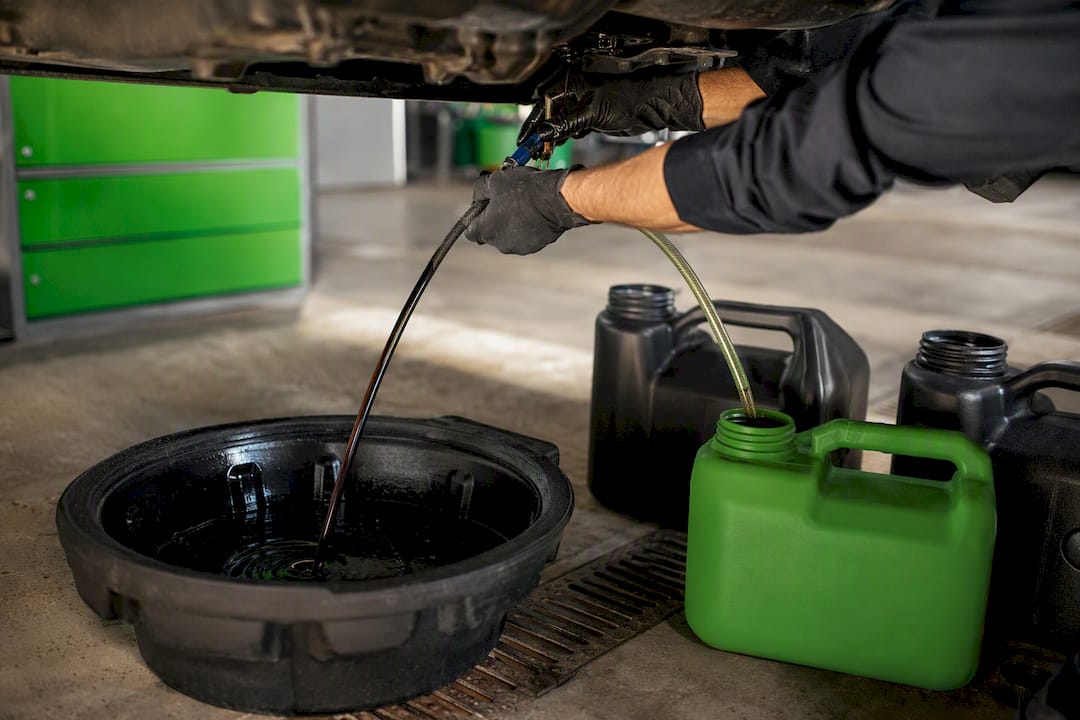
This connects to insurance more directly than most owners realize. If your insurer or a total-loss settlement requires proof the vehicle was disposed of through a licensed facility, that same facility is typically the one handling the environmental side too. A certificate of destruction from a properly licensed recycler often serves double duty: it satisfies your insurer's paperwork request and confirms the car was processed in line with provincial environmental rules.
Working with an unlicensed buyer risks both problems at once. You might not get documentation your insurer will accept, and the vehicle's fluids might not get handled the way provincial environmental law requires. Sticking with a recycler who provides a proper bill of sale or certificate of destruction protects you on both fronts without any extra effort on your part.
What Owners Get Wrong About Scrapping and Insurance
The mistakes that cost people money are almost always sequencing errors, not paperwork errors. Owners cancel their policy the moment they agree to a price, days before the tow truck shows up, and then have an uninsured vehicle sitting on their property. Others assume a write-off automatically ends their obligations to the insurer, then get blindsided when a claim stalls because nobody approved the disposal.
The safe sequence is simple: confirm your pickup date, wait for insurer sign-off if a claim is open, let the vehicle actually leave, then call to cancel or transfer and file your disposal proof. Every serious problem in this process comes from doing one of those steps out of order.
— Franz
Get Same-Day Cash Without the Insurance Headache
Southsidecashforjunkcars handles the part of this process most owners dread: the actual removal. Instead of scheduling towing yourself and hoping the buyer follows through with paperwork, you get a three-step process built for exactly this situation. Contact us, we come pick up the vehicle the same day with free towing, and you get paid in cash on the spot, whether the car runs, has a blown engine, or failed inspection outright.

That same-day pickup matters for your insurance timeline specifically. You know the exact date coverage needs to stay active until, and we provide the documentation, including proof of disposal, that your insurer and provincial registry will ask for when you close out the file. No guessing about whether your buyer will actually hand over paperwork later.
If you're in Calgary or Okotoks and ready to see what your vehicle is worth, get a quote for your scrap car today and get the removal scheduled before your next payment is due.
Sources
Before you finalize anything, confirm the specifics with your own insurer and province rather than relying on general guidance. Driving's reporting on how scrapping affects auto insurance is a solid starting point, as is the cancellation walkthrough from Scrap Car Buyer Toronto. For general context on what to expect from a removal service's process, this overview of junk removal services covers the basics. Save your insurer's direct line and your recycler's disposal paperwork in the same folder. You'll want both in one place if any question comes up later.
- Does scrapping your vehicle affect your auto insurance? | Driving
- Cancel Car Insurance After Scrapping Your Car in Ontario
- What Happens to Your Car Insurance When You Scrap Your Car?
FAQ
Do I Need to Tell My Insurer Before Scrapping My Car?
Yes. Coverage doesn't cancel automatically when a car is scrapped, so you need to call your insurer directly and request written confirmation once the vehicle is picked up.
Can I Scrap My Car While an Insurance Claim Is Open?
No, not without written approval first. Insurers need to inspect the vehicle to confirm the loss, and scrapping it early can void your claim entirely.
Will Scrapping My Car Raise My Future Insurance Rates?
Generally no. A lapse caused by scrapping a vehicle is a valid reason and is treated differently than a lapse from non-payment or driving infractions.
What Paperwork Do I Need When Scrapping a Car in Canada?
Get a bill of sale or certificate of destruction from your recycler, along with written cancellation confirmation from your insurer and a letter of experience for your claims history.
Does Southside Cash For Junk Cars Provide Insurance Paperwork?
Yes. Southsidecashforjunkcars provides documentation, including proof of disposal, at pickup, which covers what most insurers and provincial registries require to close your file.
What Happens to My License Plates When I Scrap My Car?
In most provinces, plates are your responsibility, not the recycler's, and you'll need to return them to your provincial motor vehicle office to close out registration.