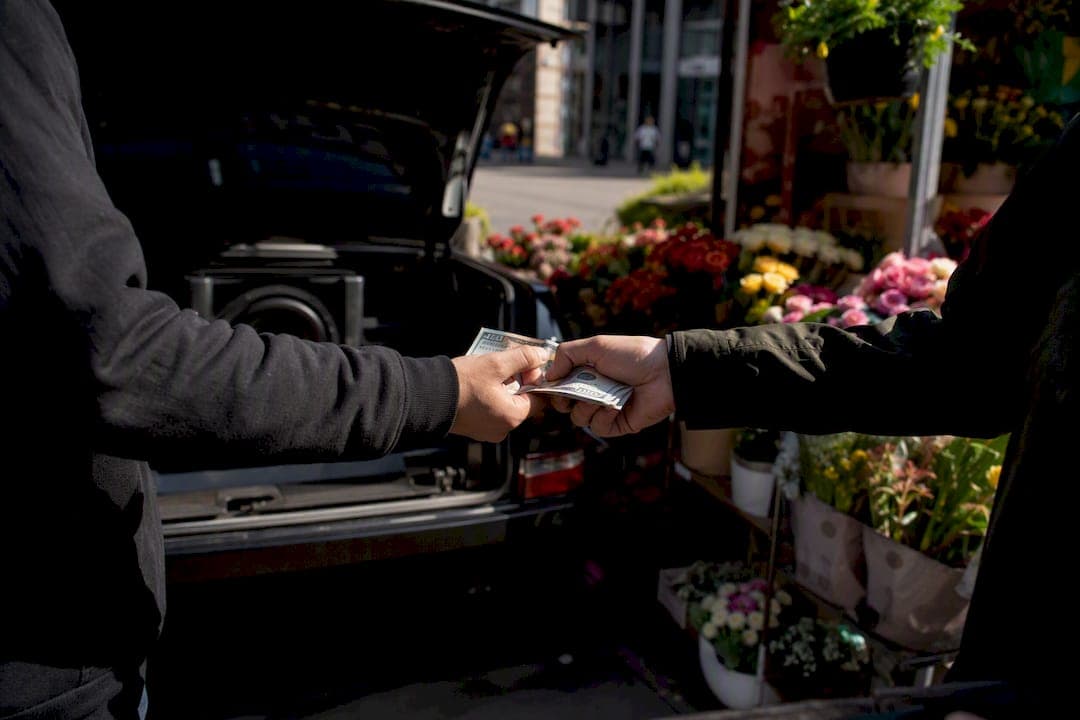
The fastest way to sell a modified, damaged, or non-running car is to take a free quote from a cash-for-junk buyer that offers same-day pickup and instant cash. You skip the private-sale grind entirely: no fielding lowball texts about your exhaust, no scheduling test drives around a blown head gasket, no waiting weeks for a buyer who ghosts you. Southside Cash For Junk Cars is a direct example of this model in action, built around a three-step process that gets you paid the same day you call.
Before you dial anyone, line up three things:
- A free quote request with your VIN, mileage, and honest condition notes
- Your title and a government photo ID ready for pickup
- A pickup time that works with your schedule (most buyers offer same-day or next-day windows)
Key Takeaways
Selling a modified, damaged, or non-running car through a cash-for-junk buyer with free same-day pickup gets you paid faster and with less cost than a private sale.
| Point | Details |
|---|---|
| Fastest route | A cash-for-junk buyer offering free pickup and instant cash beats private sales on speed and total cost. |
| Paperwork first | Title, registration, and photo ID resolve most delays; missing titles or liens should be sorted before pickup. |
| Disclose your mods | Honest reporting of modifications and missing parts protects your quote from onsite reductions. |
| Skip the "fix it up" trap | Cheap prep like inflating tires or a working battery helps; real mechanical repairs rarely pay for themselves. |
| Southside Cash For Junk Cars | Offers a three-step contact-pickup-cash process with same-day service and cash paid on the spot. |
Table of Contents
- How to Sell a Modified Car for Fast Cash
- Getting Your Modified Car Ready for Pickup Day
- How Cash Offers Get Calculated (and Warning Signs to Watch For)
- Step-by-Step: Selling Your Modified Car to a Cash-for-Junk Service
- What to Do Right After You Sell
- How Long the Whole Process Actually Takes
- What Selling a Modified Car Actually Costs You
- Pricing Your Modifications Honestly
- Where Modified Cars Actually Sell (and Why That Doesn't Apply Here)
- Legal Considerations When Selling a Modified Car
- How Condition and Mods Shape What You're Actually Offered
- Why the "Fix It First" Instinct Usually Backfires
- Get a Fast Quote and Schedule Same-Day Pickup
- Sources
- FAQ
How to Sell a Modified Car for Fast Cash
Selling a modified car through a cash-for-junk buyer works differently than a private sale, and the difference is speed. Quotes are usually given over the phone or through an online form, using your VIN, model year, mileage, and a plain description of the car's condition, including any performance mods, missing parts, or damage. You don't need a mechanic's inspection report. A rough description of what runs, what doesn't, and what's been changed is enough to get a starting number.
Here's the typical rhythm from first contact to cash in hand:
-
Quote request. You call or submit details online; the buyer gives a preliminary offer within minutes to hours.
-
Scheduling. Pickup gets booked, often the same day or the next morning, depending on your location and the buyer's route that day.
-
Onsite verification. The driver checks that the car matches what you described.
-
Payment. Cash changes hands on the spot, right as the vehicle gets hooked up for tow.
A well-run process, as Speedy's Cash For Cars outlines it, follows this same five-step arc: gather paperwork, get a quote, schedule free pickup, get paid onsite, then handle insurance and plates. Minor adjustments can happen if the driver spots something you missed describing, but a reputable buyer tells you about it before finalizing payment, not after the tow truck leaves.
Getting Your Modified Car Ready for Pickup Day
A little prep work protects both your wallet and your liability once the car is gone. Start with paperwork: you need your title (or registration, depending on your situation) and a photo ID at pickup. If the title is lost, most buyers can still work with you, but it usually means an extra step, like a duplicate title request through your local motor vehicle office, so ask about this on your first call rather than the day of pickup.
Next comes the physical walk-through. Pull everything personal or reusable out of the car:
- License plates and toll transponders (some regions require you to keep or return plates yourself)
- Garage door remotes, EZ-Pass units, phone mounts, and aftermarket stereos or gauges you plan to reinstall elsewhere
- Registration papers, insurance cards, and any documents with your personal information
Buyers and salvage yards consistently flag this step. U-Pull-It's removal checklist specifically calls out plates, toll tags, and personal paperwork as items sellers routinely forget, and forgetting them can mean liability headaches down the road, not just lost gear.
Disclosure matters more with modified vehicles than stock ones. Tell the buyer about aftermarket exhausts, tunes, lift kits, wheel swaps, or any safety-relevant changes upfront. It's not about confessing, it's about getting an accurate quote instead of a lowered one at the curb.
Pro Tip: Pulling a catalytic converter, wheels, or a battery before pickup because you think you'll sell them separately almost always costs you more than it saves. Buyers price cars partly on completeness, and a missing catalytic converter alone can drop an offer noticeably since it's one of the most valuable recoverable parts on the vehicle.
How Cash Offers Get Calculated (and Warning Signs to Watch For)
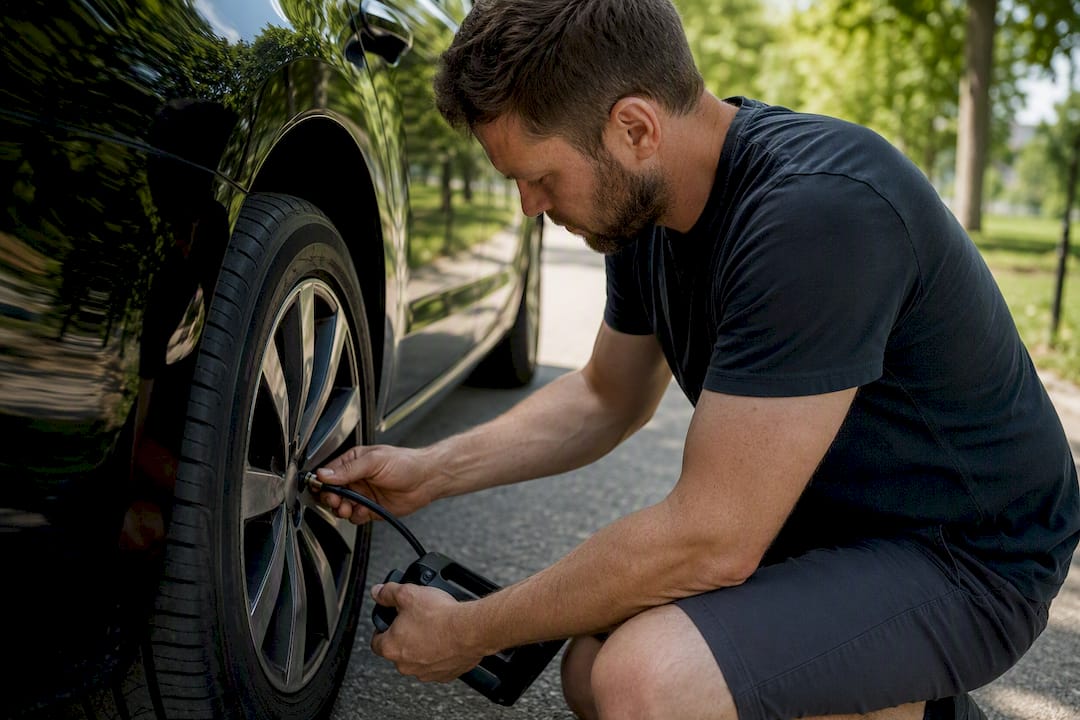
Cash offers on modified and non-running cars come down to three main factors: scrap-metal weight, the resale value of usable parts, and how easy the vehicle is to access for towing. A car with a healthy engine, intact catalytic converter, and good wheels earns more than a stripped shell, even if both are non-running. Preparing the vehicle can genuinely shift the numbers: inflating the tires, making sure it rolls freely, and swapping in a working battery can move a car from a "scrap" quote to a higher "parts or working" quote, according to Kenny U-Pull's guidance on prepping wrecked cars for salvage.
Expect small adjustments onsite if your description didn't quite match reality. Missing a catalytic converter you forgot to mention, or damage that's worse than described, are common reasons a driver revises the number before payment.
Watch for these red flags before you agree to pickup:
- A buyer who wants to deduct towing costs from your payout (reputable buyers don't charge for towing at all)
- Vague or shifting numbers with no written offer, text confirmation, or email trail
- No business name, address, or phone number you can verify
- Payment promised "later" instead of on the spot
On your first call, ask directly: Is towing free? Is payment cash on pickup? Get the answer in writing, even a text message works, before the truck shows up.
Step-by-Step: Selling Your Modified Car to a Cash-for-Junk Service
The process runs in a predictable sequence once you decide to move forward.
- Request your free quote. Provide the VIN, mileage, general condition, and a rundown of any modifications or missing parts. Photos help, especially of visible mods or damage.
- Confirm pickup logistics. Nail down the time window, who's showing up, and reconfirm that towing is free and payment happens onsite in cash.
- Final inspection at pickup. The driver verifies the vehicle matches what you described, you sign the transfer paperwork, and you get paid before the car leaves your driveway.
- Hand over your documents. Title, registration, and ID complete the ownership transfer on the spot.
Before the tow truck arrives, snap photos of the VIN plate, odometer reading, and any existing damage. Junk Car Chicago's prep checklist notes that this simple step protects you if any dispute comes up later about the car's condition at handoff. It takes two minutes and gives you a paper trail if you ever need one.
What to Do Right After You Sell
Once the tow truck pulls away, a few administrative tasks close the loop and protect you from future headaches. Cancel your insurance policy the same day, or the same afternoon if pickup happens in the morning; there's no reason to keep paying for coverage on a car you no longer own. Speedy's Cash For Cars recommends this same-day cancellation specifically to avoid unnecessary charges rolling into the next billing cycle.
Handle your plates according to local rules, either returning them or holding onto them for a future vehicle, depending on your jurisdiction's requirements.
Keep a copy of everything:
- The signed Bill of Sale or transfer receipt
- The buyer's contact information and business name
- Photos of the VIN and odometer you took before pickup
If there's a lien on the vehicle or your title is missing, resolve that before or during the sale conversation, not after. In Ontario, for instance, a Used Vehicle Information Package and signed Bill of Sale are required for ownership transfer, and the UVIP specifically discloses any liens, so buyers and sellers both know what they're dealing with. Store all of it digitally, a phone photo of every signed page is cheap insurance against a paperwork dispute months later.
How Long the Whole Process Actually Takes
Selling a modified or non-running car through a cash-for-junk buyer moves in days, not weeks. Compare that to a private sale of a modified vehicle, which routinely stretches a month or more once you factor in listing time, buyer no-shows, and negotiation back-and-forth over your aftermarket parts.
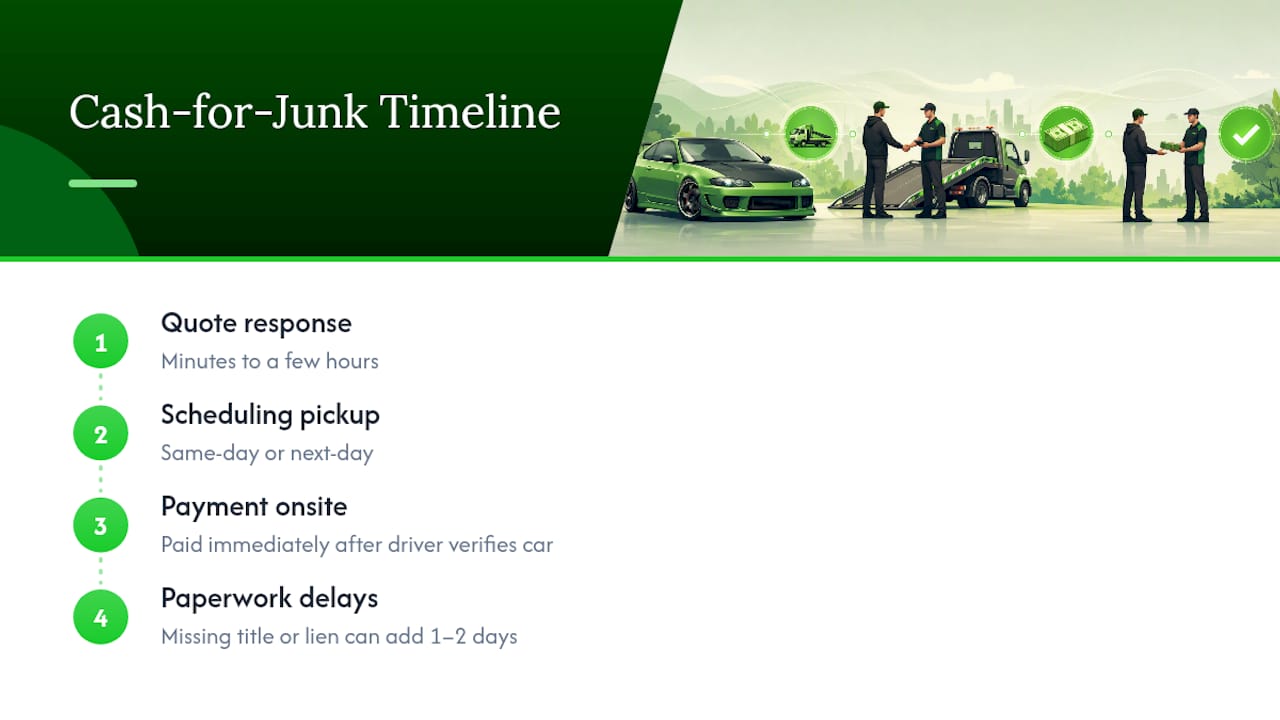
The cash-for-junk route compresses that into three phases. Quote requests get answered within minutes to a few hours, since most buyers just need your VIN and a condition summary to give you a number. Scheduling typically lands same-day or next-day, depending on your location and the buyer's existing pickup route. Payment happens the moment the driver verifies the car onsite, so there's no gap between "sold" and "paid."
The variables that stretch the timeline are usually paperwork related, not buyer related. A missing title, an unresolved lien, or a car registered under a name that doesn't match your ID can add a day or two while you sort out documentation. That's why gathering your title, registration, and photo ID before you ever request a quote matters more than almost anything else in the process. Sellers who have their paperwork in hand typically go from first phone call to cash in pocket within a couple of days. Sellers who don't often lose that speed advantage entirely, waiting on a replacement title or lien release instead of a buyer's schedule.
If your goal is genuinely fast turnaround, treat paperwork prep as the actual bottleneck to solve, not the sale itself.
What Selling a Modified Car Actually Costs You
Private sales of modified vehicles carry real costs that most sellers underestimate until they add them up. Professional detailing to make a modified car photograph well for listings often runs into real money, and it's money spent before you've secured a single buyer. Minor repairs to pass a pre-sale inspection, replacing a cracked taillight, fixing a check-engine light, patching a small dent, can add up fast on a car you're trying to get rid of, not invest in. Online listing fees on marketplace platforms and enthusiast forums add smaller costs, but they stack, especially if your first listing doesn't sell and you're paying to relist or boost visibility.
A cash-for-junk sale strips nearly all of that out. There's no detailing bill because you're not staging the car for photos. There's no pre-sale repair spending because the buyer is quoting the car as-is, mods, damage, and all. There's no advertising spend because you're not marketing to strangers, you're getting a direct quote from one buyer. Towing itself should cost nothing; a legitimate buyer covers that as part of the deal, which is exactly why a request to deduct towing from your payout is one of the clearest signs you're dealing with the wrong buyer.
The honest math often favors the cash-for-junk route even when the raw number looks smaller than what a private buyer might theoretically pay. A private sale that nets you a higher sticker price but costs you detailing, repairs, listing fees, and weeks of your time can end up netting less overall than a same-day cash offer with zero expenses attached.
Pricing Your Modifications Honestly
Aftermarket mods don't add value the way sellers assume they will, and that's the single biggest mismatch between expectation and reality in this market. A performance exhaust, a tune, or a lift kit cost you money to install, but a cash-for-junk buyer isn't pricing your car as a build, they're pricing it as recoverable metal and usable parts.
That said, certain mods genuinely shift the number. Upgraded wheels and tires in good condition, a newer battery, an aftermarket catalytic converter (as long as it's legal and intact), or a recently replaced transmission all add real recoverable value because they're either resellable as parts or they reduce what the buyer has to do before reselling the vehicle. Cosmetic mods like body kits, window tint, or interior trim swaps rarely move the number much either way, since they don't affect scrap weight or parts value.
The practical approach: describe your mods honestly and specifically when you request a quote rather than trying to build a case for a higher number. Mention the year and condition of upgraded components, note anything that's been recently replaced or upgraded, and skip the sales pitch about how much you spent on the build. A buyer values what's actually recoverable, not what you invested emotionally or financially. If corrosion has affected brake components from age or modification work, that's worth mentioning too. AAA Frictions' guide to caliper corrosion explains how this kind of wear develops and why it matters for accurate condition reporting.
Where Modified Cars Actually Sell (and Why That Doesn't Apply Here)
If you were selling a running, roadworthy modified car to an enthusiast buyer, your options would include specialized forums, local car meets, and platforms built around performance and custom builds. Those channels work because they connect you with buyers who specifically want your exact combination of mods and are willing to pay a premium for a well-documented build.
That market assumes your car runs, passes inspection, and appeals to a buyer who wants to drive it as-is or continue modifying it. A damaged, non-running, or failed-inspection modified car doesn't fit that audience, no enthusiast forum buyer wants a car with a blown transmission, no matter how good the exhaust sounds.
For a car in that condition, the cash-for-junk channel isn't a compromise, it's the correct channel. You're not competing for attention on a forum or hoping someone shows up to a car meet with cash in hand. You're getting a direct quote from a buyer whose entire business model is built around exactly your situation: a vehicle that needs to move fast, regardless of whether it runs.
Legal Considerations When Selling a Modified Car
Ownership transfer paperwork matters regardless of whether your car runs or has aftermarket mods installed. You need a signed title transfer and, depending on your jurisdiction, additional documentation proving the vehicle's history and lien status. Some regions require specific disclosure packages before a used vehicle changes hands; Ontario's Used Vehicle Information Package requirement is one concrete example of this kind of rule, and similar documentation requirements exist in other jurisdictions.
Emissions compliance is where modified vehicles occasionally hit friction, but it's a non-issue for the cash-for-junk route specifically. A buyer purchasing your car for scrap and parts recovery isn't putting it back on the road, so the modifications that might fail an emissions or safety inspection for a resale buyer don't factor into this transaction at all. That's a meaningful distinction if you've been putting off selling because you're worried a non-compliant exhaust or aftermarket tune would be a problem.
The one area that always matters is proof of ownership. If a lien exists on the vehicle, resolve or disclose it before the sale. If your title lists a different name than your current ID, whether from marriage, a typo, or an old address, sort that out before requesting pickup, since it's the most common paperwork snag that delays same-day transactions.
How Condition and Mods Shape What You're Actually Offered
Two identical cars with identical mods can get very different offers, and the deciding factor almost always comes down to condition, not the modifications themselves. A non-running car with a lift kit and aftermarket wheels still gets priced primarily on scrap weight and part recoverability. The lift kit doesn't hurt the offer, but it doesn't meaningfully help it either unless the components themselves (springs, shocks, brackets) have standalone resale value.
Damage type matters more than damage severity in some cases. A car with a blown engine but an intact body, functioning electronics, and all its glass often quotes higher than a car with moderate mechanical damage but a smashed front end and missing parts, because buyers can recover more usable components from the first car despite its more serious mechanical failure.
Modifications that involve removed or swapped components create the biggest swings. If you've pulled the catalytic converter, swapped in an aftermarket unit that's since failed, or removed factory parts and never reinstalled them, disclose all of it upfront. Buyers adjust offers onsite when a car doesn't match its description, and a car missing major components it should have gets a lower number than one that's honestly represented as incomplete from the start. Straightforward disclosure protects your quote more than any single mod protects your resale value.
Why the "Fix It First" Instinct Usually Backfires
Every seller with a modified, non-running car eventually asks the same question: should I fix it up first to get more money? Nearly every calculation says no, and the reasoning isn't complicated once you actually run the numbers instead of trusting instinct.
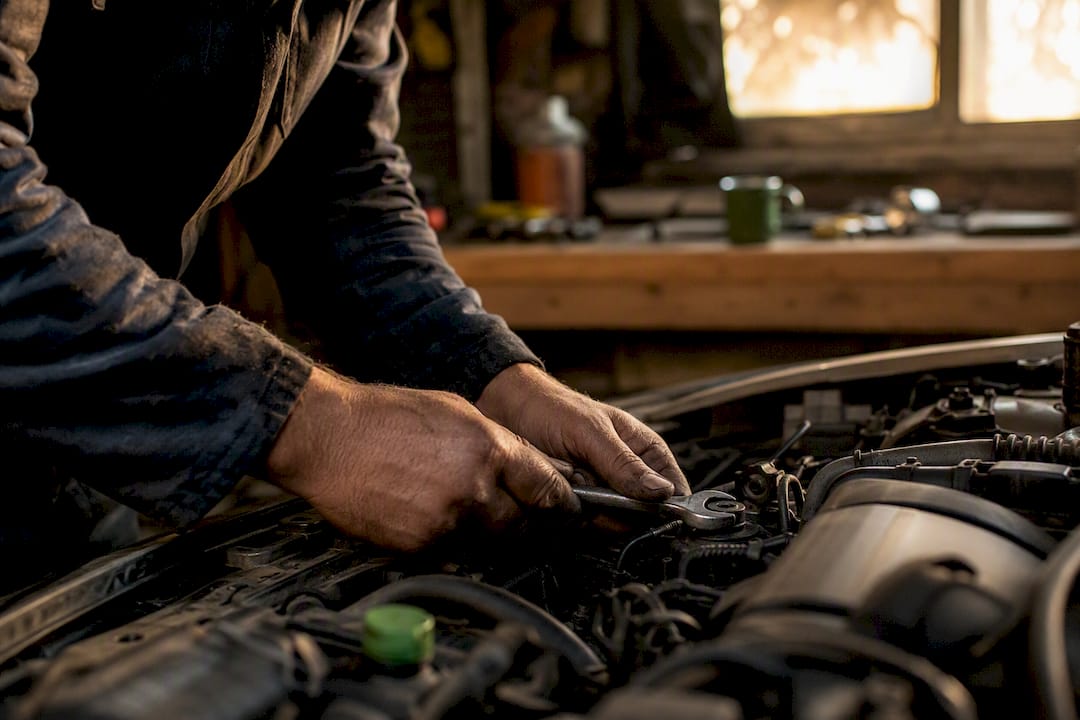
Repair costs on a modified car rarely track linearly with resale value. A $600 repair doesn't add $600 to what a cash-for-junk buyer offers you, because they're pricing recoverable parts and scrap weight, not a repaired, drivable vehicle they intend to sell to a driver. You're spending real money to move a number that mostly doesn't respond to that spending.
The bigger issue is time. Every week you spend chasing parts, scheduling a mechanic, or waiting on a diagnosis is a week you're not getting paid, insuring a car you don't need, and hoping nothing else goes wrong with it in the meantime. Sellers consistently underestimate how much a "quick fix" project actually costs once labor, parts markup, and their own time get factored in.
The exception worth knowing: cheap, fast prep steps that don't require real repair work can genuinely move the number, inflating tires, making sure the car rolls, swapping in a functional battery. Those take minutes and cost little, and they're the one category of "fixing it up" that consistently pays for itself. Everything past that, real mechanical repair, is money spent chasing a number that mostly won't move.
— Franz
Get a Fast Quote and Schedule Same-Day Pickup
If your modified car has been sitting because a private sale felt like too much work, this is the shortcut. Southside Cash For Junk Cars buys running and non-running vehicles, including modified, damaged, or failed-inspection cars, with same-day pickup and cash paid on the spot, no detailing, no repairs, no listing fees required.
When you reach out for a free quote on your junk car, have your VIN, mileage, general condition, and title status ready. Mention any modifications or missing parts honestly, since that's what shapes your number, not what you paid to install them. If your car has a blown engine or transmission failure, that's a common scenario buyers handle every day, and it's worth reading about how those specific cases get priced before you call.
Scheduling is simple: pick a pickup window that works, confirm the tow is free, and expect cash in hand the moment the driver verifies your car matches what you described. Request your quote today and get the car off your driveway this week.
Sources
- Buy or sell a used vehicle in Ontario
- 5 Things to Remove Before Scrapping Your Car | U-Pull-It
- What to do Before Selling a Wrecked Car for Salvage in Canada? - Kenny U-Pull
FAQ
Can I Sell a Modified Car That Doesn't Run?
Yes. Cash-for-junk buyers price non-running vehicles based on scrap weight and usable parts, so a blown engine or failed transmission doesn't disqualify you from getting a same-day cash offer.
Do Aftermarket Mods Increase My Offer?
Not usually. Buyers price recoverable value, so functional upgrades like newer wheels or a recent transmission can help slightly, but cosmetic mods rarely change the number.
What Paperwork Do I Need to Sell My Modified Car?
You need your title (or registration) and a government photo ID at pickup; some jurisdictions also require a lien-disclosure document, like Ontario's Used Vehicle Information Package.
Will Removing Parts Before Pickup Increase My Payout?
No, it typically does the opposite. Removing components like a catalytic converter or wheels usually lowers your offer since buyers price the car based on completeness.
How Fast Can I Get Paid for a Modified Car?
With paperwork ready, most sellers go from initial quote to cash in hand within a couple of days, since scheduling and payment both happen on the same visit.