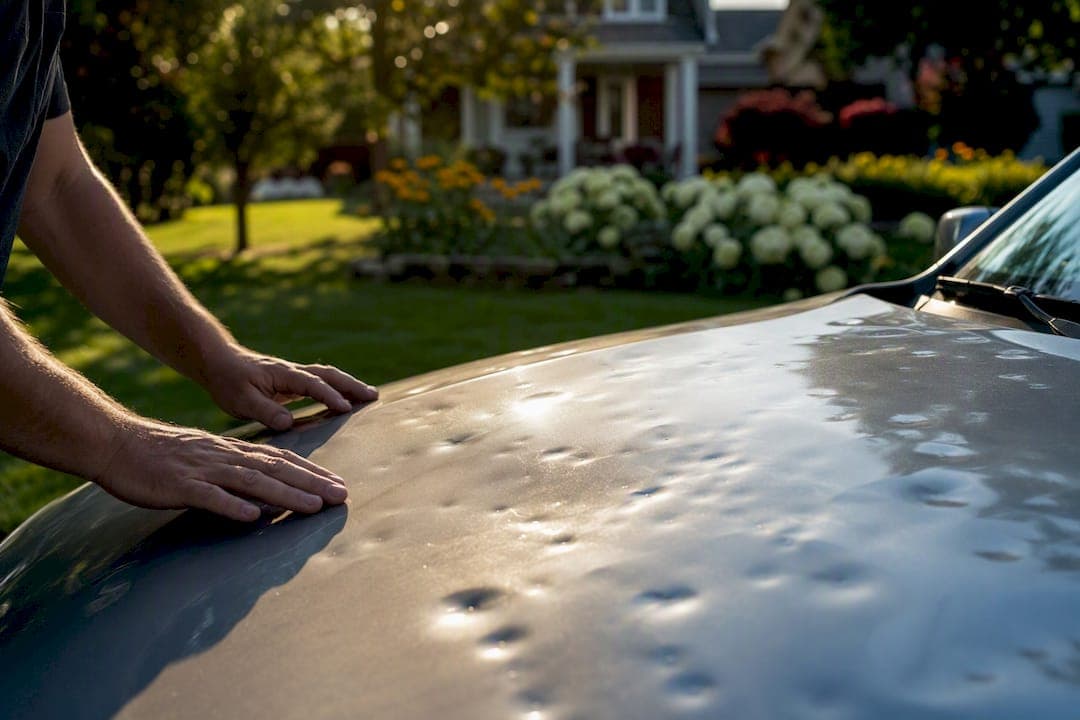
Three real paths exist: file an insurance claim and repair the car (ideally with paintless dent repair), sell it as-is to a cash buyer, or trade it in or sell it privately. Minor dents on an older car usually favor a fast cash sale. Severe damage on a newer vehicle often justifies filing a claim first. If you need money today, a same-day buyer like Southsidecashforjunkcars in Calgary or Okotoks solves the problem in one call. Unrepaired hail damage typically knocks 10 to 20 percent off resale value, so the option you pick should match what you actually need:
- Insurance and repair — best when damage is severe and you have time to wait out a claim.
- Sell as-is to a cash buyer — best when you want certainty and same-day payment.
- Trade-in or private sale — best when you want top dollar and can spend weeks marketing the car.
Key Takeaways
Selling a hail-damaged car for fair money comes down to matching the right option to your timeline: repair for maximum value, sell as-is for speed, or negotiate privately if you have weeks to spare.
| Point | Details |
|---|---|
| PDR preserves value | Paintless dent repair keeps factory paint intact and avoids the resale hit of a repaint. |
| Unrepaired damage costs money | Hail damage commonly cuts resale value by 10 to 20 percent if left unrepaired. |
| Get multiple quotes | Compare two to three buyer or repair estimates the same day to avoid lowball offers. |
| Disclosure is mandatory | Alberta rules require disclosing known damage; selling as-is is legal only when you're upfront. |
| Fastest certain payout | Southsidecashforjunkcars offers same-day pickup and instant cash for hail-damaged vehicles in Calgary and Okotoks. |
Table of Contents
- How to Assess Hail Damage Before You Sell a Car With Hail Damage
- Should You File an Insurance Claim and Repair First?
- How Does Selling to a Cash Buyer Actually Work?
- Is a Trade-In or Private Sale Worth the Extra Time?
- Checklist: Getting Fast, Fair Offers on a Hail-Damaged Car
- Tax Rules and Legal Disclosure When Selling a Damaged Vehicle
- Get a Same-Day Cash Offer From Southsidecashforjunkcars
- Sources
- FAQ
How to Assess Hail Damage Before You Sell a Car With Hail Damage
Walk the car in daylight and count dents per panel. Anything under a golf ball with no cracked paint is usually a paintless dent repair (PDR) candidate. Deeper dents, cracked clear coat, or damaged trim usually mean traditional bodywork instead.
- Photograph every panel from three angles, including close-ups of the worst dents.
- Check the windshield and back glass for pitting or chips. Cracked or heavily pitted glass sometimes needs replacement and camera recalibration on newer vehicles, which adds cost and time.
- Compare repair quotes against the car's actual market value, not what you paid for it.
PDR keeps the factory paint intact, which matters more than people realize. A car with factory paint and a clean vehicle history report holds value better than one with a repaint, even a good one.
Pro Tip: Get a PDR estimate even if you plan to sell as-is. Most quick-sale buyers ask for it, and having the number ready speeds up negotiation by a day or more.
Should You File an Insurance Claim and Repair First?
Filing a comprehensive claim makes sense when the repair estimate is high relative to the car's value, since your deductible is fixed but the payout covers the rest. Insurers sometimes total a vehicle when repair costs approach a set percentage of its value, which triggers a salvage title. That title follows the car forever and depresses resale price regardless of how well it's repaired.
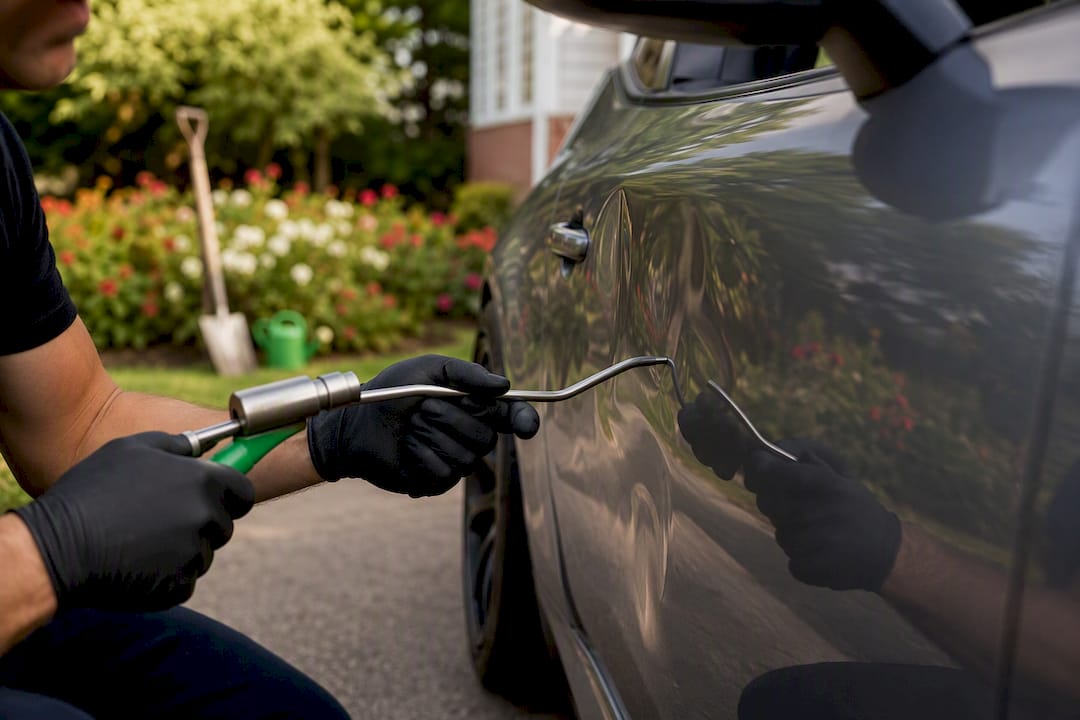
- PDR is almost always the preferred repair method when the damage qualifies, because it avoids repainting and keeps the vehicle history clean.
- Insurers occasionally push for traditional bodywork on deeper dents or damaged panels, which costs more and takes longer.
- Keep every repair invoice, before-and-after photo, and the insurance claim summary. Buyers ask for this paperwork, and it removes their guesswork.
Claims typically take two to six weeks from filing to final payment, longer if a repair shop has a backlog after a major storm. Unrepaired hail damage commonly costs several thousand dollars in lost resale value, but PDR repairs recover most of that compared with a full repaint.
How Does Selling to a Cash Buyer Actually Work?
This is the option most people land on when they want the problem solved this week, not next month. The process is short by design:
- You describe the car's condition and hail damage over the phone or online.
- The buyer gives a quote, sometimes after a quick photo review or a same-day inspection.
- If you accept, they schedule pickup, often the same day or the next.
- You sign the title, hand over the keys, and get paid on the spot.
Offer size comes down to a handful of factors: how many panels are dented and how deep, whether the title is clean or salvage, whether the car still drives, and what the parts and scrap metal are worth if it doesn't. A running car with cosmetic-only hail damage will always draw a better number than a non-runner with a branded title.
Getting two or three quotes before you commit is the single easiest way to raise your payout without extra work, since offers on hail-damaged vehicles vary more than sellers expect. Ask each buyer the same questions:
- Is the quote firm, or subject to change after inspection?
- Do you handle the tow, and is it actually free?
- How fast is payment, and is it cash, e-transfer, or check?
Watch for buyers who lowball you after arrival, citing damage they never mentioned on the phone, or who ask you to sign paperwork before agreeing on a price. A legitimate buyer confirms the number before the tow truck shows up. Selling within a few weeks of the storm also tends to net better offers, since demand for hail-damaged vehicles is strongest right after a hailstorm, before repair shop backlogs push buyers toward patience.
Is a Trade-In or Private Sale Worth the Extra Time?
A dealer or private buyer will almost always deduct more than the repair estimate itself. They're pricing in their own holding costs and the risk of hidden damage under the dents, so the discount often runs higher than the actual repair bill. That gap is where a lot of sellers lose money without realizing why.
Documented PDR repairs shrink that gap significantly, because they remove the guesswork a buyer would otherwise price in. If you go this route:
- Set a pricing floor based on at least two independent PDR or bodywork estimates.
- Disclose the hail damage clearly in your listing, including photos of the dents, not just flattering angles.
- Meet in a public location and accept only verified funds, never a personal check from a stranger.
- Complete the title transfer through your provincial process before releasing the vehicle.
Private sales can net more money, but only if you have weeks to spare and the patience to field lowball offers.
Checklist: Getting Fast, Fair Offers on a Hail-Damaged Car
Before you contact any buyer, assemble your paperwork so you're not scrambling mid-negotiation.
- Gather your title, current registration, and any insurance claim documents.
- Pull together repair or PDR estimates from two or three shops, even if you're not repairing the car.
- Take clear, well-lit photos of every panel, the roof, and the glass.
- Line up two or three buyer quotes on the same day so you're comparing apples to apples.
- Ask each buyer about tow timing, payment method, and whether the quote is final.
- Confirm the buyer handles the title transfer and towing logistics before you agree to a pickup time.
Pro Tip: Call buyers in the morning. Same-day pickup slots fill up fast, especially in the weeks right after a regional hailstorm, when everyone with a dented hood is making the same calls you are.
Tax Rules and Legal Disclosure When Selling a Damaged Vehicle
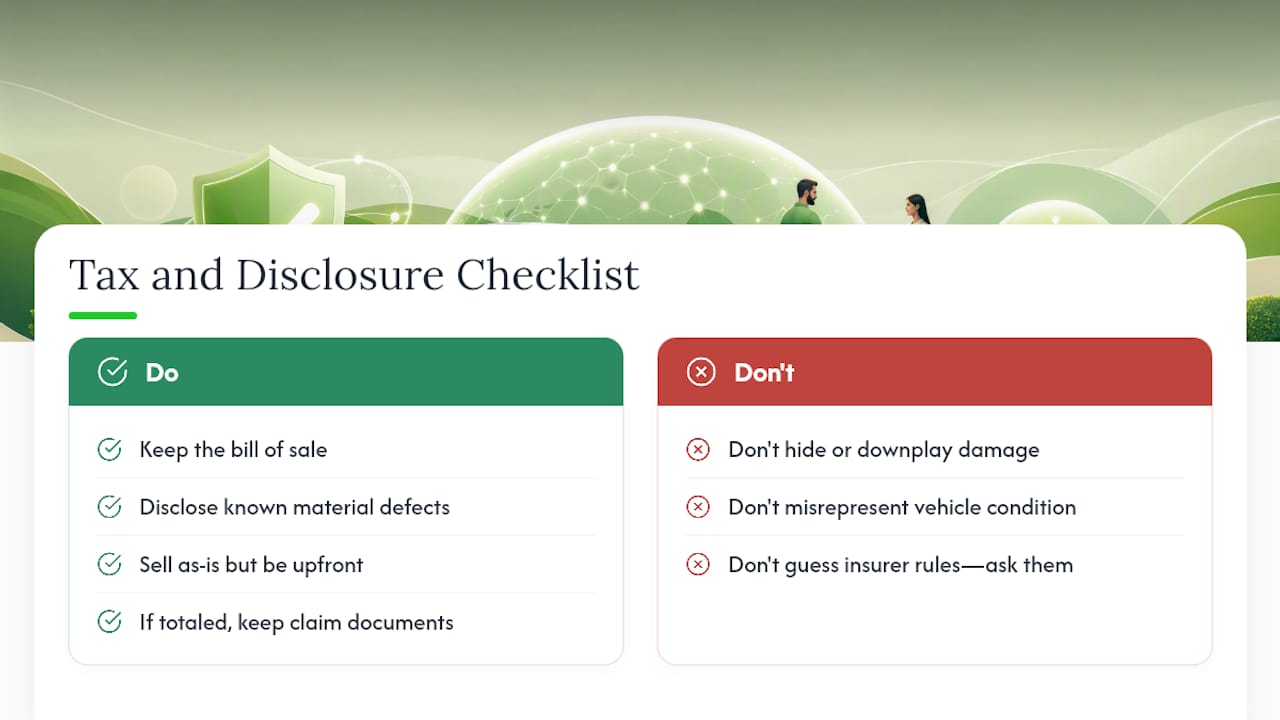
Selling a personal vehicle, hail-damaged or not, doesn't generally trigger income tax in most private-sale situations, since a used personal car is typically sold for less than you paid for it. If you happen to sell for more than your original cost, that gain could be taxable, though this is rare for anything but collector vehicles. Keep your bill of sale regardless. It's your record of the transaction if a question ever comes up.
The legal obligation that actually matters here is disclosure, not tax. Alberta's consumer protection rules require sellers to disclose known material defects and prohibit misrepresenting a vehicle's condition. Selling a hail-damaged car as-is is completely legal as long as you're upfront about the damage. What creates liability is hiding it, downplaying it, or letting a buyer assume the car is undamaged when you know otherwise.
If your insurer declared the vehicle a total loss, you're dealing with salvage-title paperwork on top of a regular sale, and the rules around buying back a totaled vehicle from your insurer vary by policy. Ask your insurer directly rather than guessing, and keep every document from the claim in case a future buyer or the province asks for it.
One seller's quick decision to take a same-day cash offer
A Calgary owner with a three-year-old sedan covered in dents got two repair quotes, one insurance estimate, and one cash offer, all in a single afternoon. Repairs would've taken three weeks and still left a claim on record. She took the cash offer instead, sold same-day, and moved on. She gave up a few hundred dollars a private sale might have brought. She got her afternoon back and a clean payment on the spot, the same kind of same-day process Southsidecashforjunkcars runs on.
— Franz
Get a Same-Day Cash Offer From Southsidecashforjunkcars
Southsidecashforjunkcars is the direct alternative to weeks of repair quotes, insurance calls, and private-sale listings for hail-damaged cars in Calgary and Okotoks. You skip the back-and-forth entirely: describe the damage, get a cash offer, and have the car picked up the same day, running or not.

The process has three steps. Contact the team with your car's condition and any details on the hail damage. Accept the offer, and they schedule free towing, often same-day. Get paid in cash on pickup, no hidden fees and no waiting on a check to clear. Have your title and registration ready when they arrive, along with any repair estimates or insurance paperwork you've collected, since that speeds up the visit. For a car with a salvage title, a non-running engine, or damage severe enough that repair doesn't make sense, this route gets you paid faster than any private listing or trade-in negotiation. Get a cash offer for your hail-damaged car and find out what same-day pickup looks like for your specific situation.
Sources
- Hail Damage & Car Resale Value: 2026 Guide | Hail-Valet
- Hail damage car resale guide 2026 | Hail-Tech PDR
- Windshield pitting repair: When to fix or replace | Collision Auto Glass
FAQ
What is the average insurance payout for hail damage to a car?
Payouts depend on your policy's deductible and the repair estimate, so there's no fixed average; insurers typically cover repair costs above your deductible or declare a total loss if repairs approach a set percentage of the car's value.
Does hail damage show up on Carfax?
A vehicle history report can show hail damage if it was reported through an insurance claim or a salvage title was issued, but cosmetic damage repaired privately without a claim usually won't appear.
Is it worth making an insurance claim for hail damage?
It's usually worth it when repair costs are high relative to your deductible and the car's value, but a claim can lead to a total-loss or salvage designation that follows the car and lowers resale value.
Is it worth trading in a damaged car?
Trading in is faster than a private sale but typically nets less money, since dealers deduct repair costs plus a margin for risk and holding time; a documented PDR repair or a same-day cash sale often closes that value gap with far less effort.