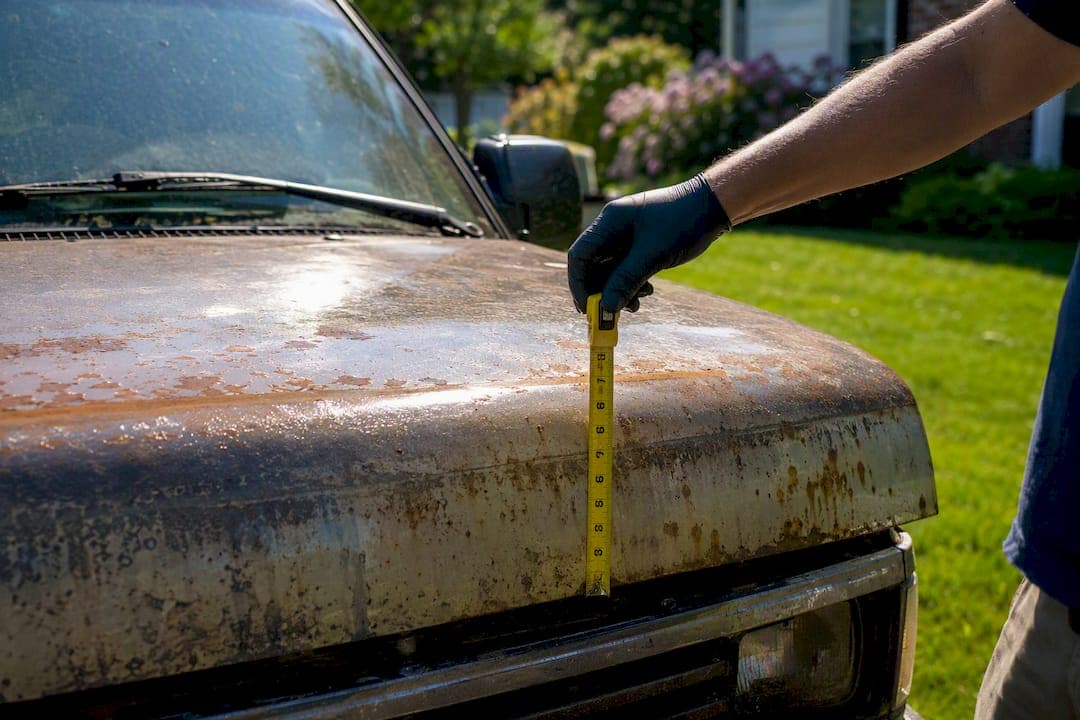
Yes, you can sell a flooded car, and the fastest legal route is an as-is sale to a salvage or junk buyer who pays cash and hauls it away the same day. You won't get retail money. What you will get is a clean exit from a vehicle that mainstream buyers and most dealerships won't touch once flood damage shows up in a history report. Skip trying to start the engine if water reached the intake. Instead:
- Write down the exact water line (floorboard, seat cushion, dash).
- Pull your title, VIN, and any insurance paperwork together.
- Call a salvage or cash-for-junk buyer for a same-day quote.
Selling a flood car is legal in nearly every case as long as you disclose the damage honestly and the title gets branded accordingly. Skip that disclosure and you risk civil or criminal exposure down the road.
Key Takeaways
A flooded car sells legally when you disclose the damage honestly, and the fastest, most realistic path to cash is a direct as-is sale to a salvage or junk buyer.
| Point | Details |
|---|---|
| Disclosure is mandatory | Failing to disclose flood damage can lead to civil or criminal penalties and requires proper title branding. |
| Expect salvage value, not retail | Flood history permanently reduces resale value, so offers reflect scrap and parts worth. |
| Don't crank a flooded engine | Cranking an engine that took on water through the intake can cause hydrolock and total engine failure. |
| Target the right buyer | Junkyards, salvage yards, parts resellers, and cash-for-junk services buy flood cars; private buyers usually won't. |
| Southsidecashforjunkcars offers same-day resolution | Cash offers, same-day pickup, and no hidden fees make it the fastest legal route to sell a flooded car in Calgary and Okotoks. |
Table of Contents
- Can You Sell a Flooded Car for a Fair Price?
- Who Actually Buys Flood-Damaged Cars?
- How Do You Prepare a Flood-Damaged Car for Sale?
- What Are Your Options for Selling and How Long Does Each Take?
- Where Southside Cash For Junk Cars Fits Into Selling a Flooded Car
- What Happens to a Flooded Car Once It's Scrapped?
- How Should You Advertise a Flooded Car to Attract the Right Buyers?
- What Scams Should You Watch for When Selling a Flooded Car?
- Sources
- FAQ
Can You Sell a Flooded Car for a Fair Price?
You can sell it, but "fair price" means something different once water has been inside the cabin or engine bay. Flood history sticks to a vehicle permanently. Even after a full detail and a mechanic's clean bill of health, Transport Canada's consumer advisory warns that corrosion and electrical failures can surface months or years later, which is exactly why the market prices these cars for salvage and parts rather than retail resale.
Salvage buyers don't value a flooded car the way a used-car lot values a trade-in. They're pricing scrap weight, the catalytic converter, and whatever components survived the water without corrosion. A car with a solid drivetrain and an intact converter earns more than one that flooded to the dashboard and sat for days.
A rough heuristic: take the pre-flood private-party value, cut it sharply for flood history, then subtract a reserve for repairs a buyer will assume are coming, even if you haven't seen them yet. Salvage valuation guides confirm that parts-resale premiums drop fast once flood damage enters the picture, no matter how good the car looks after a cleaning.
- Shallow flooding (floorboard only) tends to hold more value than a full submersion.
- A clean title history before the flood helps, but it won't undo the damage discount.
- Repairing before selling almost never pencils out unless the car is rare or the damage was minimal.
Who Actually Buys Flood-Damaged Cars?
Private buyers scroll past flood-damaged listings the moment they see the word "flood" or run a VIN check. That leaves a smaller, more specialized pool of buyers who know exactly what they're getting and price accordingly.
- Junk and scrapyards pay for metal weight and will take almost any vehicle, running or not.
- Salvage yards look for cars with parts still worth pulling: transmissions, body panels, electronics that survived.
- Parts resellers target specific high-demand components, like a catalytic converter or an intact interior.
- Mechanics and restorers occasionally buy flood cars cheap as project vehicles, but this is a smaller and slower market.
- Cash-for-junk services roll all of the above into one transaction, quoting a number based on scrap and parts value and picking the car up the same day.
Each of these buyers expects a branded title and a VIN they can check. What they don't expect is a private buyer showing up with cash for a car they'll have to explain to their insurer later, which is exactly why mainstream buyers and dealerships pass.
How Do You Prepare a Flood-Damaged Car for Sale?
Buyers move faster and offer more accurately when you hand them documentation instead of vague descriptions. Gather your title (noting whether it's already branded salvage or flood), the VIN, any insurance total-loss paperwork, and receipts for repairs you've already attempted.
Photograph the engine bay, the interior, the odometer, and anything that shows the water line clearly. Clear out personal items and secure loose trim or components before pickup. If water reached the intake, do not try to crank the engine. Cranking a hydrolocked engine can turn a salvageable car into a total-loss engine in seconds.
- Note when the flooding happened and how deep the water got.
- List any repairs you've already made, even minor ones.
- Keep the VIN and title status ready for the first phone call.
Write a short, plain disclosure covering when it flooded, how high the water reached, and what you've done about it since. Sellers who prepare a written disclosure with VIN and title details tend to get faster, more accurate offers because the buyer isn't guessing.
Pro Tip: Take one photo with a tape measure or ruler against the door panel showing the water line. It settles any dispute about severity before a buyer even calls back.
What Are Your Options for Selling and How Long Does Each Take?
Your timeline depends entirely on which channel you pick. Here's how the main three compare:
- Quick cash sale. Call or submit your VIN, waterline description, and title status online. Most buyers quote a price over the phone within minutes, and pickup with payment on the spot can happen the same day or the next.
- Salvage auction or consignment. You list the car through a salvage auction house, which can net more for cars with valuable intact parts, but expect a process that takes weeks, not hours, and often involves listing fees.
- Private sale. Legal if you disclose fully and the title is branded correctly, but expect a much longer timeline. Most private buyers avoid flood history entirely once a HowStuffWorks explainer or a quick VIN check flags the damage.
- Insurance total-loss path. If you filed a claim, your insurer typically takes the vehicle and issues a salvage title as part of the settlement, removing the sale decision from your hands entirely.
For most owners who want speed and certainty, a direct cash buyer beats the other three on time without sacrificing much in expected value once you account for auction fees or the weeks a private sale can drag on.
Where Southside Cash For Junk Cars Fits Into Selling a Flooded Car
Southsidecashforjunkcars built its process around exactly this kind of car: one that isn't going back on the road as a retail vehicle. The three-step process is contact, pickup, and cash payment, and the same-day pickup with no hidden fees applies whether the car runs, doesn't run, or came out of a flood.
Specialized buyers reduce the risk that trips up private sellers. A flood-branded title doesn't scare off a buyer who's pricing scrap and parts value from the start, and removal is handled as part of the deal instead of becoming your problem after the sale closes.
Southsidecashforjunkcars quotes based on what a flooded vehicle is actually worth for parts and scrap, then backs that quote with same-day pickup and payment in hand, no negotiation games after the tow truck arrives.
- Serves Calgary and Okotoks with local pickup crews.
- Same-day removal in most cases once a quote is accepted.
- No hidden fees deducted at pickup.
Local case examples for non-running and heavily damaged vehicles are covered in Southsidecashforjunkcars's guide to selling cars with blown engines or transmission failure, which walks through the same as-is sale logic that applies to flood damage.
What Happens to a Flooded Car Once It's Scrapped?
Flood-damaged vehicles aren't just an inconvenience to sell. They're an environmental liability if disposed of carelessly. Fluids left sitting in a submerged engine or transmission, along with battery acid and coolant, can leach into soil and waterways if a vehicle sits on a property instead of moving to a licensed facility.
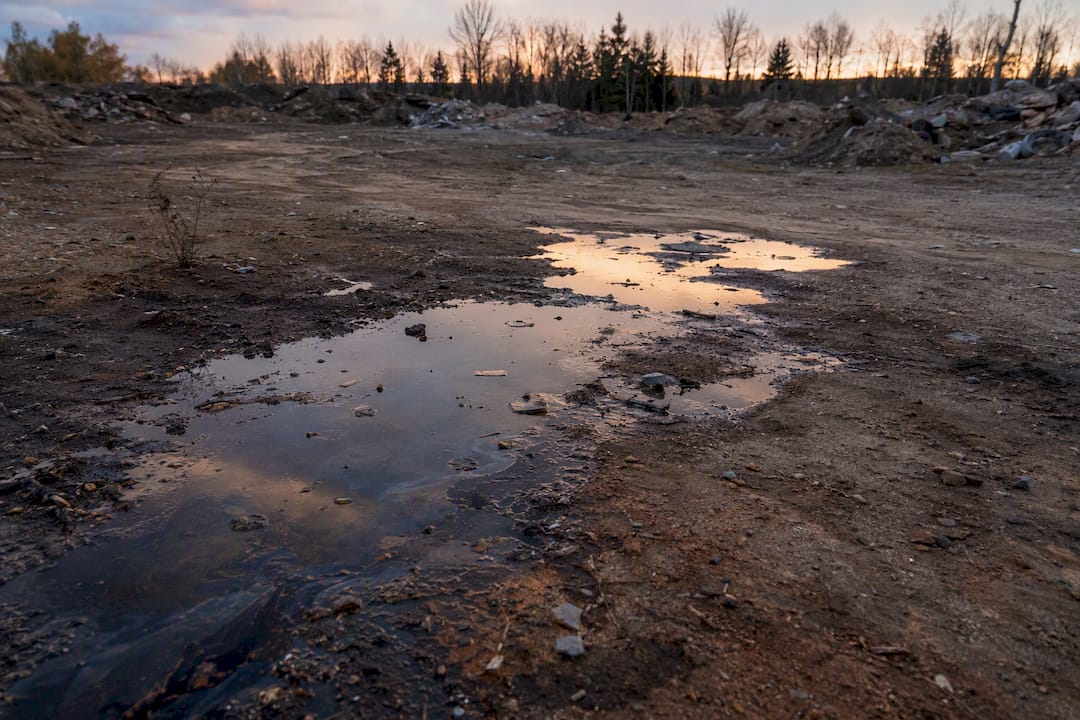
Licensed scrapyards and salvage operations are required to drain fuel, oil, coolant, and other fluids before crushing or dismantling a vehicle, and to handle batteries and mercury switches as hazardous waste rather than dumping them with scrap metal. This is one more reason mainstream buyers and roadside private sales aren't a good fit for a flooded car. A private buyer has no obligation, and often no capability, to handle fluid recovery or hazardous component disposal properly.
When you sell to a licensed scrap or salvage operation, that environmental compliance is built into their process. That's part of what you're paying for indirectly, even if it never shows up as a line item on your quote. It's also a reason to ask a buyer, plainly, whether they operate a licensed facility before you hand over the keys. A legitimate buyer will answer that question without hesitation.
Skipping proper disposal isn't just risky for the environment. It can leave you exposed if the vehicle is later found abandoned or leaking on a property still tied to your name through the title.
How Should You Advertise a Flooded Car to Attract the Right Buyers?
Marketing a flood-damaged car is the opposite of marketing a clean used car. You're not trying to reach the widest audience. You're trying to reach the narrow slice of buyers who actually want a flood-branded vehicle, and filtering out everyone else before they waste your time.
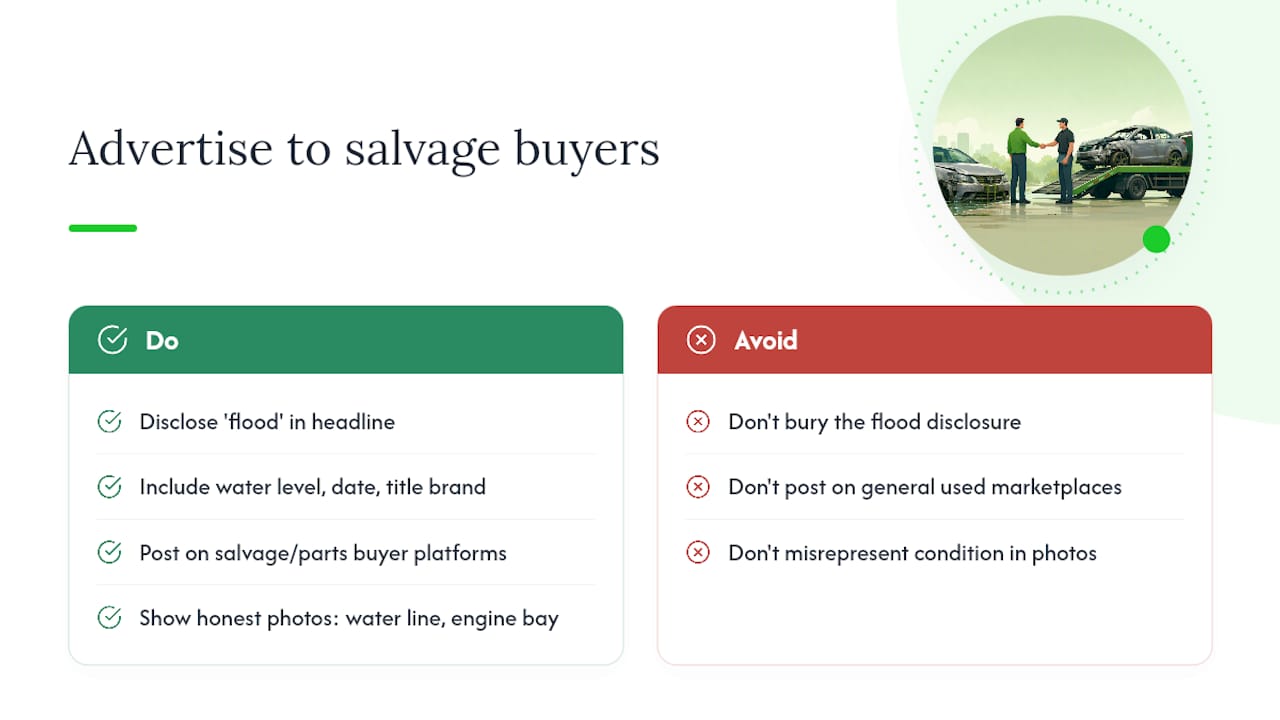
Lead with the flood disclosure in the headline or first line of any listing, not buried in the description. "Flood-damaged, sold as-is for parts/scrap" attracts salvage buyers immediately and repels the private shoppers who'll ghost you the moment they find out. Include the water level, the date of flooding, and whether the title is already branded.
Skip general marketplace listings aimed at everyday used-car shoppers. Post instead where salvage buyers, parts resellers, and junk-car services actually look, and consider calling two or three cash-for-junk buyers directly rather than waiting for someone to find your ad. A phone quote often beats a week of unanswered listing views.
Photos matter more here than on a typical listing. Show the water line, the engine bay, and any visible corrosion honestly. Buyers pricing for parts and scrap want accuracy, not a car dressed up to look better than it is.
What Scams Should You Watch for When Selling a Flooded Car?
Flood-damaged cars attract a specific breed of scammer because sellers are often in a hurry and less likely to push back on lowball or shady terms.
Watch for buyers who quote a price over the phone, then show up and claim the car is "worse than described" to slash the offer on the spot after you've already turned other buyers away. Legitimate buyers price off the details you give them and honor that number, or explain clearly why an in-person inspection changed it.
Be wary of anyone offering to pay by personal check, wire transfer to an unfamiliar account, or a payment app you've never used for a transaction this size. Cash on pickup, or a verified bank draft, is standard for legitimate junk and salvage buyers. Also avoid buyers who ask you to sign over the title before payment changes hands, or who refuse to provide a business name and phone number you can verify.
Get every quote in writing or recorded through a text message or email before pickup, and confirm the buyer's business identity ahead of time. A real buyer won't hesitate to give you that information.
One Seller's Checklist and What to Expect
Before you call anyone, have this ready: VIN, title, a photo of the water line, a two-sentence disclosure, and two buyer phone numbers. A Calgary-area seller with floorboard-level flooding once got a phone quote, a same-day pickup, and cash in hand within about 24 hours of the first call. That's the realistic timeline when your paperwork is ready before you dial.
Get a Cash Offer and Schedule Same-Day Pickup
Southsidecashforjunkcars turns a flooded car into cash the same day you call, without asking you to fix anything first or haggle over a number that changes at pickup. Have your VIN, title status, and a few photos of the water damage ready, and you'll get a real quote fast instead of a runaround.
Compare that to a salvage auction that takes weeks or a private sale that most buyers won't touch once flood history shows up, and the appeal of a same-day cash transaction becomes obvious. Southsidecashforjunkcars serves Calgary and Okotoks with no hidden fees deducted at pickup, whether the car runs or not. Start by requesting your instant cash offer and get a pickup scheduled before the day is out.
Sources
- HowStuffWorks — Can you sell a car that has been under water?
- CheapCarfax — How flood damage shows up in CARFAX reports and impacts value
- JunkCarValue — Sell a flood-damaged car
FAQ
How Can I Get the Most Money for My Wrecked Car?
Get quotes from more than one salvage or cash-for-junk buyer, highlight any parts that survived the flood intact (like the catalytic converter), and have your VIN, title, and disclosure ready so buyers can quote accurately the first time.
How Long Does It Take for a Flooded Engine to Dry Out?
There's no reliable safe drying timeline for a flooded engine, and attempting to run it before a full inspection risks hydrolock. Don't try to start it; document the water level and let a buyer or mechanic assess it properly.
Who Pays the Highest Price for a Junk Car?
Specialized cash-for-junk services and salvage yards typically pay the most for flood-damaged vehicles because they price based on scrap weight and surviving parts rather than refusing the car outright like most private buyers and dealerships do.
How Do I Unflood My Car Engine?
Don't attempt to start or "unflood" the engine yourself if water reached the intake. Document the water level and condition, then let a salvage buyer or qualified mechanic evaluate it, since cranking a hydrolocked engine can cause irreversible damage.