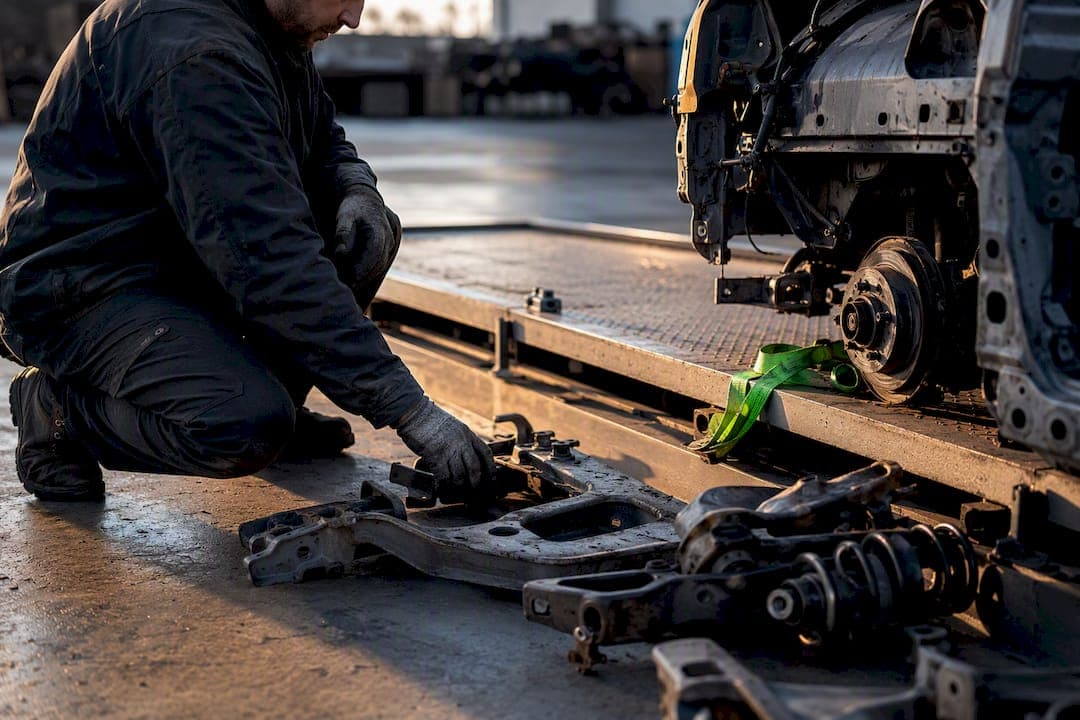
Most junk cars in Alberta bring between $200 and $1,500, with trucks and SUVs often landing higher because of their extra steel weight. The single biggest lever you control is who you sell to: a full-service cash-for-cars buyer who prices the catalytic converter, reusable parts, and metal weight together, and throws in free towing, almost always beats a metal-only scrap yard. Get two or three written quotes before you commit, and confirm exactly how each one calculated your number.
TL;DR:
- Full-service cash-for-cars buyers generally pay more than scrap yards because they include parts and catalytic converter value, with free same-day towing.
- Vehicle weight, current metal prices, and whether the catalytic converter is intact significantly influence the final offer, which can fluctuate weekly.
- Getting multiple written quotes and confirming whether towing is free can help sellers avoid undervaluing their vehicle.
- Selling complete vehicles with resale parts usually yields higher prices, especially if electronics and alloy wheels are still attached.
- Sellers should verify quotes against local market indexes to ensure the offered amount reflects current Alberta scrap metal prices.
Table of Contents
- Average Scrap Car Prices in Alberta by Vehicle Type and Condition
- What Drives Your Scrap Car Price in Alberta
- How to Get the Best Price: Step-By-Step for Alberta Sellers
- Choosing a Selling Route: Scrap Yard, Cash-for-Cars, or Private Sale
- Process, Pickup, and Paperwork in Alberta
- Local Proof: How Reputable Alberta Buyers Actually Price Cars
- A Few Mistakes I See Alberta Sellers Make Over and Over
- Get a Free Quote From Southside Cash For Junk Cars
- Trusted Alberta Resources for Checking Scrap Prices
- Sources
- FAQ
Average Scrap Car Prices in Alberta by Vehicle Type and Condition
A heavily damaged non-runner that's missing its catalytic converter or has significant frame damage typically sits at the bottom of the market, often in a lower value range. An average junk car in reasonably complete shape, one that runs poorly or not at all but still has its engine, transmission, and wiring intact, usually lands in a mid-range value bracket. A complete vehicle with resale-worthy parts, working electronics, or alloy wheels can push into higher value brackets according to Alberta pricing guides. Trucks and SUVs generally outperform sedans across most value brackets because their frames and body panels carry more scrap steel by weight, an advantage reflected in regional pricing breakdowns for larger vehicles.
Three things move a vehicle between brackets: how much it weighs, how strong current metal demand is, and whether reusable parts are still attached. A half-ton pickup missing its catalytic converter can still out-earn a smaller sedan simply on steel tonnage. A compact car with an intact converter and clean interior electronics can occasionally beat a larger vehicle that's been stripped for parts.
These bands shift week to week. A buyer quoting you today may offer a different number in a month if steel or aluminum prices move, which is exactly why a written quote with a calculation breakdown matters more than a verbal estimate.
What Drives Your Scrap Car Price in Alberta
Every offer you get is built from the same handful of inputs, whether the buyer says so out loud or not.
- Vehicle weight: heavier cars and trucks contain more scrap steel, which is the base of almost every quote.
- Local scrap metal rates: ferrous metal (steel) and non-ferrous metal (aluminum, copper wiring) trade at very different per-ton rates, and both move weekly.
- Catalytic converter status: an intact converter with its precious-metal content can add a meaningful premium; a missing or gutted one drops the offer fast.
- Reusable parts: engines, transmissions, working electronics, and alloy wheels all carry resale value beyond scrap weight.
- Completeness and condition: a stripped shell earns less than a complete vehicle, even if both weigh the same.
- Site access: a car parked in an easy-to-reach driveway costs less to tow than one stuck in a back alley or a rural yard, and that difference can show up as a lower net offer.
Pro Tip: Ask any buyer whether their quote is based on this week's metal price or an older average. Rates for steel, copper, and aluminum shift constantly, and weekly Alberta indexes are the only reliable way to check whether a number is current.
Timing matters more than most sellers realize. Scrap steel and non-ferrous rates are genuinely volatile, and a quote that felt fair last month can undersell your vehicle today. Buyers who update pricing against a live local index tend to give more accurate numbers than those quoting from memory or a national average that doesn't reflect Alberta's own scrap yard pricing patterns.
How to Get the Best Price: Step-By-Step for Alberta Sellers
Getting a fair number isn't complicated, but it does take a little legwork before you say yes to the first offer.
- Gather your vehicle details. Have the VIN, year, make, model, mileage, and an honest condition summary ready, plus note whether the catalytic converter is still installed. Photos speed up accurate quoting more than almost anything else you can provide.
- Request multiple written quotes. Ask each buyer to show their math: metal weight value, parts value, catalytic converter premium if applicable, and any fees. A buyer who won't break this down is a red flag.
- Confirm towing is free and separate from the price. Free towing should be stated up front, not quietly subtracted from your final payment at pickup.
- Keep the car as complete as possible. Pulling the battery, wheels, or electronics yourself almost always costs you more in lost resale value than you'd save doing it yourself.
- Have your paperwork ready before pickup. Title or registration, a bill of sale, and photo ID keep the transaction moving instead of stalling at the curb.
If a buyer's number seems low, ask what they're valuing the parts at and compare it against a competing quote. A second offer that itemizes the catalytic converter or transmission separately is solid leverage. This isn't about being difficult, it's about making sure nobody's quietly pricing your car as scrap-only when it's got resale parts worth real money.
Choosing a Selling Route: Scrap Yard, Cash-for-Cars, or Private Sale
Your priority (speed, top dollar, or minimal hassle) should decide which route you take.
- Scrap yards work best for vehicles that are already stripped down or heavily damaged with nothing left to salvage. They price almost entirely on metal weight, so a complete car usually leaves money on the table here.
- Cash-for-cars buyers combine metal weight with parts and catalytic converter value, and most include free towing, which is why full-service buyers tend to net sellers more than a scrap-only operation.
- Private sale or parts-out can occasionally beat both, but it demands photography, listings, buyer negotiations, and weeks of your time, an option worth weighing against Alberta's other selling alternatives if you're not in a rush.
If your car runs and has intact parts, a cash-for-cars quote is generally a fast path to a competitive price without the listing headaches.
Process, Pickup, and Paperwork in Alberta
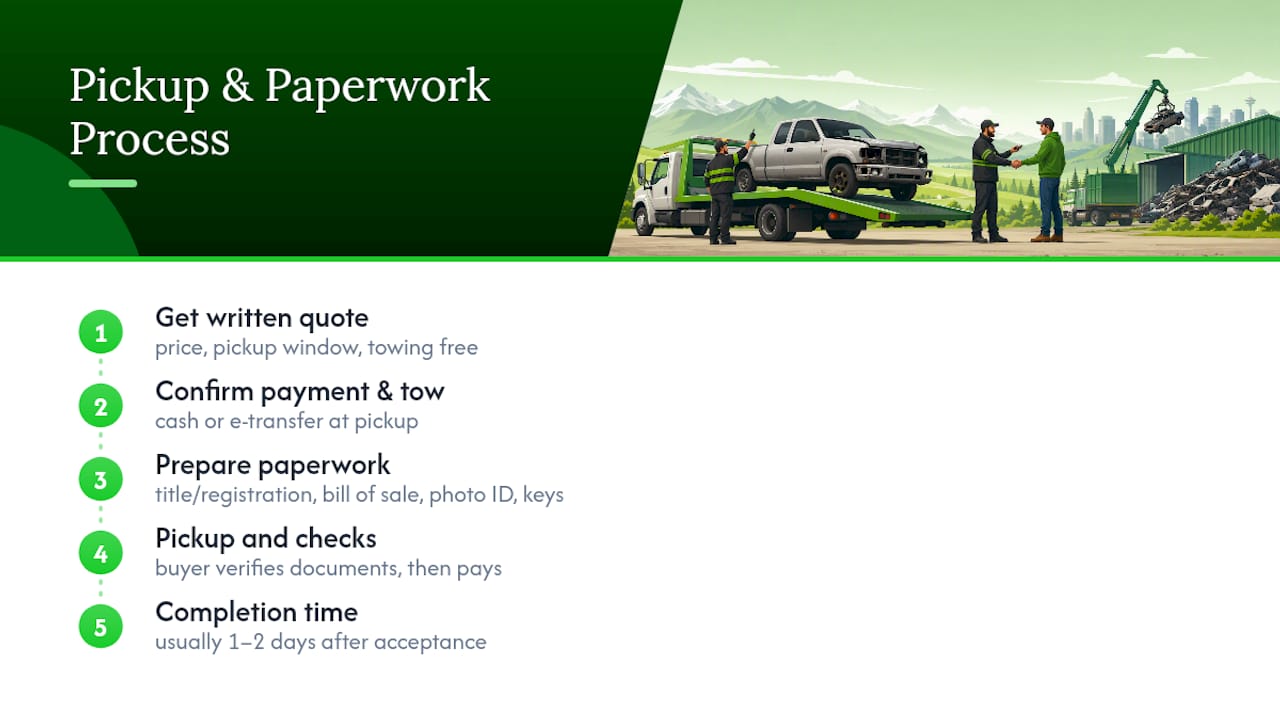
Before any buyer shows up, get the price in writing along with the pickup window, payment method, and confirmation that towing costs nothing extra. Cash or e-transfer at the moment of pickup is standard; anything promising payment "later" deserves a second look.
Paperwork is simple but non-negotiable: bring your title or registration, a signed bill of sale, and photo ID. Missing keys or an unsigned title are the two most common reasons a pickup gets delayed. Most transactions, from accepted quote to cash in hand, close within a day or two once paperwork is in order, and confirming your towing arrangement in advance avoids most last-minute surprises.
Watch for warning signs: a buyer who avoids putting the price in writing, tries to deduct towing after agreeing it was free, or won't pay until "processing" is complete. Consumer-protection guidance from AMVIC specifically flags unexpected post-agreement fees as a sign to walk away.
Local Proof: How Reputable Alberta Buyers Actually Price Cars
Franz covers vehicle removal and scrap pricing across Calgary and Okotoks, and the pattern among trustworthy local buyers is consistent: they show their math instead of asking you to trust a flat number. Southside Cash For Junk Cars structures its process around three steps, contact, pickup, cash, with same-day pickup and no hidden fees layered on top.
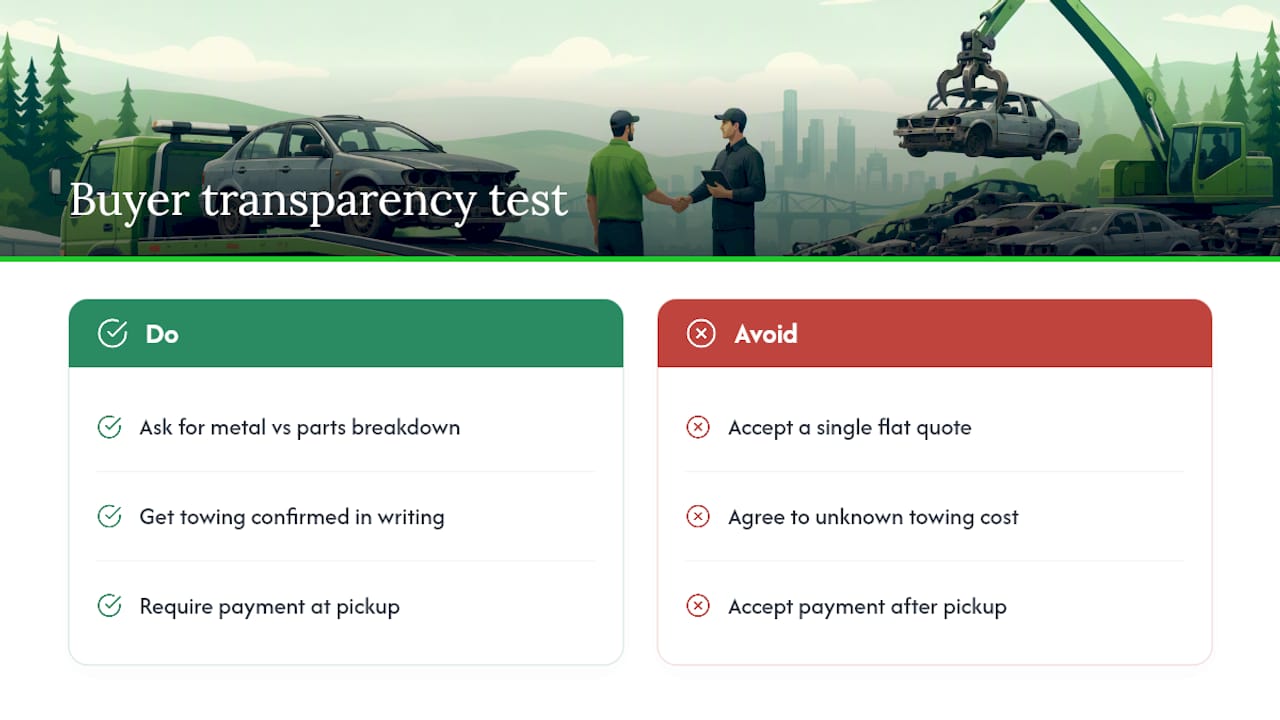
You can test any buyer's transparency with a few direct questions: Does the quote separate metal value from parts value? Is towing confirmed free in writing? Will payment happen at pickup, not after? A buyer who answers all three without hesitation is one worth trusting with your vehicle.
A Few Mistakes I See Alberta Sellers Make Over and Over
The biggest one is accepting the first quote without a second for comparison, which almost always leaves cash on the table. The second is pulling parts off the car before calling anyone, thinking it'll save the buyer work. It usually just lowers the number you're quoted. And plenty of sellers never ask whether towing is genuinely free until the truck's already at the curb. Get quotes in writing, keep the car whole, and confirm towing costs zero before pickup day. That's the whole checklist.
— Franz
Get a Free Quote From Southside Cash For Junk Cars
Southside Cash For Junk Cars is the faster route to real cash for a vehicle that's just sitting there costing you space, not the slow grind of a private listing or a metal-only scrap yard payout. Because pricing accounts for parts, the catalytic converter, and metal weight together, and towing is same-day and free locally, you typically net more than a basic scrap yard would offer for the same car.
Getting a quote takes a few minutes. Have your VIN, year, make, model, and a rough condition description ready, along with photos if you can grab them. There are no hidden fees deducted at pickup, and payment happens on the spot once the vehicle is loaded. If you're in Okotoks specifically, there's a dedicated local option as well. Ready to see your number? Request your free quote today and get paid the same day your car leaves the driveway.
Trusted Alberta Resources for Checking Scrap Prices
Before accepting any offer, cross-check it against a few independent sources. ScrapHub's weekly Alberta price index tracks current ferrous and non-ferrous rates, which is the fastest way to see whether a quote reflects this week's market or an outdated average. AMVIC's consumer guidance covers what fees are and aren't reasonable in a vehicle transaction. Use Google Maps or local directories to confirm a buyer actually operates where they claim to, and check general automotive resources like Clearwater Largo Automotive when comparing buyer transparency standards.
Sources
- AMVIC — Beware of extra fees
- ScrapHub — Scrap metal prices Alberta
- ScrapMonster — scrap yard prices Canada
FAQ
Who Pays the Most for a Scrap Car in Alberta?
Full-service cash-for-cars buyers that price parts, the catalytic converter, and metal weight together typically pay more than metal-only scrap yards, especially for complete or lightly damaged vehicles.
How Do I Calculate the Scrap Value of My Car?
Start with your vehicle's kerb weight against current Alberta ferrous metal rates, then add estimated value for the catalytic converter and any resale parts like the engine, transmission, or alloy wheels still attached.
Is It Better to Scrap or Sell My Old Car?
If your car runs and has resale-worthy parts, a private sale or cash-for-cars quote usually beats a straight scrap yard price; if it's heavily damaged or stripped down, scrapping is typically the faster and simpler route.
What Is the Most Expensive Part of a Scrap Car?
The catalytic converter is usually the single most valuable component due to its precious-metal content, followed by the engine, transmission, and alloy wheels if they're still in working, resalable condition.