
Rod knock almost always destroys resale value, and for most owners, the math points clearly toward selling rather than repairing. A car with an audible rod knock will typically draw significantly lower offers than its clean-condition market value from private buyers, and dealers will often refuse to take it on trade at any reasonable price. Before you decide anything, do two things: get a confirmed diagnosis from a mechanic, then pull the car's current value on Kelley Blue Book or NADA Guides and compare that number against repair estimates.
Here is the short version of what you are facing:
- Rod knock usually means worn connecting-rod bearings, and fixing it properly costs $2,000–$7,000 depending on how far the damage has spread.
- If the repair estimate exceeds roughly 60% of the car's clean market value, selling as-is or to a salvage buyer is almost always the better financial move.
- Three paths exist: repair and resell, sell as-is to a private buyer, or sell to a junk or salvage buyer for immediate cash.
Key Takeaways
Rod knock almost always makes repair uneconomical for low-value vehicles, and selling as-is to a salvage or junk buyer is typically the fastest way to recover cash without additional risk.
| Point | Details |
|---|---|
| Rod knock destroys resale value | Buyers discount rod-knock cars significantly below clean market value across most buyer types. |
| Repair costs are high | Typical rod knock repair costs run $1,400–$7,000+, with labor as the largest portion of the bill. |
| Use the 60% threshold | If the repair estimate exceeds 60% of the car's clean KBB/NADA value, selling is usually the better financial choice. |
| Driving worsens the damage | Continued driving risks catastrophic engine failure; towing to a shop or buyer is the safer option. |
| Southsidecashforjunkcars | Offers same-day cash pickup in Calgary and Okotoks for rod-knock and non-running vehicles, with no hidden fees. |
Table of Contents
- What rod knock actually is and how to recognize it
- How rod knock changes what buyers and dealers will pay
- What repairs cost and what each option actually involves
- Should you fix it? A step-by-step decision guide
- How to price and sell a car with rod knock
- Sample scenarios: what you might actually get offered
- How long can you safely drive a car with rod knock?
- US paperwork and title steps when selling a car with engine problems
- The repair-vs-sell decision is usually simpler than it feels
- Southsidecashforjunkcars: same-day cash for rod-knock vehicles in Calgary and Okotoks
- Sources
- FAQ
What rod knock actually is and how to recognize it
Rod knock is the rhythmic, metallic thumping sound that comes from inside the engine when a connecting rod bearing has worn down enough to let the rod slap against the crankshaft journal. The bearing's job is to keep a thin film of oil between the rod and the crank. When that film breaks down, metal contacts metal, and the knock begins.
The most common causes are low oil pressure, contaminated oil, oil starvation from a missed change, or a spun bearing from a previous overheating event. The sound itself is distinctive: a deep, hollow thump that speeds up with engine RPM, gets louder under load (accelerating uphill, for example), and does not go away when the engine warms up. Valve tick and exhaust manifold leaks can mimic it briefly, but rod knock stays consistent and worsens over time.
A mechanic will typically confirm it by doing a cylinder-drop test, disabling one cylinder at a time to isolate which rod is knocking. At home, you can do a rough check by letting the engine idle, then revving it slightly while listening for the knock to intensify. If it does, and the sound is coming from the lower half of the engine block rather than the top, rod knock is the likely culprit.
Pro Tip: Record a short video of the engine sound before you take it to a shop. Mechanics can often narrow down the diagnosis faster when they hear the knock cold-start versus warmed-up, and a video gives them both.
How rod knock changes what buyers and dealers will pay
The impact of rod knock on price is severe across every buyer type, though each discounts the car for a different reason.
Private buyers are the most variable. A knowledgeable buyer who wants a project car or plans to part it out may offer something, but most private buyers walk away entirely once they hear the knock or see it disclosed in the listing. Those who do make an offer typically price in the full repair cost plus a risk buffer, which means offers often land well below what the car would fetch with a clean engine.
Dealers and trade-in buyers almost universally decline or offer salvage-level money. A dealer taking a car with rod knock has to either pay for a full engine repair before reselling or wholesale it to an auction at a steep loss. Neither scenario leaves room for a fair trade-in offer.
Salvage and junk buyers pay based on scrap metal weight and usable parts, not on the car's original market value. For a car with severe rod knock, this is often the most realistic offer available, and it comes with the advantage of same-day pickup and no negotiation.
| Buyer Type | Typical Offer vs. Clean Value | Speed | Notes |
|---|---|---|---|
| Private buyer | 30%–60% of clean value | Slow | Rare; project-car buyers only |
| Dealer trade-in | 10%–30% of clean value | Fast | Usually wholesale or decline |
| Salvage/junk buyer | Scrap + parts value | Same day | Most reliable for severe knock |
Forum reports consistently show that sellers with rod knock on lower-value cars often net only a few hundred dollars from salvage buyers, while higher-value vehicles with repairable engines can still attract offers in the low thousands from private buyers willing to take on the project.
What repairs cost and what each option actually involves
Rod knock repair costs average around $2,500, with a realistic range from roughly $1,400 to over $4,500 for bearing replacement and related work. Labor accounts for the majority of that bill, not parts. An engine has to come partially or fully apart to reach the rod bearings, and that teardown time is expensive regardless of the shop's hourly rate.
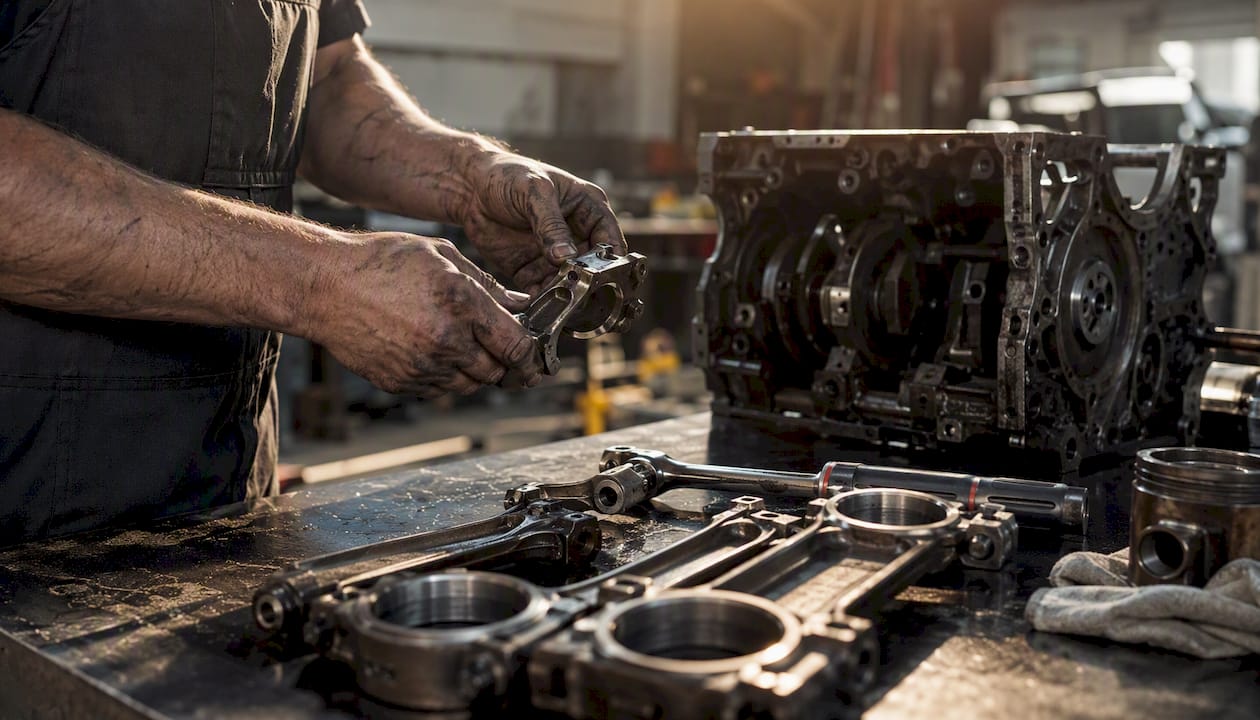
The biggest hidden cost in any rod knock repair is crank damage. If the crankshaft journal has been scored by metal-on-metal contact, the crank needs machining or replacement, which adds $500–$1,500 to the bill. Oil contamination from bearing debris also means the entire lubrication system needs flushing, adding time and parts. Remanufactured long-blocks typically carry a warranty and offer more predictable reliability than a single bearing replacement on a damaged crank.
Pro Tip: Get at least two quotes before committing to any repair. Labor rates vary significantly by region, and some shops specialize in engine work and can do it faster and cheaper than a general repair shop.
Should you fix it? A step-by-step decision guide
The 60% rule used by many mechanics is the clearest threshold available: if the repair estimate exceeds 60% of the car's current "Good" condition market value on KBB or NADA, selling is almost always the better financial choice. On a car worth $4,000 in good condition, that means any repair estimate over $2,400 tips the math toward selling.
The $3,000 rule works similarly. If the car's total value after repair would be under $3,000, the repair rarely makes economic sense because you cannot recover the cost in resale value.
Here is a practical decision sequence:
- Get a confirmed diagnosis. Do not spend money on repairs until a mechanic has verified rod knock and assessed crank condition.
- Pull the car's clean-condition value from KBB or NADA. Use the "Good" condition rating, not "Excellent."
- Collect two or three repair quotes. Ask each shop specifically whether the crank needs machining.
- Calculate repair cost as a percentage of clean value. Above 60%: sell. Below 40%: repair may make sense if the car has high remaining value.
- Choose your path: repair and resell, sell as-is to a private buyer, or contact a junk buyer for a same-day cash offer.
One behavioral trap worth naming: the sunk-cost fallacy leads many owners to keep pouring money into a car because of what they have already spent on it. Past spending is gone regardless of what you decide next. The only question that matters is whether the future repair cost is justified by the future value of the car.
Pro Tip: If you are on the fence, ask the mechanic to give you a worst-case estimate that includes crank machining and oil system flush. That number is usually what you actually pay, not the optimistic quote.
How to price and sell a car with rod knock
The selling route that nets the most cash depends on the severity of the knock and the car's underlying value. A minor knock on a higher-value vehicle may still attract a private buyer willing to negotiate. A severe knock on a $3,000 car almost always goes to a salvage or junk buyer.
| Selling Path | Expected Net Cash | Time Required | Best For |
|---|---|---|---|
| Private sale (disclosed) | Moderate; negotiated | Days to weeks | Higher-value cars, project buyers |
| Dealer trade-in | Low | Same day | Convenience only |
| Salvage/junk buyer | Low to moderate | Same day | Severe knock, low-value cars |
| Part-out | Potentially high | Weeks to months | Rare parts, popular models |
When selling privately, disclose the rod knock in writing in the listing. Use specific language: "engine has confirmed rod knock; sold as-is." Buyers who respond to that listing already know what they are getting, which reduces negotiation friction and protects you legally. Bring the mechanic's diagnosis report to any showing.
For negotiation, lead with the repair estimate. If a buyer knows the repair costs $2,500 and the car is worth $5,000 repaired, pricing it at $2,000–$2,500 as-is gives them a clear path to profit and gives you a faster sale. Dealers will rarely match that logic, so trade-in is usually the worst financial outcome short of abandonment.
Keep the title clean and in hand. A car with a lien on it is nearly impossible to sell quickly to a salvage buyer, and some junk buyers will not process the transaction without a clear title present at pickup.
Sample scenarios: what you might actually get offered
These three scenarios show how the math plays out across different vehicle types. Numbers are illustrative ranges based on typical repair costs and market dynamics.
A few factors shift these numbers significantly:
- Local labor rates can push repair estimates 20%–30% higher in major metro areas.
- Parts availability for older or less common engines affects both repair cost and used-engine swap pricing.
- Mileage matters: a 200,000-mile engine with rod knock has almost no repair justification regardless of the car's body condition.
- Severity of the knock changes the salvage offer. A car that still runs gets more than one that has already seized.
How long can you safely drive a car with rod knock?
Not long. The honest answer is that you should not drive it at all if you can avoid it. Mechanics consistently recommend towing a car with rod knock to the shop rather than driving it, because continued driving accelerates bearing destruction, contaminates the oil with metal debris, and risks punching a connecting rod through the engine block.
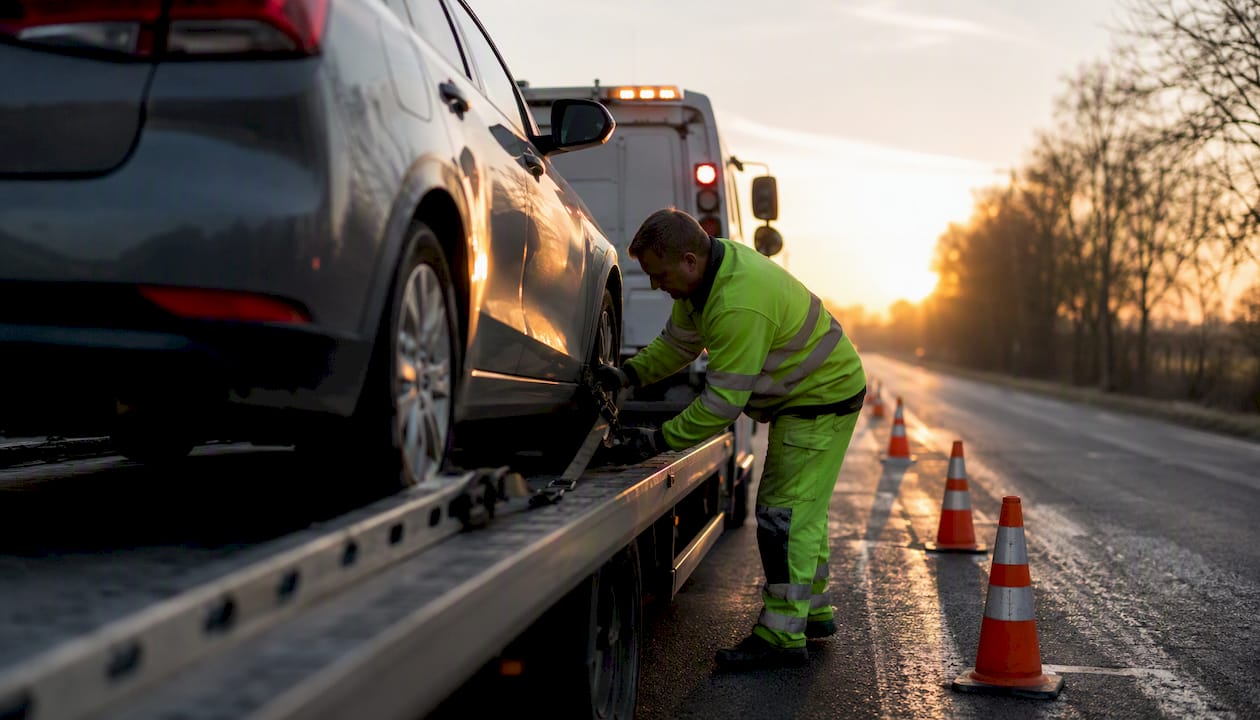
How quickly catastrophic failure arrives depends on three things: the severity of the knock, how high you rev the engine, and whether the oil is already contaminated. A mild knock at idle on a freshly changed oil supply might give you a few dozen miles at low RPM before things get worse. A severe knock with dirty oil can fail within minutes of hard acceleration.
If towing is not immediately available and you must move the car a short distance, keep RPMs below 2,000, avoid highway speeds entirely, and watch the oil pressure gauge. Any drop in oil pressure means stop immediately.
The practical rule: treat rod knock like a cracked radiator. You might get somewhere, but every mile risks turning a $3,000 repair into a $7,000 one.
US paperwork and title steps when selling a car with engine problems
In most US states, sellers are legally required to disclose known material defects when selling a vehicle. Rod knock qualifies as a material defect. Selling without disclosure can expose you to fraud claims even on an as-is sale, because "as-is" protects against unknown defects, not ones you were already aware of.
Practical checklist before you sell:
- Title: Confirm the title is in your name, lien-free, and signed correctly. Most salvage buyers require a clean title at pickup.
- Bill of sale: Write one even if your state does not require it. Include the sale price, vehicle VIN, odometer reading, and a clear "sold as-is with known engine knock" statement.
- Salvage/branded title: If the car has already been declared a total loss by an insurer, it may carry a salvage or rebuilt title, which further reduces private-sale value and limits who will buy it.
- State DMV rules: Disclosure requirements and title transfer procedures vary by state. Check your state's DMV website directly for the current process. The NHTSA and your state DMV are the authoritative sources for title and transfer rules.
- Odometer disclosure: Federal law requires an odometer disclosure statement for vehicles under 10 years old.
Selling to a licensed salvage or junk buyer typically simplifies this process. They handle title transfer paperwork as part of their standard process, which is one practical advantage over a private sale.
The repair-vs-sell decision is usually simpler than it feels
Most owners who end up repairing a rod-knock engine on a low-value car later wish they had sold it. The repair cost almost always exceeds what the car recovers in resale value, and the emotional pull of keeping a familiar vehicle often clouds the math.
For higher-value vehicles, especially trucks and SUVs where a remanufactured engine swap can be justified by the remaining vehicle value, repair can make sense. But that calculation requires honest numbers, not optimistic ones.
The fastest and least stressful path for most owners of low-value, rod-knock vehicles is a same-day cash sale to a junk buyer. No repair bills, no weeks of private-sale negotiations, no risk of the engine seizing further and reducing the offer. The money is smaller, but it is immediate and certain.
Southsidecashforjunkcars: same-day cash for rod-knock vehicles in Calgary and Okotoks
If the math has already told you that repair does not make sense, Southsidecashforjunkcars offers a faster exit than any private sale or dealer trade-in. The service is built specifically for vehicles in exactly this condition: running or not, rod knock or blown engine, failed inspection or seized motor.
The process runs in three steps: contact Southsidecashforjunkcars with your vehicle details, get a cash offer, and schedule same-day pickup with free towing. No hidden fees come off the offer at pickup, and you do not need to arrange a tow truck separately. For Calgary and Okotoks owners who have already decided to sell, this is the path that gets cash in hand today rather than weeks from now. Get a same-day cash offer and skip the repair bill entirely.
Sources
These sources provide the repair cost data, decision thresholds, and mechanical context referenced throughout this article.
- Carparts
- Rod Knock Explained: Causes, Sounds, and Engine Dangers
- Rod Knock: What It Sounds Like, Causes & Fix Options (2026)
- How To Save On Rod Knock Repair Costs: 2026 Prices
FAQ
Is it worth fixing a car with rod knock?
Rarely, unless the car's clean market value is significantly higher than the repair estimate.
What is the $3,000 rule for cars?
The $3,000 rule is a practical threshold: if a car's total repaired value would be under $3,000, the repair cost almost never makes economic sense because you cannot recover it in resale value.
Is rod knock expensive to fix?
Yes. Rod knock repair costs average around $2,500 and can run from $1,400 to over $7,000 depending on whether the crankshaft is damaged and which repair path you choose. Labor is the largest part of the bill.
How long will a vehicle last with rod knock?
Not reliably long. Mechanics recommend against driving a rod-knock vehicle at all, since continued driving can cause catastrophic engine failure within miles. If you must move it, keep RPMs below 2,000 and arrange a tow as soon as possible.
Can Southsidecashforjunkcars buy a car with rod knock?
Yes. Southsidecashforjunkcars purchases vehicles in any condition, including those with rod knock or blown engines, with same-day pickup and instant cash payment in Calgary and Okotoks.