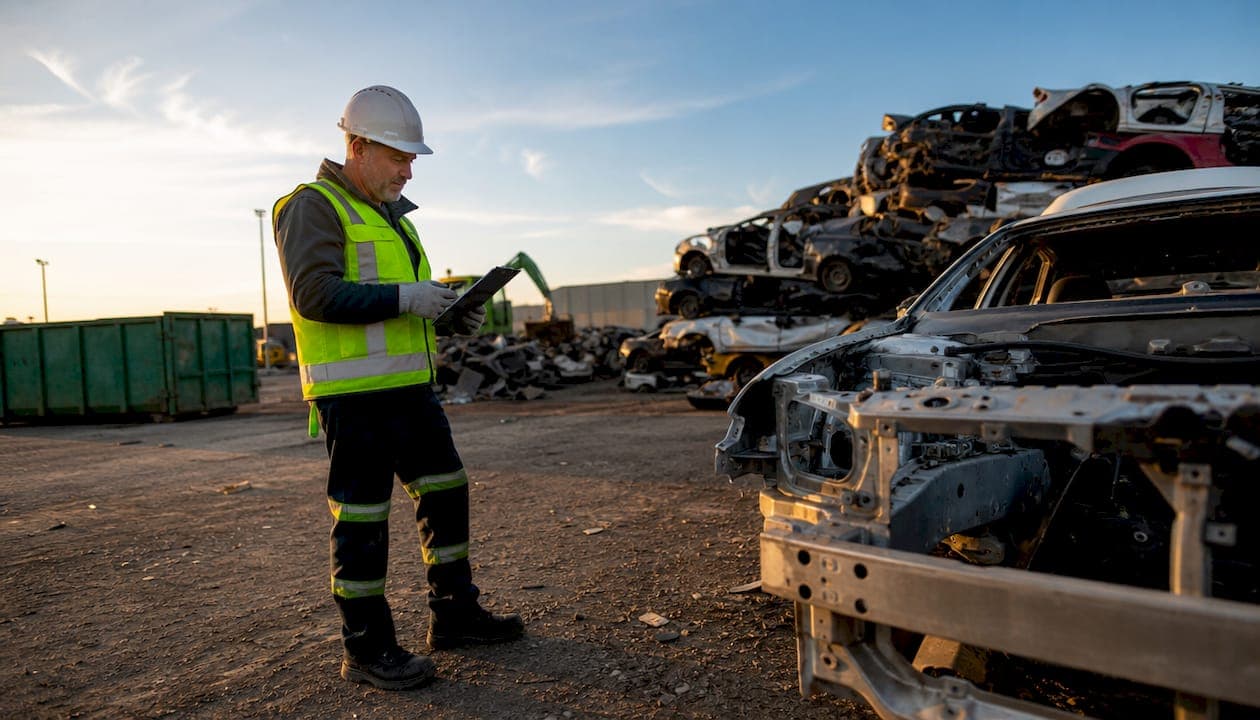
Recycling vehicles is defined as the systematic dismantling, depollution, and material recovery of end-of-life cars so their components and raw materials re-enter productive use rather than landfill. Industry standards require that at least 95% of a vehicle's weight be recovered, with a minimum of 85% directly reused or recycled. For Calgary vehicle owners, understanding the automobile recycling process means knowing exactly what happens to your car, what you can earn from it, and how to stay legally protected throughout. Licensed recycling centers handle everything from hazardous fluid removal to official destruction documentation, making the process straightforward when you choose the right facility.
What is the vehicle recycling process and how does it work?
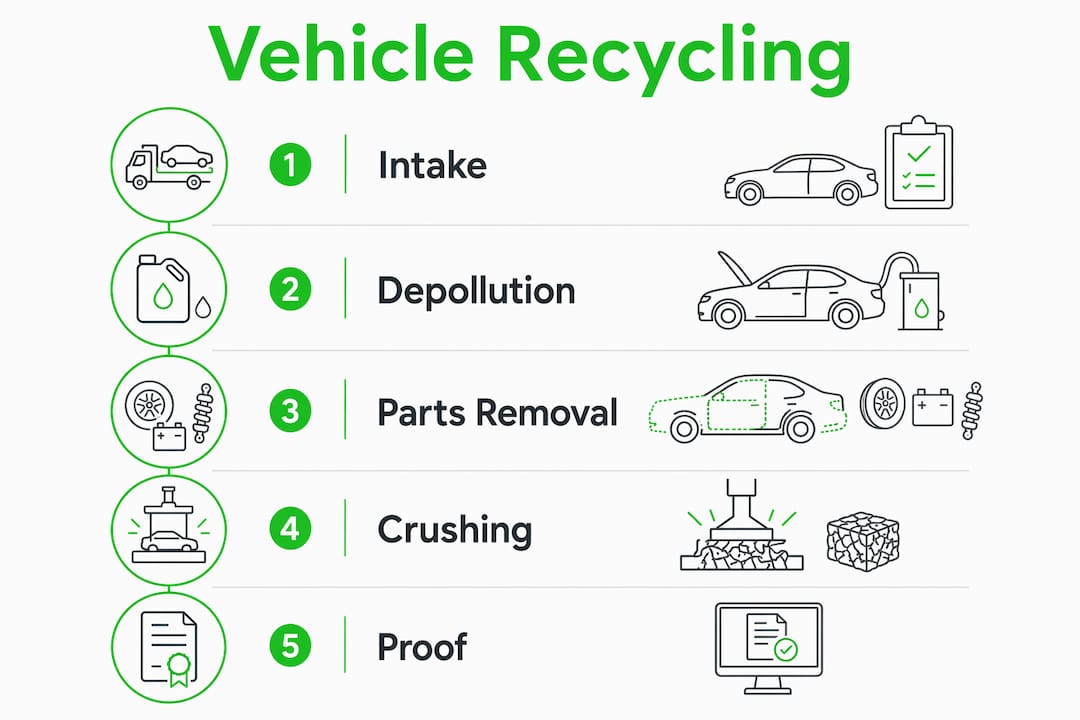
The vehicle recycling process follows a defined sequence of steps, each designed to recover maximum value while meeting environmental compliance requirements. Knowing each stage helps you set realistic expectations and avoid surprises.
Step 1: Vehicle intake and assessment
When you hand over your vehicle, the facility logs it formally and records its identification details. Staff assess the car's condition, note which parts are salvageable, and estimate its scrap metal weight. This intake step determines your initial payout offer.
Step 2: Depollution
Depollution is the most critical environmental step in the entire process. Technicians drain and collect engine oil, gasoline, coolant, brake fluid, and transmission fluid before any dismantling begins. Unauthorized scrapping skips this step entirely, which risks thousands of gallons of hazardous waste contaminating Calgary's soil and groundwater. Licensed facilities store these fluids for proper disposal or reprocessing.
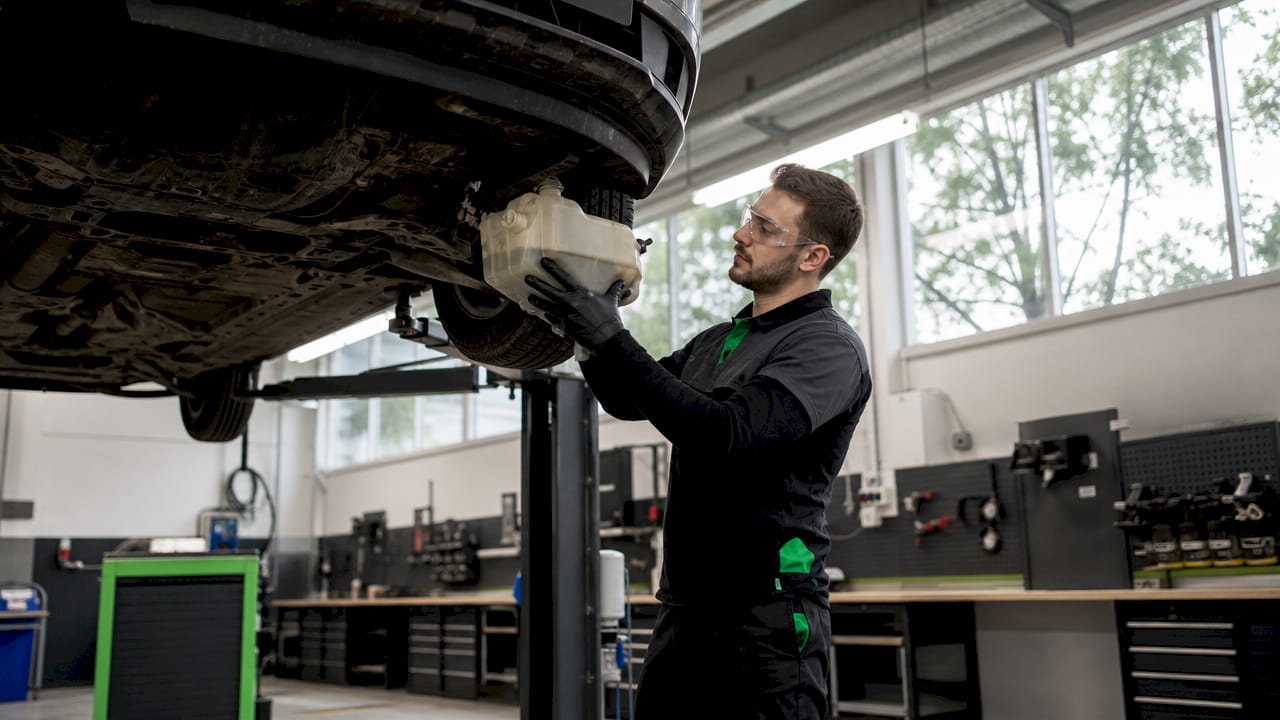
Step 3: Parts extraction
High-value components come out before the vehicle shell goes anywhere near a crusher. Catalytic converters, batteries, electronic control modules, tires, and usable body panels are removed and either resold or sent to specialist recyclers. Catalytic converters alone often generate more revenue than the scrap metal from the rest of the car, because they contain platinum, palladium, and rhodium.
Step 4: Crushing, shredding, and separation
The stripped shell is flattened by a crusher, then fed into an industrial shredder that breaks it into fist-sized fragments in seconds. Powerful magnets pull out ferrous metals like steel, while eddy-current separators recover aluminum and copper. The remaining mix of plastics, foam, and glass is called automotive shredder residue and requires further sorting.
Step 5: Proof of destruction
Once processing is complete, the facility issues documentation confirming your vehicle has been legally destroyed. You need this certificate to cancel your registration and insurance without penalty. Never hand over a vehicle without confirming you will receive this paperwork.
Pro Tip: Ask the recycling facility for your certificate of destruction before you leave the lot. Some owners forget to request it and face months of insurance billing on a car that no longer exists.
The full recycling cycle from vehicle handover to issuance of destruction proof takes approximately 10 days. That timeline covers depollution, parts extraction, shredding, and all required documentation.
What materials and parts are recycled from vehicles?
Vehicle recycling recovers a wide range of materials, and understanding their value explains why the process pays you money rather than costing you money.
Metals form the largest share of recoverable material. Steel and aluminum can be recycled infinitely without losing structural quality. Recycled steel from scrapped vehicles contributes over 14 million tons annually to the global steel industry. That volume directly reduces demand for iron ore mining, which is one of the most energy-intensive industrial processes on earth.
High-value components deserve special attention:
- Catalytic converters contain precious metals worth more than the surrounding scrap steel
- Lithium-ion and lead-acid batteries are recovered and reprocessed by specialist facilities
- Electronic control modules and sensors are tested and resold as used parts
- Alternators, starters, and transmissions in working condition go directly to the used parts market
- Tires in good condition are retreaded or sold to secondary markets
Plastics present the biggest technical challenge in automobile recycling. Polypropylene and polycarbonate are the most common automotive plastics, and mechanical recycling of these materials is growing as technology improves. Recovery rates are still developing, which is why automotive shredder residue remains a challenge for the industry.
Pro Tip: If your car has a working transmission, ask the recycling facility whether they will extract and price it separately. A functional transmission can add meaningful dollars to your payout.
The environmental case for material recovery is straightforward. Every ton of recycled steel avoids roughly 1.5 tons of CO2 compared to producing new steel from raw ore. For a Calgary vehicle owner, recycling your old car is one of the most concrete environmental contributions you can make locally.
How does recycling vehicles provide financial benefits for vehicle owners?
The cash value of a recycled vehicle depends on several factors, and knowing them before you call a recycler puts more money in your pocket.
Weight and metal content drive the base price. Heavier vehicles with more steel and aluminum command higher payouts. A full-size pickup truck will consistently fetch more than a compact sedan at the same scrap metal price per ton.
Condition and extractable parts significantly affect the final offer. A car with a working engine, intact catalytic converter, and undamaged body panels is worth more than an identical model that has been stripped or fire-damaged. Facilities that extract high-value parts before crushing pay more because they recover more revenue from those components.
Key factors that affect your payout:
- Current scrap metal prices in Calgary (these fluctuate with global commodity markets)
- Whether the catalytic converter is intact and unmodified
- The condition of the battery, especially for hybrid vehicles
- Mileage and mechanical condition of major components
- Vehicle make and model, since some parts have stronger used-parts demand
Electric vehicle recycling adds complexity. EV battery packs require removal by certified technicians using insulated tools and specialized protective equipment. That extra labor cost can reduce the net payout compared to a conventional vehicle, and not every Calgary facility is equipped to handle it. Always confirm EV capability before booking a pickup.
To get the best return, check current Calgary scrap car prices before you call any recycler. Knowing the market rate prevents you from accepting a lowball offer. You can also review the car donation vs. cash comparison if you are weighing your disposal options.
Why choosing a licensed recycling facility matters
Using an unlicensed scrapper in Calgary is not just an environmental risk. It is a legal and financial risk for you as the vehicle owner.
Licensed facilities are required by law to complete full depollution before any dismantling. That requirement protects the surrounding environment from oil, coolant, and refrigerant contamination. Unauthorized operations skip depollution because it costs time and money, and the resulting pollution can affect soil and water for years.
The legal protections for you as an owner depend entirely on proper documentation. A licensed facility issues a certificate of destruction that formally releases you from all ongoing liability. Without that document, you remain legally responsible for the vehicle, including any fines, insurance obligations, or registration fees.
Reasons to use only a licensed Calgary recycling facility:
- Mandatory depollution prevents hazardous waste from entering local waterways
- Official destruction certificates protect you from ongoing registration and insurance costs
- Licensed facilities meet provincial environmental standards for waste handling
- Proper parts extraction maximizes your payout and supports the used parts market
- Compliance with circular economy goals reduces the city's overall industrial waste footprint
The vehicle recycling process at a licensed center also protects you if questions arise later about the vehicle's disposal. That paper trail matters more than most owners realize until they need it.
What should Calgary vehicle owners look for in a recycling service?
Choosing the right vehicle dismantling service in Calgary comes down to five practical criteria.
Licensing and compliance. Confirm the facility holds current provincial authorization for vehicle recycling and hazardous waste handling. Ask directly whether they perform full depollution before dismantling.
Transparent pricing and free removal. A reputable recycler provides a clear cash offer upfront with no hidden fees. Free vehicle pickup is standard among quality operators. If a facility charges for towing, factor that into your net return.
Experience with electric and hybrid vehicles. As EVs become more common in Calgary, the ability to safely remove and recycle high-voltage battery packs matters. Confirm this capability if your vehicle is electric or hybrid.
Speed and professionalism. Same-day or next-day pickup availability signals an organized operation. Delays often indicate poor logistics or high volume backlogs that will slow your payout.
Customer reviews and local reputation. Search for recent Calgary-specific reviews. A strong local track record is the most reliable indicator of fair dealing and reliable service. If you are unsure whether your vehicle qualifies, read through signs your car is a junker to clarify your options before calling.
Key Takeaways
Vehicle recycling is the most effective end-of-life solution for Calgary owners because it recovers up to 95% of a vehicle's weight, pays cash for scrap, and legally releases you from all ongoing ownership liability.
| Point | Details |
|---|---|
| Industry recovery targets | Standards require 95% weight recovery and 85% direct reuse or recycling per vehicle. |
| Depollution is non-negotiable | Licensed facilities drain all hazardous fluids before dismantling to protect soil and water. |
| High-value parts boost payouts | Catalytic converters and batteries extracted before crushing generate the most revenue. |
| Documentation protects you | A certificate of destruction releases you from insurance and registration liability. |
| EV recycling needs specialists | Electric vehicle battery removal requires certified technicians and affects pricing. |
What I have learned from watching Calgary's recycling market evolve
The conversation about vehicle recycling in Calgary has shifted noticeably over the past few years. Owners used to think of scrapping a car as a last resort, something you did when a vehicle was too far gone to sell privately. That framing misses the real opportunity.
The circular economy argument for recycling old cars is not abstract. When steel from a scrapped Calgary vehicle re-enters production, it displaces raw ore extraction somewhere else in the supply chain. That connection is direct and measurable, and it is one of the reasons I think vehicle recycling deserves more attention than it gets in local environmental conversations.
The area I watch most closely right now is EV battery recycling. Calgary's EV adoption is growing, and the infrastructure for safely handling high-voltage battery packs is still catching up. Owners of electric vehicles need to be especially careful about choosing a facility with certified technicians. The cost of improper EV battery disposal, both environmental and legal, is significant.
My honest advice: do not hand your vehicle to any recycler who cannot show you their licensing, explain their depollution process, and hand you a certificate of destruction on the spot. Those three things separate a legitimate operation from one that cuts corners at your expense and the environment's.
— Franz
Southsidecashforjunkcars: fast, fair vehicle recycling in Calgary
Calgary vehicle owners who want a straightforward recycling experience without the paperwork headaches have a reliable local option.

Southsidecashforjunkcars handles the full process from pickup to payment, serving Calgary and Okotoks with same-day vehicle removal and upfront cash offers. Every vehicle goes through proper depollution and licensed disposal, so you receive your certificate of destruction and walk away with cash in hand. There are no hidden fees and no lengthy negotiations. Whether your car runs or not, Southsidecashforjunkcars provides a clear offer before anyone touches your vehicle. Get your instant cash offer today and have your vehicle gone by tomorrow.
FAQ
What does recycling vehicles actually mean?
Recycling vehicles means dismantling an end-of-life car, removing hazardous fluids, extracting reusable parts, and shredding the remaining shell so metals, plastics, and glass can re-enter manufacturing. Industry standards target recovery of at least 95% of a vehicle's total weight.
How long does the vehicle recycling process take?
The full process from vehicle handover to issuance of a certificate of destruction takes approximately 10 days at a licensed facility. Same-day pickup is common, but complete processing and documentation require additional time.
Will I get paid to recycle my car in Calgary?
Yes. Licensed recyclers pay cash based on your vehicle's weight, metal content, and the condition of high-value parts like the catalytic converter and battery. Heavier vehicles with intact components consistently earn higher payouts.
Do I need any paperwork when recycling my vehicle?
You need to receive a certificate of destruction from the recycling facility. This document formally releases you from all ongoing insurance, registration, and legal liability tied to the vehicle.
Can electric vehicles be recycled the same way as gas-powered cars?
Electric vehicles require specialized handling because their high-voltage battery packs must be removed by certified technicians using insulated tools. Not every Calgary facility offers this service, so confirm EV capability before booking pickup.