
Transferring car ownership is the legal process of reassigning a vehicle title from the seller to the buyer, supported by signed paperwork submitted to your provincial or state motor vehicle authority. In Calgary, this means completing the correct Alberta registry documents before you hand over the keys. Knowing how to transfer ownership of a car correctly protects both parties from fines, liability, and registration headaches. Skip a step, and you could face escalating penalties or find yourself legally responsible for a vehicle you no longer own.
What documents are required to transfer ownership of a car?
The signed certificate of title is the foundation of every vehicle ownership transfer. Without it, no registry office will process the change. The title must show the seller's full legal name exactly as it appears on their government-issued photo ID. Any mismatch is grounds for rejection.
Beyond the title itself, most transfers require a signed certificate of title, valid photo ID for both buyer and seller, a bill of sale, an odometer disclosure statement, and a lien release if the vehicle carries financing. Each document serves a specific legal purpose, and missing even one can stall the process by days or weeks.

Here is a quick reference for the core documents:
| Document | Who Provides It | Notes |
|---|---|---|
| Signed certificate of title | Seller | Must match legal name on ID |
| Government-issued photo ID | Buyer and seller | Driver's license is standard |
| Bill of sale | Both parties | Confirms price and date of sale |
| Odometer disclosure statement | Seller | Federally required for vehicles under 20 years old |
| Lien release | Lender or seller | Required if vehicle was financed |
Special situations add extra paperwork. Gifted vehicles often require a gift affidavit to avoid sales tax. Inherited vehicles need probate documents or an executor's letter. If your name has changed since the title was issued, you must update your name with the registry before completing the transfer. That step catches many sellers off guard.
Some states and provinces require notarization, particularly when the transfer involves a power of attorney or an out-of-jurisdiction sale. Alberta registry agents handle verification in person, so check with your local registry office before assuming a mail-in process will work.
Pro Tip: Make two photocopies of every document before you hand anything over. Keep one set for yourself and give one to the other party. This protects you if a dispute arises weeks later.
How to transfer ownership of a car step by step
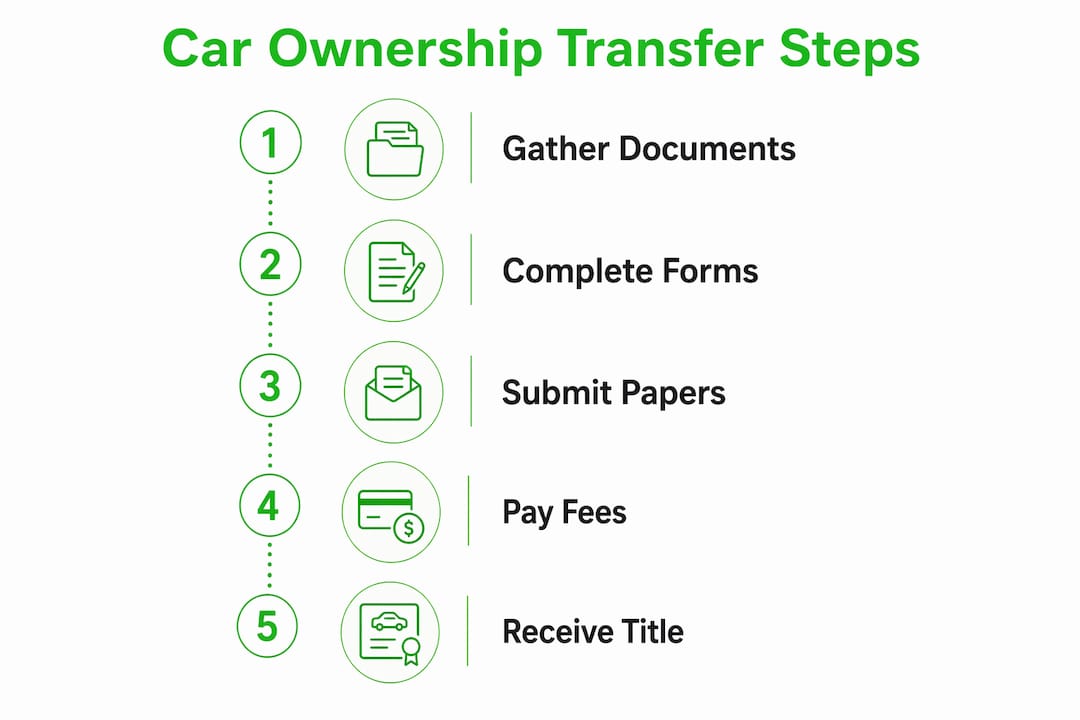
A clean transfer follows a clear sequence. Rushing any step or skipping the order creates errors that require affidavits or duplicate titles to fix.
-
Seller signs the title correctly. The seller writes their full legal name, the sale date, the agreed sale price, and the odometer reading in the designated fields. The signature must match the name printed on the title exactly.
-
Buyer completes their section. The buyer fills in their full legal name and current address. If two buyers are listed, clarify whether the title will read "and" or "or." When names are joined by "and," both owners must sign for any future transfer. When joined by "or," only one signature is needed.
-
Gather all supporting documents. Collect the bill of sale, odometer disclosure, lien release, and valid IDs before visiting the registry. Arriving without a document means a second trip.
-
Submit paperwork to the registry. In Alberta, you visit a licensed registry agent in person. Some states allow online transfers for one-to-one private sales when the vehicle is not financed and both parties have valid accounts. Check whether your jurisdiction offers this option before making the trip.
-
Pay title transfer fees and applicable taxes. Title transfer fees range from $8 to over $100 depending on the jurisdiction. Sales tax applies based on the declared sale price. Budget for both.
-
Register the vehicle and obtain new plates if required. Titling and registration are separate steps. A vehicle can be titled without being registered, but it cannot be driven legally until registration is complete. Registration requires proof of insurance and a separate registration fee.
-
Seller files a release of liability. After the sale, the seller should immediately file a notice of transfer or release of liability with the registry. This formally ends the seller's legal connection to the vehicle.
Pro Tip: If you are selling a junk car or a vehicle that will not be driven right away, you can complete the title transfer without registering the vehicle. This saves the buyer the registration fee until they are ready to put the car on the road.
What common mistakes cause title transfer rejections?
Most rejected title transfers stem from clerical errors such as name mismatches, missing odometer information, or absent signatures. These mistakes are easy to make and expensive to fix. Correcting them often requires notarized affidavits or a full duplicate title application, adding weeks to the process.
The most common errors include:
- Name mismatches. The name on the title must match the seller's ID character for character. A middle initial present on one document but absent on another is enough to trigger a rejection.
- Missing odometer disclosure. Odometer disclosure is federally required for vehicles under 20 years old. Leaving this field blank is one of the top reasons for rejected transfers.
- Incomplete signatures. Both parties must sign where required. On jointly owned titles, the "and" versus "or" distinction determines how many signatures are needed.
- Forgetting the lien release. If the vehicle was financed, the lender must provide a signed lien release before the title can transfer. Sellers sometimes forget this step entirely.
- Lost or damaged titles. Lost titles require a duplicate title application, which adds processing time and a modest fee before the transfer can proceed.
Sellers who skip the release of liability step remain legally responsible for the vehicle after the sale. If the new owner gets a parking ticket or is involved in an accident before the transfer is recorded, the original seller can be held liable. Filing this notice immediately after the sale is the single most important protective step a seller can take.
How do fees and deadlines affect the transfer process?
Deadlines for completing a change of vehicle ownership are strict and vary by jurisdiction. Most states require title transfers within 10 to 30 days after the sale, with penalties that escalate the longer you wait. Waiting even a few weeks past the deadline can cost you significantly more than the transfer fee itself.
The penalty structures are specific. Washington State charges a $50 penalty starting on day 16, plus $2 per day after that, up to a maximum of $125. Michigan charges a $15 late fee for transfers completed more than 15 days after the sale. These numbers are not hypothetical. They are the actual fees assessed at the registry window.
| Jurisdiction | Deadline | Late Penalty |
|---|---|---|
| Washington State | 15 days | $50 on day 16, then $2/day up to $125 |
| Michigan | 15 days | $15 flat fee after 15 days |
| General range | 10–30 days | Varies widely by state |
Transfer fees themselves also vary widely. The base fee ranges from $8 to over $100 depending on the state or province. Sales tax adds to that total, calculated on the declared sale price. If you need the title faster than the standard processing window, some jurisdictions offer expedited services. Washington State's "Quick Title" service costs approximately $50 extra and cuts the wait time significantly compared to the standard 6–8 week processing window.
Pro Tip: Ask your registry agent about expedited title options at the time of submission. Paying the extra fee upfront is almost always cheaper than dealing with a delayed registration or a lapsed insurance situation.
Key Takeaways
Completing a vehicle ownership transfer correctly requires the right documents, accurate signatures, and submission within your jurisdiction's deadline to avoid penalties.
| Point | Details |
|---|---|
| Documents matter most | Gather the signed title, photo ID, bill of sale, odometer disclosure, and lien release before visiting the registry. |
| Deadlines are strict | Most jurisdictions require transfer within 10–30 days; late fees escalate quickly and are non-negotiable. |
| Errors cause delays | Name mismatches and missing signatures are the top reasons transfers get rejected; double-check every field. |
| Titling and registration differ | A title transfer is not the same as registration; the vehicle cannot be driven legally until both are complete. |
| Sellers need liability protection | Filing a release of liability immediately after the sale protects sellers from tickets and accidents tied to the vehicle. |
What I have learned from watching transfers go wrong
After years of watching vehicle sales in Calgary go sideways over paperwork, the pattern is always the same. The seller assumes the buyer will handle everything. The buyer assumes the seller already signed everything correctly. Nobody checks the odometer field. Three weeks later, someone is at the registry paying a late fee and waiting on a duplicate title.
The fix is simple but requires discipline. Before you hand over the keys, sit down together and go through every field on the title. Read the name on the title aloud and compare it to the seller's ID. Check the odometer field. Confirm the lien release is attached if the car was financed. This takes ten minutes and prevents weeks of frustration.
The detail that surprises most sellers is the release of liability. Sellers who skip this step stay legally connected to the vehicle even after the money changes hands. I have seen sellers receive parking tickets for cars they sold months earlier because they never filed the notice of transfer. File it the same day you hand over the keys.
My strongest advice for Calgary sellers: know Alberta's specific registry requirements before the sale, not after. The rules around notarization, lien releases, and acceptable ID vary enough from other jurisdictions that assuming you know the process from a previous sale in another province can cost you. Keep copies of everything. The registry agent keeps the originals, and you will want your own record if anything is disputed later.
— Franz
Selling your car in Calgary? Southsidecashforjunkcars handles the paperwork
Dealing with title transfers on a vehicle you no longer want is a frustrating use of your time, especially when the car is old, damaged, or simply not worth the hassle of a private sale.

Southsidecashforjunkcars works with Calgary and Okotoks sellers to make the process fast and straightforward. You get a same-day cash offer for your vehicle regardless of its condition, and the title transfer is handled as part of the transaction. There are no hidden fees, no lengthy negotiations, and no second trips to the registry. Southsidecashforjunkcars picks up the vehicle and pays you on the spot. If you are ready to sell your car without the paperwork headache, this is the most direct path to getting it done.
FAQ
What documents do I need to transfer a car title?
You need the signed certificate of title, a valid photo ID for both buyer and seller, a bill of sale, an odometer disclosure statement, and a lien release if the vehicle was financed. Missing any one of these documents will delay the transfer at the registry.
How long do I have to transfer a car title after buying a vehicle?
Most jurisdictions require transfer within 10 to 30 days of the sale date. Washington State begins charging penalties on day 16, and Michigan charges a flat late fee after 15 days.
Can I transfer a car title online?
Some states allow online title transfers for private one-to-one sales when the vehicle is not financed and both parties meet eligibility requirements. In Alberta, transfers are completed in person at a licensed registry agent.
What happens if I lose the car title before transferring it?
You must apply for a duplicate title before the transfer can proceed. Duplicate title applications carry a modest fee and add processing time, so apply as soon as you realize the title is missing.
Does transferring a title mean the car is registered?
No. Titling and registration are two separate steps. A vehicle can be titled without being registered, but it cannot be driven legally on public roads until registration is also complete, which requires proof of insurance and a separate registration fee.